
HERITΛGE joins MusicSphere partners in Valencia
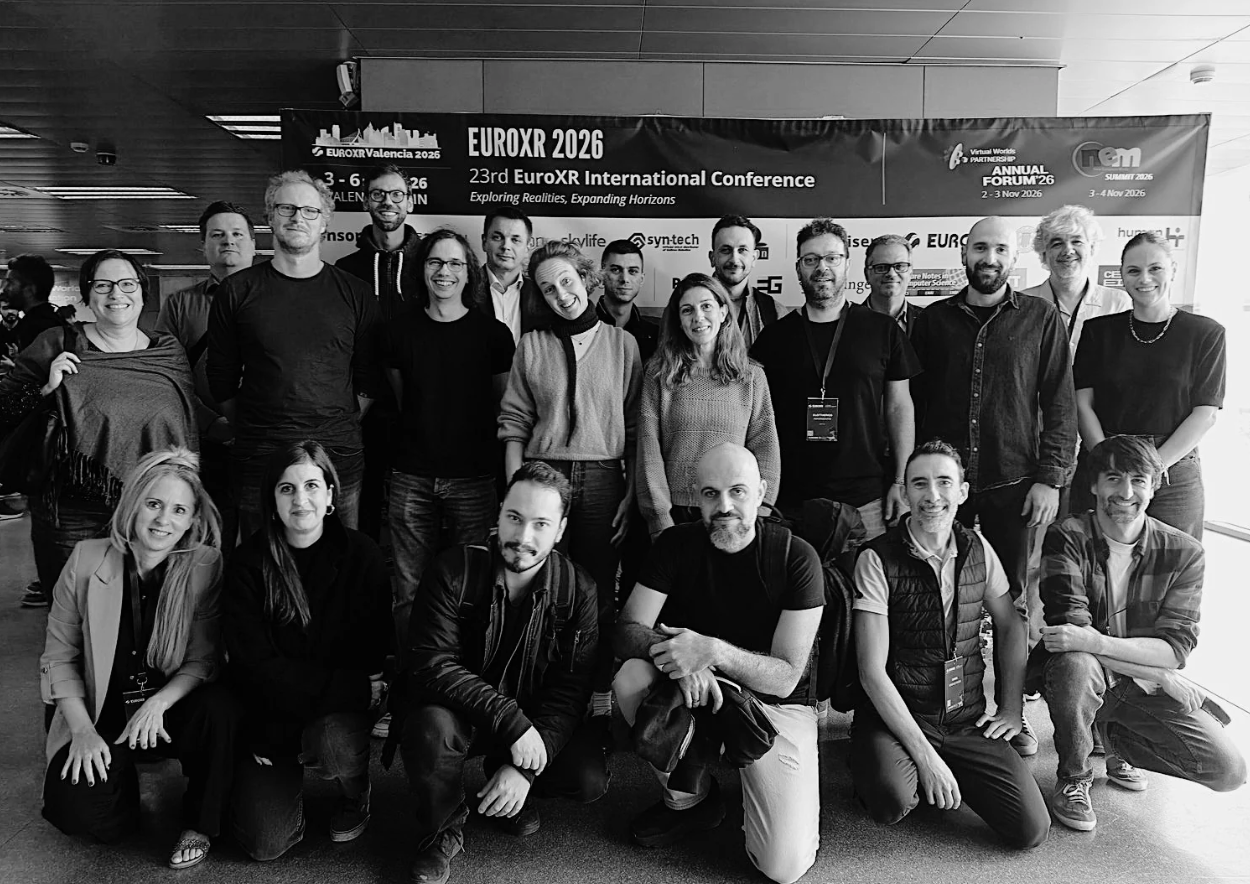 On 2–3 November 2026, HERITΛGE met with the MusicSphere consortium in Valencia, Spain, for the project’s Fourth General Meeting which took place alongside the 23rd EuroXR International Conference (3–6 November 2026), bringing partners together at one of Europe’s leading events for extended reality research and practice.
MusicSphere – A Multimodal Approach for Digitizing, Analyzing, and Simulating Traditional Musical Organs Through 3D Technologies, Acoustic Analysis and Interactive Experiences – is a 42-month research and innovation project funded by the European Union’s Horizon Europe programme. It is part of the European Collaborative Cloud for Cultural Heritage (ECCCH), the EU initiative managed by the ECHOES project, and is coordinated by the Centre for Research & Technology Hellas (CERTH) in Thessaloniki, Greece.
The project aims to capture the whole process by which traditional and ancient musical instruments produce sound: from the materials and mechanics of the instrument, to its acoustics, the way it is played, and the way its sound interacts with the building around it. Its focus is the pipe organ and its ancient Greek ancestor, the hydraulis (water organ). It brings together 14 partners – research centres, universities, technology companies and organ builders from Greece, Spain, Germany, Cyprus and Belgium. MusicSphere is developing:
- Digital twins of instruments to support preservation, restoration and preventive conservation
- Tools for heritage professionals to digitise, analyse and simulate complex instruments
- Digital reconstructions that bring the sound of ancient instruments such as the hydraulis back to life
- Immersive VR and AR experiences that open up musical heritage to new audiences and support education
- Sensor-based monitoring and risk mapping to detect material and climate threats early
- Training, guidelines and cascade funding to build skills and capacity across the heritage sector
During the Meeting, partners reviewed the project’s progress, shared updates on ongoing activities and discussed the work across the different work packages. They also agreed on priorities for the coming months and aligned next steps toward the project’s objectives. Meeting in person gave partners time to talk directly and work through shared questions together.
HERITΛGE – the partner leading the design of MusicSphere’s training programme – had a chance to present the proposed training model to partners. The team discussed what input is needed from to shape the programme around the project’s toolkits. The training programme is central to MusicSphere’s goal of building skills and capacity in the heritage sector: it will help ensure that the tools and methods developed by the project reach the conservators, curators, heritage managers and other professionals who will use them.
MusicSphere at the ECCCH Projects Pitch Session
During EuroXR 2026, MusicSphere also took part in the ECCCH Projects Pitch Session: Understanding the Cloud and Its Projects. Chaired by Eleftherios Anastasovitis, the 60-minute session brought together four ECCCH projects – MusicSphere, EXCALIBUR, UNICHE and MNEME.
The session opened with an introduction to the vision of the ECCCH and its role in supporting collaboration and innovation in cultural heritage. Each project then presented its objectives, approach, key results and contribution to the Cloud. A discussion followed on how the four initiatives can contribute to the wider European cultural heritage ecosystem, and the session closed with questions from the audience.
The four projects also joined a 90-minute ECCCH Technical Workshop: Exploring Integration and Interoperability, which looked at how project tools, data and services can connect to the Cloud’s shared technical framework. Topics included APIs, metadata and standards, opportunities to reuse project results, and the technical and organisational barriers still to be addressed.
Together, the sessions gave MusicSphere the chance to exchange knowledge with fellow ECCCH initiatives, explore how its work can feed into the Cloud, and strengthen its links with the European XR and cultural heritage communities.
To follow the project’s progress, visit the MusicSphere website: musicsphere-eccch.eu.