
Tag Archives: climate change adaptation
HERITΛGE delivers Seasonal School on heritage adaptation to climate change
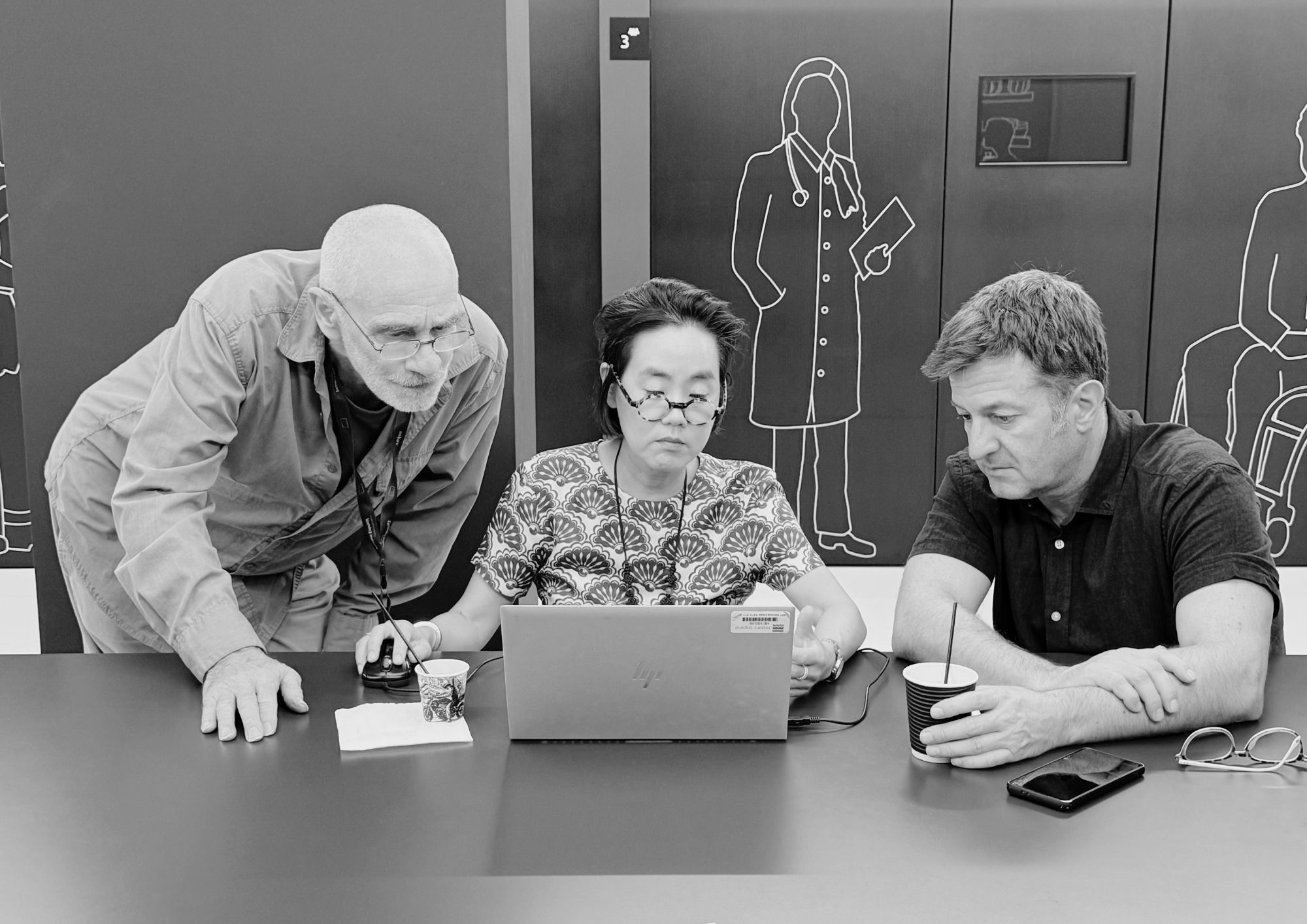
Working with Prof. Brimblecombe
How can climate projections help heritage professionals decide which monument needs attention first? And what does adaptation mean for a mountain community whose landscape and traditions are threatened by recurring wildfires? These were among the questions that heritage professionals and researchers brought to Athens for the first Seasonal School of the European Partnership for Resilient Cultural Heritage (RCH).
The Heritage Management Organization (HERITΛGE) delivered the school, Heritage Adaptation to Climate Change, from 5 to 15 October 2026. More than 400 applications were filed from around the world. Fourteen participants attended in person at the European Parliament’s Europa Experience in Athens, and more than 100 took part online. The in-person participants were selected from candidates nominated by states participating in RCH. They represented 13 countries, with two participants from Spain and one each from Belgium, Croatia, Egypt, Finland, Greece, Italy, Lithuania, Malta, the Netherlands, Portugal, Romania and the United Kingdom.
Professor Peter Brimblecombe, Dr Jenny Richards and HERITΛGE Director Dr Evangelos Kyriakidis led the training. Participants brought projects from their own work and used them to explore how to find and interpret climate data, assess risks to particular sites and prioritise conservation measures. The group included conservators, architects, ethnographers, materials scientists and meteorologists, some working on their doctoral research and others drawing on years of professional practice.
Reflecting on the value of bringing these colleagues together, Dr Kyriakidis said, “It was a great opportunity not only to learn from excellent instructors such as Peter Brimblecombe and Jenny Richards, but also to learn from one another and see the different challenges and the different solutions that are being given in different countries and in different types of heritage, different aspects of heritage.”
From national strategy to the stone of the Acropolis
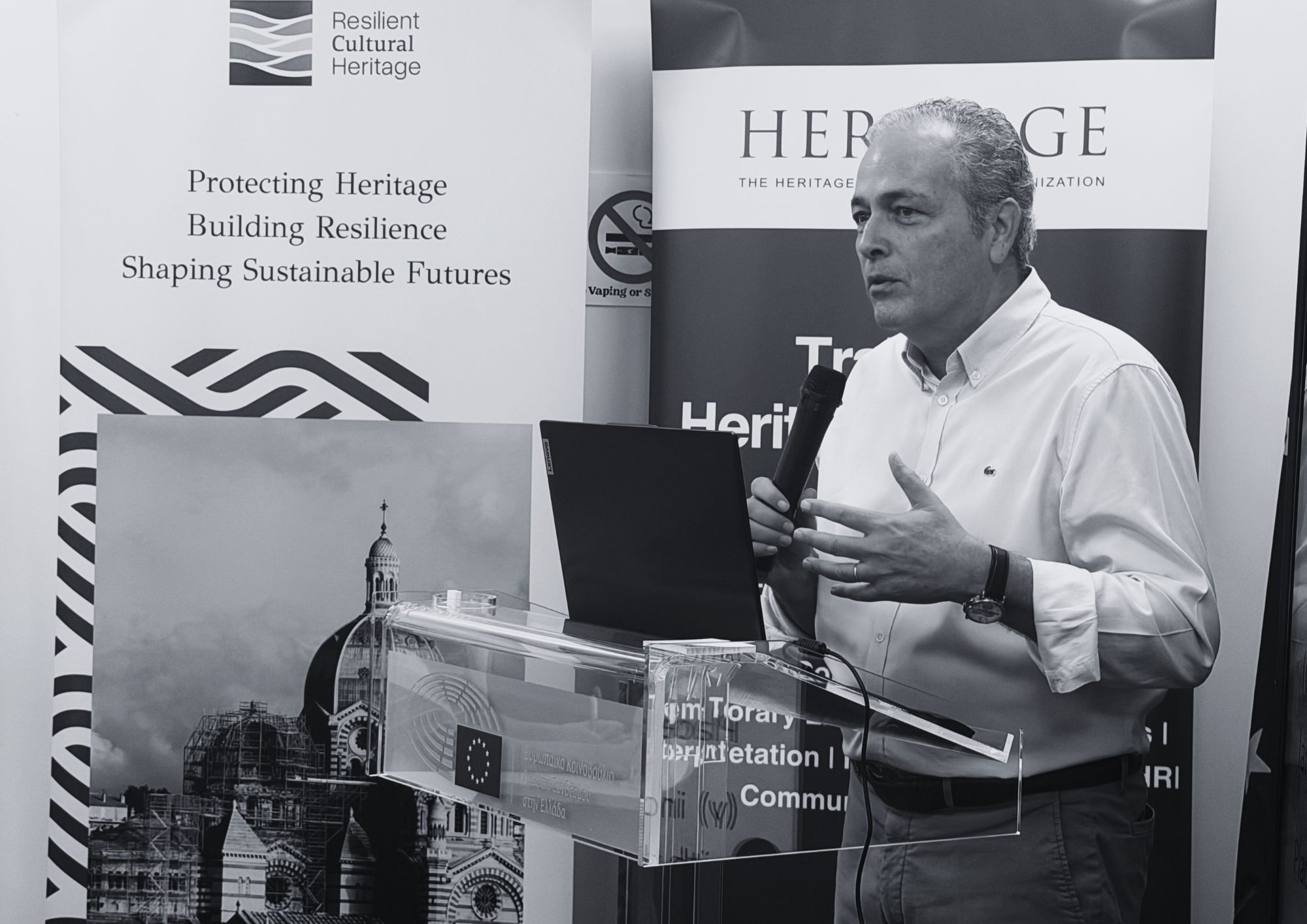
Professor Constantinos Cartalis’ Keynote
In his keynote, Professor Constantinos Cartalis of the National and Kapodistrian University of Athens presented Greece’s national strategy for protecting cultural heritage from the impacts of climate change, focusing on monuments and archaeological sites. Field visits to the Acropolis and the archaeological site of Elefsina, organised by the University of West Attica’s Department of Conservation of Antiquities and Works of Art, gave participants the opportunity to consider those challenges on site. While in Athens, the Seasonal School participants also attended a special EMPATHS Multiplier Event on how heritage professionals and local communities can work together to interpret cultural heritage and respond to climate change.
For Dr Alexis Stefanis, an associate professor in the department who also leads HERITΛGE’s conservation workshops, understanding the risks to an archaeological site means looking closely at the materials themselves. Floods and wildfires are visible threats. Changes in the way moisture moves or salts crystallise within porous stone can be harder to see, yet they matter to the conservators responsible for its care. “What’s happening inside the pores of the material? How does salt crystallisation happen?” he asked.
Back in the classroom, participants explored how to use evidence of such risks to make the case for intervention. As Professor Brimblecombe put it, “quantification is really important in convincing policy makers and people who can fund restoration and fund preservation of sites.”
What participants took home
For Ana Margarida Cruz da Silva, a researcher at the Centre for Intercultural Studies at the Polytechnic University of Porto, the starting point was Serra da Estrela. Her doctoral research explores identity and memory in this mountainous region of Portugal, where communities have faced wildfires for decades. She came to the school with an interest in how people protect both the places and the traditions affected by those fires. Asked what she would take back to her work, she said:
“I think that one of the main insights is that a lot of people are dealing with the same things we are dealing with. But the other part is also that we can see so many different things happening in the world that sometimes we are not aware of… it was an amazing opportunity also to take back to the community things that are happening across the world.”
Other participants approached the relationship between heritage and climate through very different projects. Aurora Cairoli, a conservation and heritage scientist from Italy, studies contemporary outdoor murals. Their exposure to the elements is one part of her research. Another is what happens to their significance when environmental change affects the communities for whom the paintings are part of a shared identity.
Ionica Pîrvu, who works in the Project Management Unit of Romania’s Ministry of Culture, used the school to develop an idea for monitoring the country’s built heritage. He told HERITΛGE that upon his return, he will propose a network of sensors that could track humidity, vibration and small cracks in historic buildings. Read alongside satellite imagery, those measurements could help conservators spot gradual deterioration and decide where an early repair could prevent more extensive damage.
HERITΛGE thanks the European Parliament Office in Athens for welcoming the Seasonal School to Europa Experience, Professor Constantinos Cartalis for his time and insights, the University of West Attica for organising the field visits, and the Ephorate of Antiquities of the City of Athens and the Ephorate of Antiquities of West Attica for their support and kind offer to guide the Seasonal School around both these important sites and share insights into their work.
Join Us for the Launch of a New Partnership for Resilient Cultural Heritage
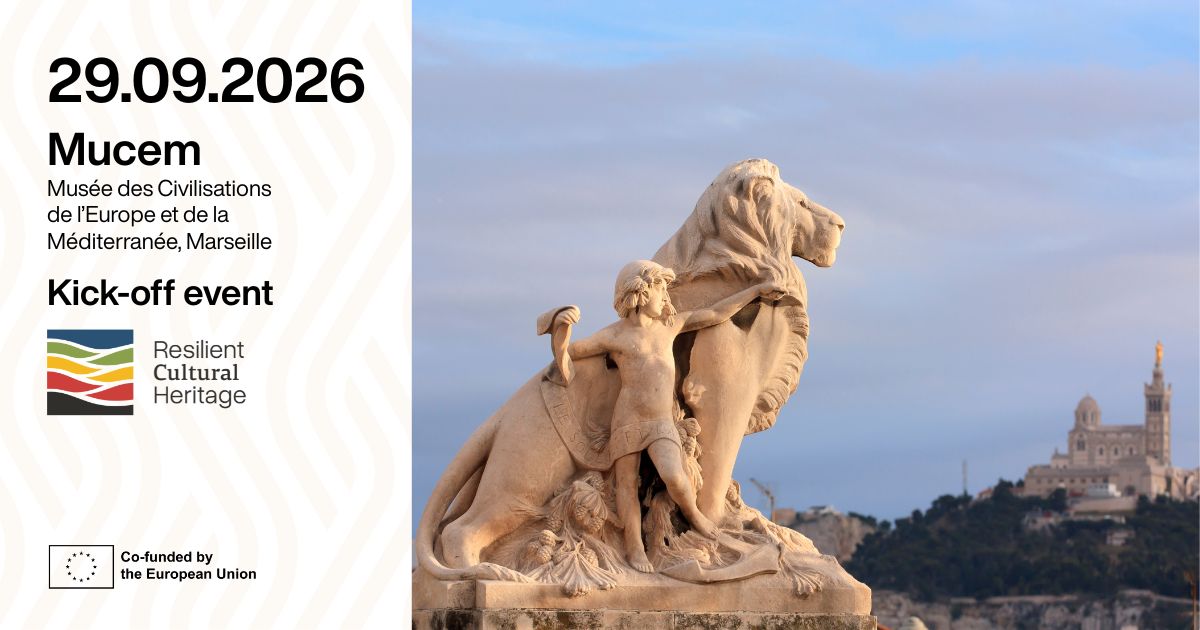
We are delighted to invite our global HERITΛGE community to join us for the official Kick-off Event of the European Partnership for Resilient Cultural Heritage (RCH), taking place on 29 September 2026 at Mucem – Musée des civilisations de l’Europe et de la Méditerranée in Marseille, France, and online.
For us at HERITΛGE, this is far more than the launch of another European project. It marks the beginning of an ambitious, decade-long collaboration that has the potential to transform how Europe—and its international partners—understand, protect and adapt cultural heritage in the face of climate change and how heritage can itself contribute to climate change adaptation.
We are incredibly proud that HERITΛGE is one of the 90 partner organisations from 30 countries shaping this landmark initiative, one of the largest investments ever made in research and innovation connecting cultural heritage and climate action.
Over the next ten years, the Partnership will coordinate transnational research and innovation funding, while building an entire ecosystem of activities to strengthen the heritage sector. These include capacity-building programmes, networking opportunities, impact monitoring, Living Labs, knowledge exchange, and collaborative initiatives that will help translate research into practical action and public policy.
As we contribute to the Partnership’s capacity-building activities, HERITΛGE is especially excited to be working to develop opportunities that will equip professionals, researchers, institutions and communities with the knowledge and skills needed to respond to one of the defining challenges of our time.
Why attend?
Whether you work in cultural heritage, climate science, museums, conservation, archaeology, architecture, policy, education, local government or the creative industries, this event offers an exciting opportunity to become part of the RCH community from the very beginning.
By joining us, you will be able to:
- Learn about the Partnership’s vision, priorities and roadmap for the next decade.
- Discover upcoming transnational funding opportunities for collaborative research and innovation.
- Explore how RCH’s Mapping, Living Labs, Capacity Building and other initiatives can support your work.
- Meet researchers, practitioners, policymakers and organisations working across heritage and climate resilience.
- Join discussions exploring how research can better inform policy, practice and sustainable development.
The programme will feature distinguished speakers from the European Commission, French national and regional institutions, and leading experts from the fields of cultural heritage and climate science. Through keynote lectures, panel discussions and interdisciplinary conversations, participants will explore new ways of working across disciplines, sectors and countries to strengthen the resilience of cultural heritage.
Event Details
Date: 29 September 2026
Venue: Mucem, Marseille, France
Participation: In person or online
️ Cost: Participation is completely free, but registration is required.
We would love to welcome members of the extended HERITΛGE network—from former participants, alumni and trainers to partners, colleagues and friends from around the world. Whether you join us in Marseille or online, your participation will help launch a community that will shape the future of resilient cultural heritage for years to come.
Α new global campaign to accelerate climate adaptation for heritage

At HERITΛGE we are very proud to be a part of a new, UN-recognised campaign to accelerate climate change adaptation for cultural heritage sites and practices by 2030, Heritage Adapts! (HA!)
The HA! Initiative launches today as the first global campaign uniting the heritage sector behind a shared mission: to have at least 3,000 sites and practices pledge to take locally-led climate adaptation action by 2030.
The campaign is driven by a powerful coalition of leading partners, led by Preserving Legacies, that also includes HERITΛGE, the Center for Indigenous Peoples’ Research and Development (CIPRED), The Climate Heritage Network (CHN), the European Heritage Hub, the Intangible Cultural Heritage NGO Forum, International Council on Monuments and Sites (ICOMOS), the International Federation of Library Associations and Institutions (IFLA), Julie’s Bicycle, Shadhona, and the World Monuments Fund.
Recognised by UNFCCC, the UN’s climate agency, as a Plan to Accelerate Solutions advancing the Global Goal on Adaptation, Heritage Adapts! connects local action to global impact, strengthening community resilience worldwide.
A crisis threatening heritage, community resilience
Climate change is the fastest-growing threat to heritage globally. According to UNESCO, one in three natural heritage sites and one in six cultural heritage sites are under threat, as are 60% of World Heritage Forests and 66% of World Heritage Marine Sites. UNESCO’s newly published People and Nature in Unesco-Designated Sites report further found that across its sites, climate-related hazards have increased 40% in a decade, and more than one in four could hit potentially irreversible tipping points by 2050. But this data covers only a fraction of the world’s heritage; most sites, living practices, collections, and landscapes that communities value remain untracked by international frameworks. This gap is itself part of the problem. Compounded by heritage adaptation remaining largely absent from climate finance and policy, stewards on the frontlines are often left with limited funding and support. Yet heritage is not just a victim, it is part of the solution, a source of community resilience and time-tested solutions relevant today.
A collective campaign built for action
Heritage Adapts! — with its founding coalition of over 100 organisations and stewards across the Global North and South — aims to fill that gap and accelerate climate adaptation for all types of heritage.
“As the world hurtles toward 2°C of warming, we are in a race to help communities—and the culture and heritage that sustain them—adapt while there is still time. The UN’s new Global Goal on adapting cultural heritage can be transformative, but only if it fuels real support for every site and cultural practice. Around the world, partners are uniting to urgently seize this moment. That shared resolve is the driving force behind Heritage Adapts!” – Andrew Potts, Director of Policy, Preserving Legacies.
HERIΤΛGE is excited to be part of an initiative that aims to foster immediate action at the level of local communities and heritage managers.
“Across the world, we are already witnessing the impact of climate change on cultural heritage, from historic cities and archaeological sites to living traditions and community practices. At HERITΛGE, we work with heritage professionals and communities on the frontlines of these challenges, helping them build the skills, knowledge and networks needed to respond. We are honoured to be part of Heritage Adapts!, an initiative that has the potential to drive meaningful change where it matters most. By empowering those closest to heritage to lead adaptation efforts, we can strengthen both heritage resilience and community resilience for generations to come,” said HERITΛGE Director, Dr. Evangelos Kyriakidis.
At the core of HA! is the collective pledge to take locally -ed adaptation action by 2030 and an online community of action platform to support those adapting. Built around a self-paced program through every stage of adaptation, it makes the process accessible no matter the starting point. A global peer network connects those on the frontlines, and downscaled climate data is available in downloadable regional packets, complemented by training so stewards can use it on their own terms and weave it with the knowledge their communities already hold. Developed directly with stewards, it is grounded in hands-on expertise and an inclusive, locally led, plural knowledge system approach to help ensure all voices are at the table and that solutions are targeted, sustainable, and locally appropriate.
Heritage stewards, organisations, and institutions are invited to take the pledge, join the community, and start adapting at act.heritageadapts.org.