
Tag Archives: Grants
A visit to Red Rock Centre in Rwanda
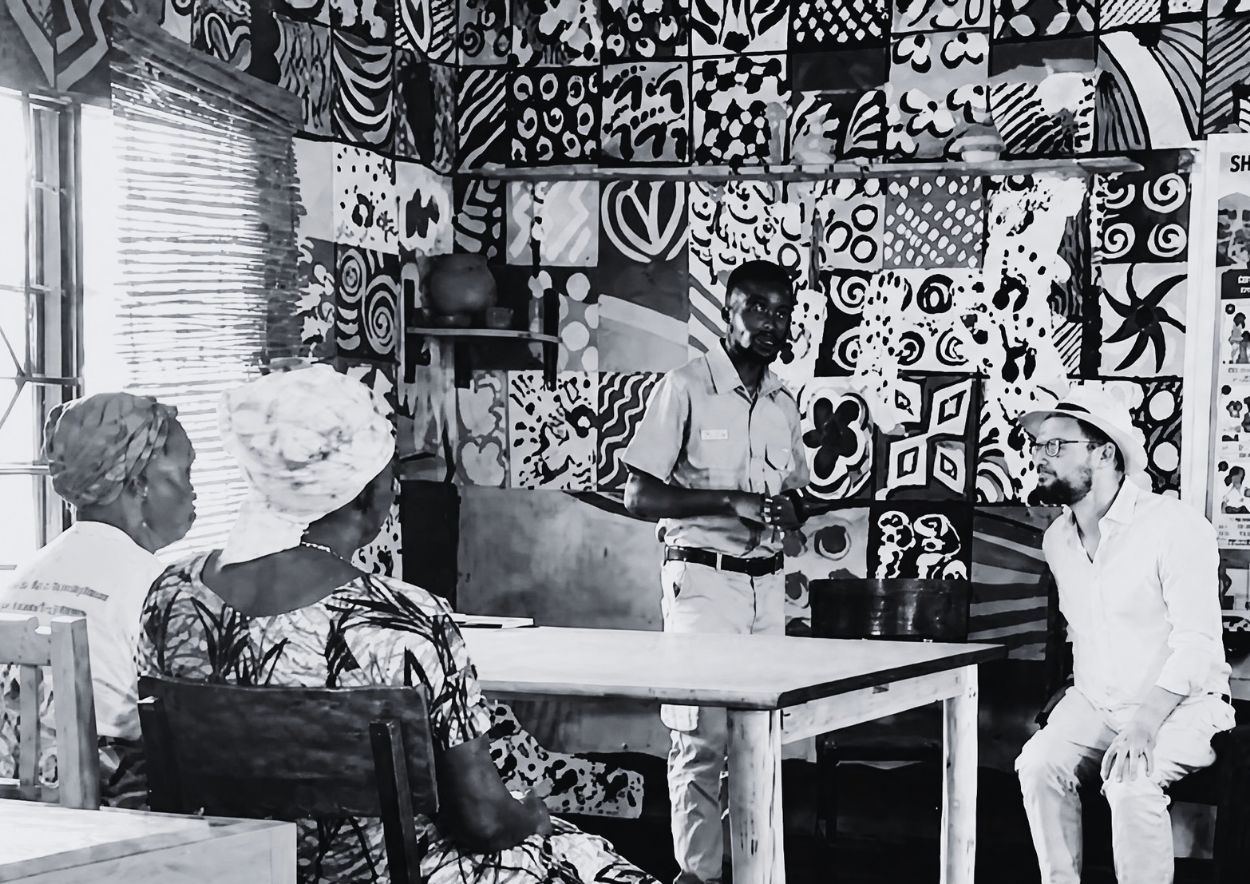
Mark chatting to community members in the Red Rocks centre.
By Mark Goldstone*
Ochre burnt-orange dust, which for convenience we call red, covers both the outside and the inside of my 4×4. Everything is a hill in Rwanda, and my trip today takes me up a thousand hills and down a thousand more. Power takes me up and gravity takes me down like a marble in a marble run.
My destination is the Red Rocks Intercultural Exchange Centre in Rwanda’s highlands outside the city of Musanze. The journey is hard and I arrive tired and dusty, but within five minutes every member of staff knows my name. This is the kind of welcome you can expect at Red Rocks, a community-based initiative working with communities living alongside protected areas and important natural ecosystems that has received one of HERITΛGE’s small grants for African projects and is also the recipient of another grant, fiscally sponsored by HERITΛGE.
The Musanze project combines accommodation with a cultural centre where local people ply traditional crafts, selling their wares in the onsite shop. There is basket weaving, a traditional kitchen serving vegetables grown in the onsite garden. Drums beat the dusk, reminding us that the end of the day is near.
Proofing dough takes patience, you just have to wait till the right texture is achieved; in the Red Rocks kitchen they make everything fresh so some waiting is worthwhile. The Chef comes out to greet me in person and enquires about my tastes. Needless to say, he already knows my name. An hour later the freshly made samosas arrive hot from the kitchen. Too hot to touch, more patience required but eventually the spicy samosas taste of smiles. Love hides in the corners of the food. Love of the craft of cookery, love of the ability to sustain and entertain at once. A cold beer dances with the chilli heat and sleep will not be long.
The next day is the opening ceremony of the Red Rocks Cultural Festival 2026. Many members of the local community leaders have gathered to kick off a week of celebration and dialogue. Much has already been achieved, but that just proves the potential of the Red Rocks approach, marrying community development with sustainable tourism.
As I am here representing HERITΛGE, I am asked for some words. I talk about the 115 heritage projects in 35 African countries that have received small grants through the HerMaP Africa initiative* the Organization’s approach of supporting local action whilst situating the projects within global fellowship networks. I reflect on Rwanda’s extraordinary 9.2% growth in GDP, a young, increasingly educated population and the investment that is flowing into both tourism and the new knowledge economies. Rwanda punches above its weight class for a small nation in the hills.
Lastly I conclude, “Good leaders get things done, great leaders create platforms for other leaders to emerge.” This is what I learn at Red Rocks, a platform in which leadership from the community is able drive change in a sustainable way. Red Rocks founder Greg still has many ambitions for the future.
As I am preparing to leave I hear that the chef has been in an accident with a motorbike. Only once returned to Kigali do I hear the tragic news that our chef did not survive his injuries. This article is dedicated to the memory of Twizeyimana Faustin. Our thoughts and prayers are with his friends and family.
* Mark Goldstone has researched and written HERITΛGE’s forthcoming publication showcasing projects supported through its grant programmes across Africa. This reflection emerged from his visit to Red Rocks Rwanda, one of the organisations featured in the publication.
**Through HerMaP Africa, HERITΛGE has provided 74 small grants for African heritage project and acted as a fiscal sponsor for another 29.
*** HERITΛGE signed an MoU with Red Rocks Rwanda in 2024 and is currently supporting two of the organization’s heritage projects.
10 proyectos de patrimonio del norte de México reciben apoyos
The Heritage Management Organization (HERITΛGE) se complace en anunciar los 10 proyectos seleccionados para recibir apoyo a través de HerMaP México, su principal iniciativa para fortalecer la gestión del patrimonio cultural en la región fronteriza del norte de México.
Los proyectos seleccionados representan a Baja California, Sonora, Chihuahua, Coahuila, Nuevo León y Tamaulipas, garantizando así la representación de los seis estados que conforman el ámbito geográfico de HerMaP México en esta primera convocatoria de apoyos.
Los proyectos fueron seleccionados entre 115 solicitudes recibidas a través de una convocatoria abierta lanzada a principios de 2026, reflejando tanto la extraordinaria riqueza del patrimonio cultural de la región como el compromiso de las comunidades, profesionales e instituciones que trabajan para salvaguardarlo.
Diez proyectos, múltiples expresiones del patrimonio
Las iniciativas seleccionadas ofrecen una ventana a la extraordinaria diversidad del norte de México. Abarcan desde técnicas agrícolas tradicionales y tradiciones gastronómicas hasta artesanías, música, sitios de memoria, museos y documentación fotográfica del patrimonio cultural inmaterial. Se desarrollan en paisajes igualmente diversos, que van desde las costas y los extensos desiertos hasta regiones montañosas y complejos entornos urbanos.
Igualmente importante es la diversidad de las personas y organizaciones que están detrás de estos proyectos y que trabajan por la salvaguardia del patrimonio en toda la región. Entre los beneficiarios se encuentran personas y comunidades indígenas, iniciativas comunitarias y asociaciones, profesionales independientes e instituciones públicas. Algunos proyectos se desarrollan en pequeñas comunidades, mientras que otros tienen el potencial de generar impacto a nivel estatal. Varios involucran a jóvenes, fomentan el diálogo intergeneracional y crean oportunidades para transmitir conocimientos y saberes de una generación a otra.
“Estos diez proyectos nos muestran lo que realmente significa el patrimonio cuando miramos más allá de monumentos o colecciones individuales: es conocimiento, memoria, habilidades, paisajes y prácticas profundamente arraigadas en la vida de las personas”, señaló el Dr. Evangelos Kyriakidis, Director de The Heritage Management Organization. “Nuestro objetivo no es simplemente proporcionar financiamiento. Queremos ofrecer a las personas y organizaciones con buenas ideas los recursos, las capacidades y las conexiones que necesitan para convertirlas en iniciativas sostenibles que generen beneficios duraderos para sus comunidades”.
El proceso de selección, que se desarrolló en cuatro etapas, fue diseñado no solo para identificar propuestas sólidas, sino también para ayudar a las personas y organizaciones participantes a fortalecer sus capacidades en gestión de proyectos.
Durante los próximos meses, HERITΛGE acompañará a los equipos seleccionados durante la implementación de sus proyectos. Asimismo, se organizarán actividades de creación de redes e intercambio de conocimientos que conectarán a los beneficiarios entre sí, generando oportunidades para compartir experiencias, desafíos y buenas prácticas entre distintos estados y sectores.
La aspiración es que el impacto vaya mucho más allá de estos 10 proyectos. Al reunir a personas con diferentes conocimientos, experiencias y enfoques sobre el patrimonio, HerMaP México busca contribuir a la creación de una red regional más sólida, capaz de impulsar la colaboración y la innovación mucho después de que los proyectos individuales hayan concluido.
Las iniciativas seleccionadas también contribuirán a acercar la diversidad del patrimonio del norte de México a un público internacional más amplio.
Lista de proyectos que han recibido apoyos
| Estado | Proyecto | Organización |
| Baja California | Bosque de los Attenuatas: infraestructura turística comunitaria y centro cultural de encuentro | Bosque de los Attenuatas – Ejido Adolfo Ruiz Cortines |
| Baja California | Caminos en común: Sendero interpretativo del Cañón de los Sauces | Promotora de las Bellas Artes A.C. |
| Chihuahua | Fotoperiódico Revelado | Colectivo Latente |
| Chihuahua | Los colores del desierto: recuperación y transmisión de la tradición de los cubrecamas de retazos del Desierto de Chihuahua | Umbral, Construyendo Comunidad A.C. |
| Coahuila | Saberes de la tierra: Cocina tradicional y educación biocultural | El Fogón de Nacimiento |
| Coahuila | Conservación y restauración de la cubierta del Chalet Wong Lim, actual Museo de la Revolución de Torreón – Primera fase de intervención | Secretaría de Cultura del Gobierno del Estado de Coahuila de Zaragoza |
| Nuevo León | Los colores del noreste | Restāurika |
| Sonora | Ecosistema Sonoro Comunitario e Interactivo del Pueblo Mayo | Centro para el Fortalecimiento Cultural Comunitario y Pueblos Originarios |
| Tamaulipas | Guardianes del Patrimonio de Tamaulipas | Tamaholipa Nuestra A.C. |
| Chihuahua | Preservación y transmisión del patrimonio cultural de la Sierra Tarahumara: semillas nativas y alfarería tradicional | Napawika Tibupo Kawi, A.C. (NATIKA) |
Ten Heritage Projects in N. Mexico Receive Funding
The Heritage Management Organization (HERITΛGE) is delighted to announce the 10 projects selected to receive funding through HerMaP Mexico, its major initiative to strengthen cultural heritage management across Mexico’s northern border region.
The selected projects represent Baja California, Sonora, Chihuahua, Coahuila, Nuevo León and Tamaulipas, ensuring that all six states within HerMaP Mexico’s geographic scope are represented in this first round of funding.
The projects were chosen from 115 applications submitted through an open call launched in early 2026, demonstrating both the extraordinary richness of the region’s cultural heritage and the commitment of communities, practitioners and institutions working to safeguard it.
Ten projects, many different expressions of heritage
The selected initiatives offer a window onto the remarkable diversity of northern Mexico. They encompass heritage ranging from traditional farming techniques and gastronomic traditions to crafts, music, memorial sites, museums and the photographic documentation of intangible cultural heritage. They are rooted in landscapes that stretch from ocean coasts and vast deserts to mountain regions and complex urban environments.
Just as importantly, the people behind them reflect the diversity of those caring for heritage across the region. The successful applicants include Indigenous individuals and communities, grassroots and community-based initiatives, independent practitioners and public institutions Some projects operate within small communities, while others have the potential to create impact at state level. Several engage young people, foster intergenerational dialogue and create opportunities for knowledge to be passed between generations.
“These ten projects show us what heritage really means when we look beyond individual monuments or collections: it is knowledge, memory, skills, landscapes and practices that are embedded in people’s lives,” said Dr Evangelos Kyriakidis, Director of The Heritage Management Organization. “Our aim is not simply to provide funding. We want to give people and organizations with strong ideas the resources, skills and connections they need to turn those ideas into sustainable initiatives with lasting benefits for their communities.”
The selection process -that unfolded in four stages- was designed not only to identify strong proposals but also to help applicants develop their project-management skills. Over the coming months, HERITΛGE will work alongside the selected teams as they implement their projects. Networking and knowledge-sharing activities will also connect grantees with one another, creating opportunities to exchange experience, challenges and good practices across state and sector boundaries.
The ambition is that the impact will extend well beyond the 10 individual projects. By bringing together people with different expertise, lived experiences and approaches to heritage, HerMaP Mexico aims to help create a stronger regional network capable of supporting collaboration and innovation long after the individual projects have concluded. The selected initiatives will also help bring the diverse heritage of northern Mexico to a wider international audience.
List of awarded projects
| State | Project | Organization |
|---|---|---|
| Baja California | Bosque de los Attenuatas: Community Tourism Infrastructure and Cultural Meeting Center | Bosque de los Attenuatas – Ejido Adolfo Ruiz Cortines |
| Baja California | Paths in Common: Cañón de los Sauces Interpretive Trail | Promotora de las Bellas Artes A.C. |
| Chihuahua | Fotoperiódico Revelado | Colectivo Latente |
| Chihuahua | Colors of the Desert: Reviving and Transmitting the Patchwork Bedspread Tradition of the Chihuahua Desert | Umbral, Construyendo Comunidad A.C. |
| Coahuila | Knowledge of the Land: Traditional Cuisine and Biocultural Education | El Fogón de Nacimiento |
| Coahuila | Conservation and Restoration of the Roof of Chalet Wong Lim, Home of the Museum of the Revolution of Torreón – Phase I | Secretaría de Cultura del Gobierno del Estado de Coahuila de Zaragoza |
| Nuevo León | The Colors of the Northeast | Restāurika |
| Sonora | Community and Interactive Sound Ecosystem of the Mayo People | Centro para el Fortalecimiento Cultural Comunitario y Pueblos Originarios |
| Tamaulipas | Guardians of the Heritage of Tamaulipas | Tamaholipa Nuestra A.C. |
| Chihuahua | Preservation and Transmission of the Cultural Heritage of the Sierra Tarahumara: Native Seeds and Traditional Pottery | Napawika Tibupo Kawi, A.C. (NATIKA) |
HerMaP Mexico project gains momentum
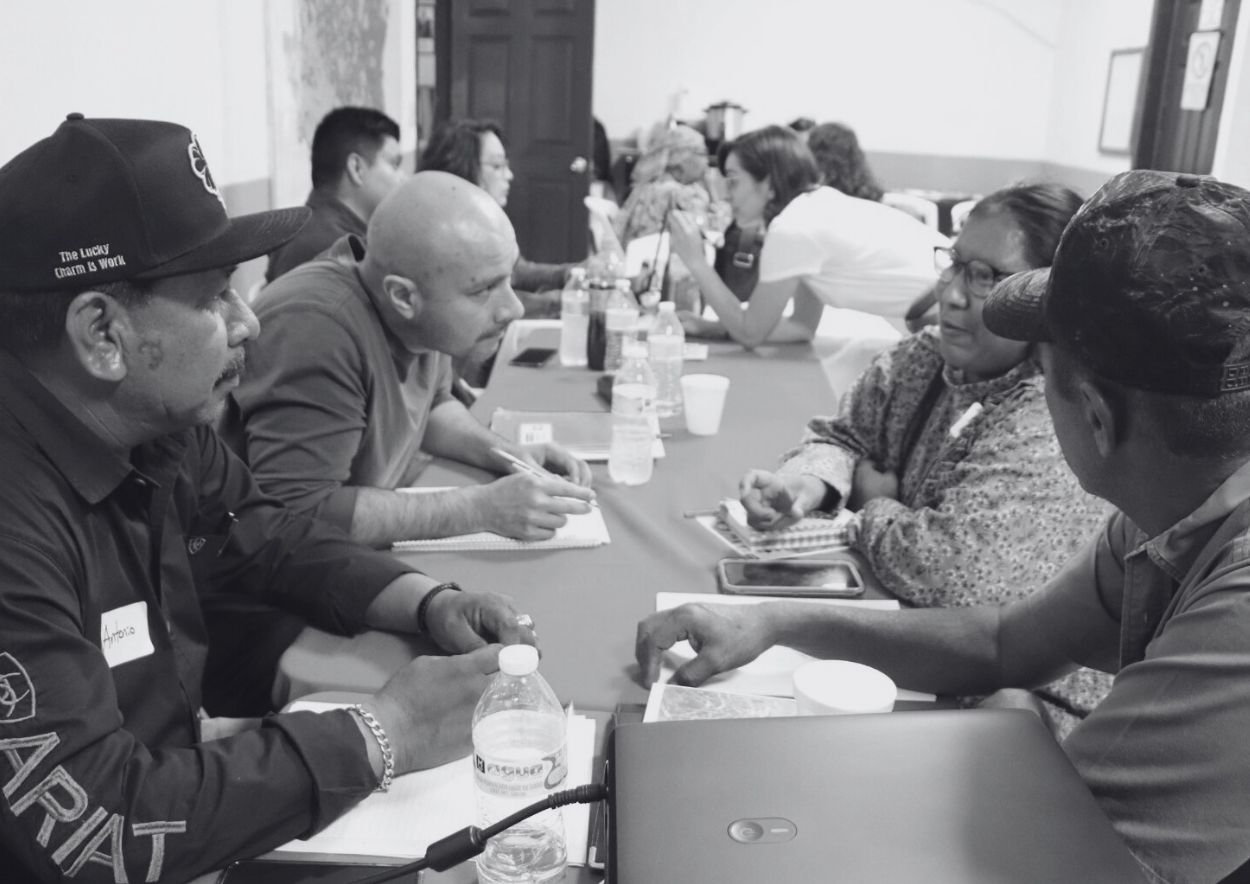
An oral history and heritage workshop
HerMaP Mexico, HERIΤΛGE’s major initiative to support cultural heritage in Mexico’s northern border states is now in full motion. After crossing the six-month mark of the project, we carried out an intensive, month-long field visit across four states of Mexico’s northern border: Chihuahua, Coahuila, Nuevo León, and Tamaulipas. This on-site engagement allowed us to strengthen partnerships, deliver specialized training, and continue mapping capacity needs across the region.
Throughout the visit, we engaged with a wide range of stakeholders who have been progressively involved in the project. These included representatives from local and federal government bodies, universities, key institutional partners such as the U.S. Consulate in Monterrey, and, crucially, community-led initiatives and associations working on the ground to safeguard heritage.
At this stage of the project, the numbers reflect the momentum and progress achieved so far, as well as the strong interest and commitment of heritage professionals and practitioners in northern Mexico:
- Two workshops on Oral History and Heritage have been delivered
- 40 professionals have been trained
- One formal collaboration agreement has been signed
- Two radio programs have been recorded
- Three talks were delivered to university students in tourism, arts, and social project management in the “Heritage Days” Program of Universidad Autónoma de Baja California (UABC)
- More than 50 students have been reached through these talks
- One heritage community networking workshop was conducted
- 80+ applications have been received for the grants program
- 100 stakeholders have been mapped through the ongoing mapping process
Beyond these quantitative results, we have witnessed a deep and inspiring commitment across all sectors to the safeguarding, promotion, and sustainable use of local heritage as a driver for development.
The northern border of Mexico is extraordinarily rich and diverse. Its heritage spans marine and coastal landscapes, vast desert and sierra ecosystems, and vibrant cultural expressions rooted in centuries-old traditions. This diversity also includes significant industrial heritage: factories, railways, mining sites, and infrastructure that tell the story of the region’s economic and social transformations. Together, these tangible and intangible elements form a complex and layered cultural landscape.
Through our conversations with heritage practitioners, community leaders, and institutional actors, we have gained a deeper understanding not only of this richness, but also of the challenges that shape the region today. These include issues of preservation, resource allocation, security and the need to balance development with the protection of cultural identity.
We are excited to continue building on the strong collaborations established during this first phase. We remain deeply grateful for the generosity, hospitality, and openness we have encountered, which have been instrumental in reaching these important milestones.
In the coming months, we will expand our activities with a new series of online trainings focused on community engagement and economic development, tailored specifically to the context of the six northern border states and delivered in Spanish.
New grants initiative for northern Mexico
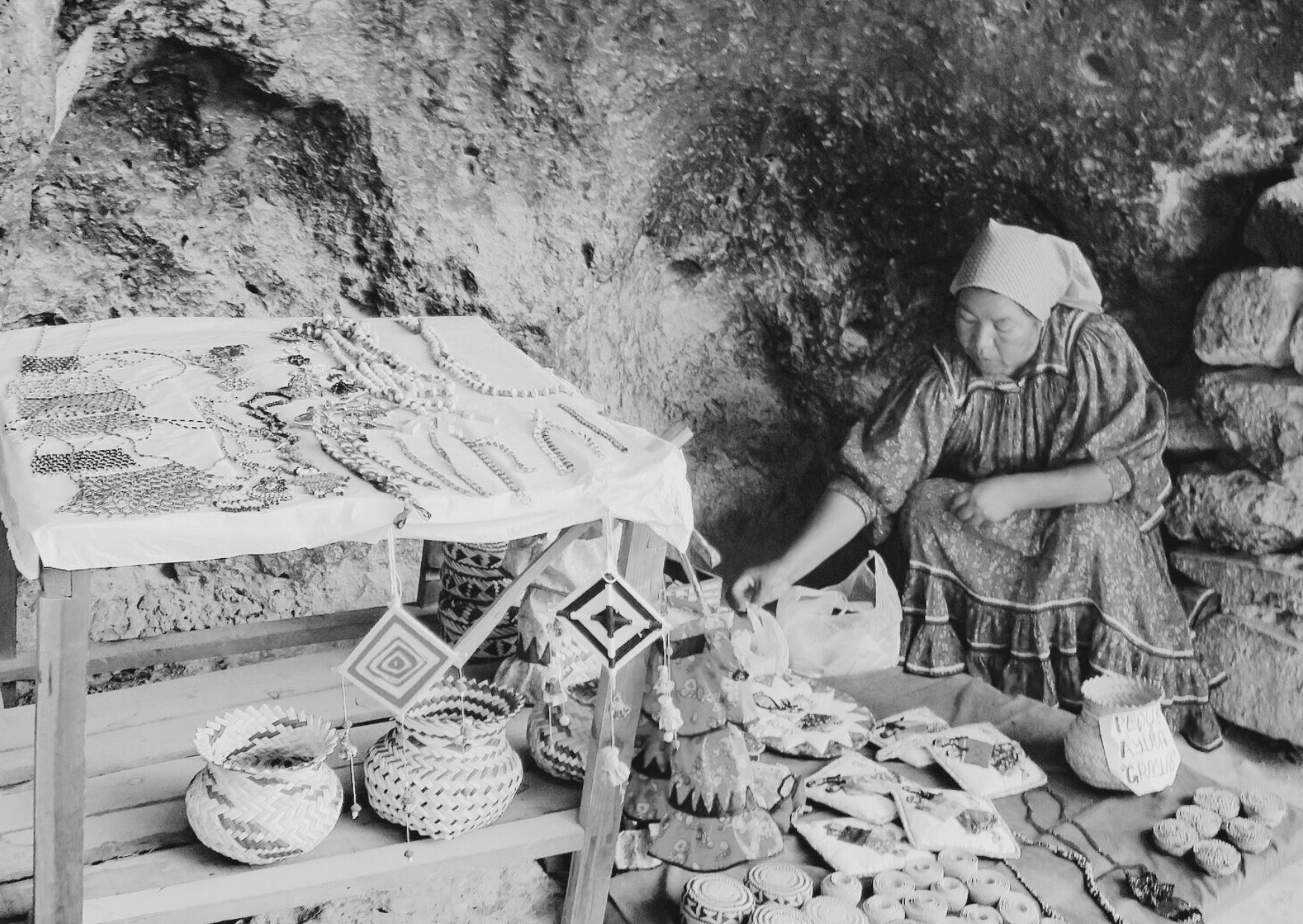 We are very happy to announce a brand new call for grants for heritage projects in Mexico. Our new call for proposals is aimed at organizations, groups, and individuals working with cultural heritage in northern Mexico, in the states of Baja California, Chihuahua, Coahuila, Nuevo Leon, Sonora and Tamaulipas. HERITΛGE will offer grants ranging from USD 10,000 to USD 50,000 per project.
The grants are part of the HerMaP-Mexico, an initiative to strengthen cultural heritage management and networks in northern Mexico. They will fund projects that focus on the protection of and/or promotion of local heritage for socio-economic development across the Mexico’s six northern border states.
All projects must clearly focus on the protection, safeguarding, strengthening, and/or promotion of local heritage, from approaches that recognize its cultural, social, and community value.
There are three main criteria for selecting proposals under this program:
- Sustainability- Priority will be given to projects that generate a lasting impact and whose positive effects extend beyond the support period.
- Capacity building and network strengthening – Projects that contribute to strengthening local capacities and establishing or consolidating links with similar organizations within heritage management networks will be encouraged.
- Concrete and Community Impact – Priority will be given to proposals that present clear, measurable, and verifiable results in terms of heritage protection and direct benefits for local communities. Each project must define specific indicators of the expected impact.
This call for proposals is the first phase of the selection process. Following an initial review, the shortlisted projects will be invited to submit an expanded and more detailed proposal. These complete proposals will be evaluated by the HerMaP Mexico program’s Support Committee.
The deadline for submitting proposals for this first phase is April 15, 2026. The final selection of supported projects will be announced no later than July 2026.
Sixth Online Networking Convening of Africa Grantees
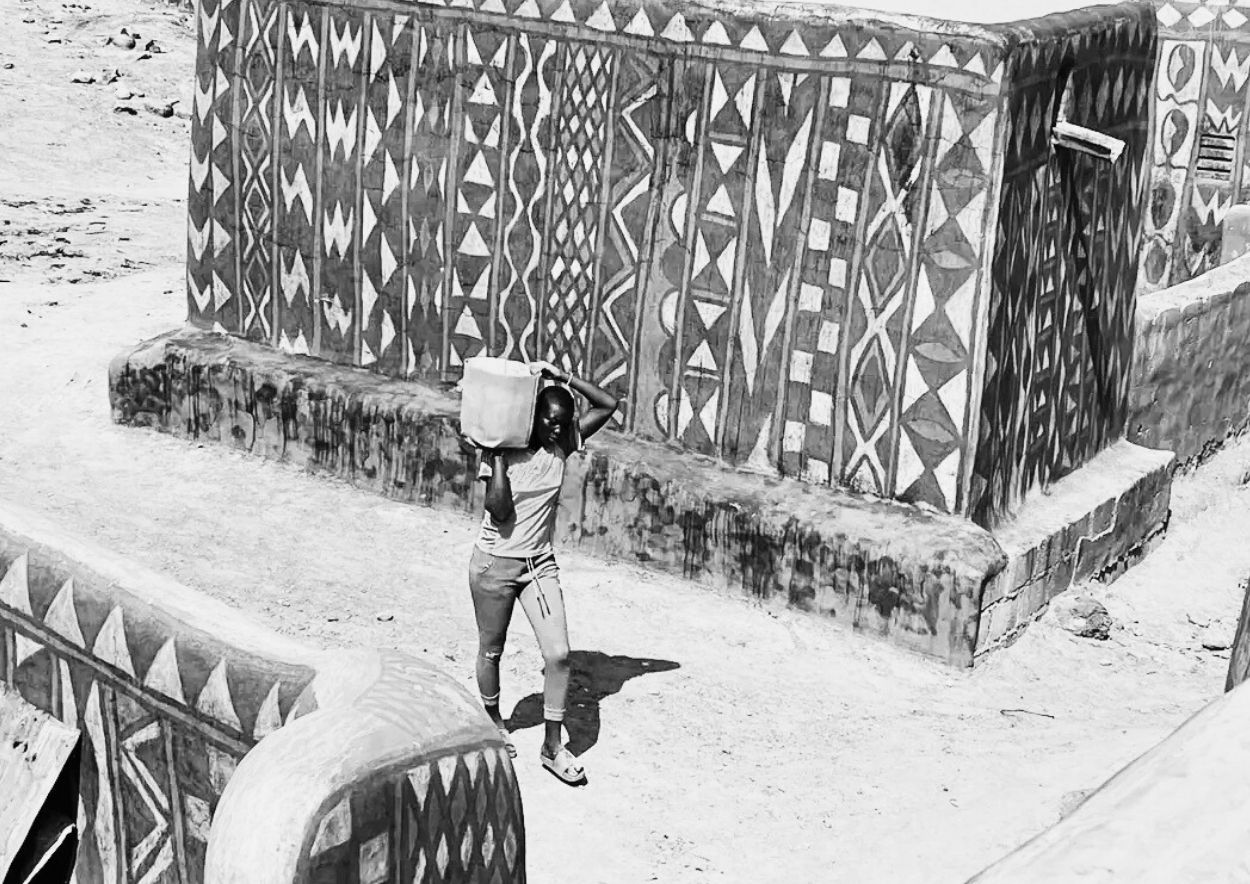
On 10 December 2025, the HERITΛGE Africa Grants Team held the sixth online networking convening for grantees awarded in 2024. The meeting brought together grantees, HERITΛGE staff, members of the Re-granting Committee, representatives of the Mellon Foundation, and other African donors, with 45 attendees. After welcoming remarks by Richard A. Brown, seven grantees shared their projects. These ranged from documenting traditional boat-making in Mauritius and supporting cultural teaching in Senegal to safeguarding heritage industries in Sudan and revitalising museums in Chad and Ghana.
“Hearing the diverse experiences of colleagues across Africa reminded me that we are part of a wider heritage community, facing similar challenges, but also drawing inspiration and new ideas from one another.”
After the presentations, grantees’ refelcted on presenting their work and learning from one another. Participants discussed how the experience of sharing their projects encouraged them to reconsider elements of documentation, community engagement, and youth involvement in heritage work. Several grantees noted that hearing from others sparked new thinking about how to approach their own initiatives and opened possibilities for collaboration across contexts.
The sixth convening highlighted the strength of these gatherings in creating a space for peer learning, shared reflection, and mutual support, reinforcing HERITΛGE’s commitment to fostering heritage initiatives across Africa.
The participants and projects featured were:
-
Dr. Jayshree Mungur-Medhi, Mauritius: ‘Living the Heritage in Vieux Grand Port – Documentation and Transmission of Traditional Boat Making’
-
Abdoulaye Diao Noumounthi, Senegal: ‘ElleSolaire Cultural Academy’
-
Dr. Gafar Ali Fadol Ibrahim, Sudan: ‘Safeguarding Living Cultural Heritage in the Sudan at the Time of Conflict: Documentation of Cultural Industries (Pottery and Basketry) of Sinkat Locality in the Red Sea State’
-
Yaw Mankatah Asare, Ghana: ‘Abibikwantuo (AK) Indigenous Sustainability Hub’
-
Ngague Gaga Taguimbi, Chad (presenting on behalf of Ganda Bini Djabou): ‘Restoration and revitalization of the Sarh Museum’
-
Prof. Pastory Magayane Bushozi, Tanzania: ‘Conservation and Promotion of Cultural Sites in the Eyasi Basin, Tanzania’
-
Isaak Aduko, Ghana: ‘Protection, preservation and promotion of Fort Fredericksburg’
This was the sixth out of six planned events aimed at showcasing projects funded through our Small Grants for African Heritage Projects initiative, made possible through generous funding by the Mellon Foundation. 75 projects have received around $1 million in funding. You can read more about the specific projects on our Africa Grants page.