
Tag Archives: opinion
Museum As a Space for Healing? Towards Reparative Discomfort.
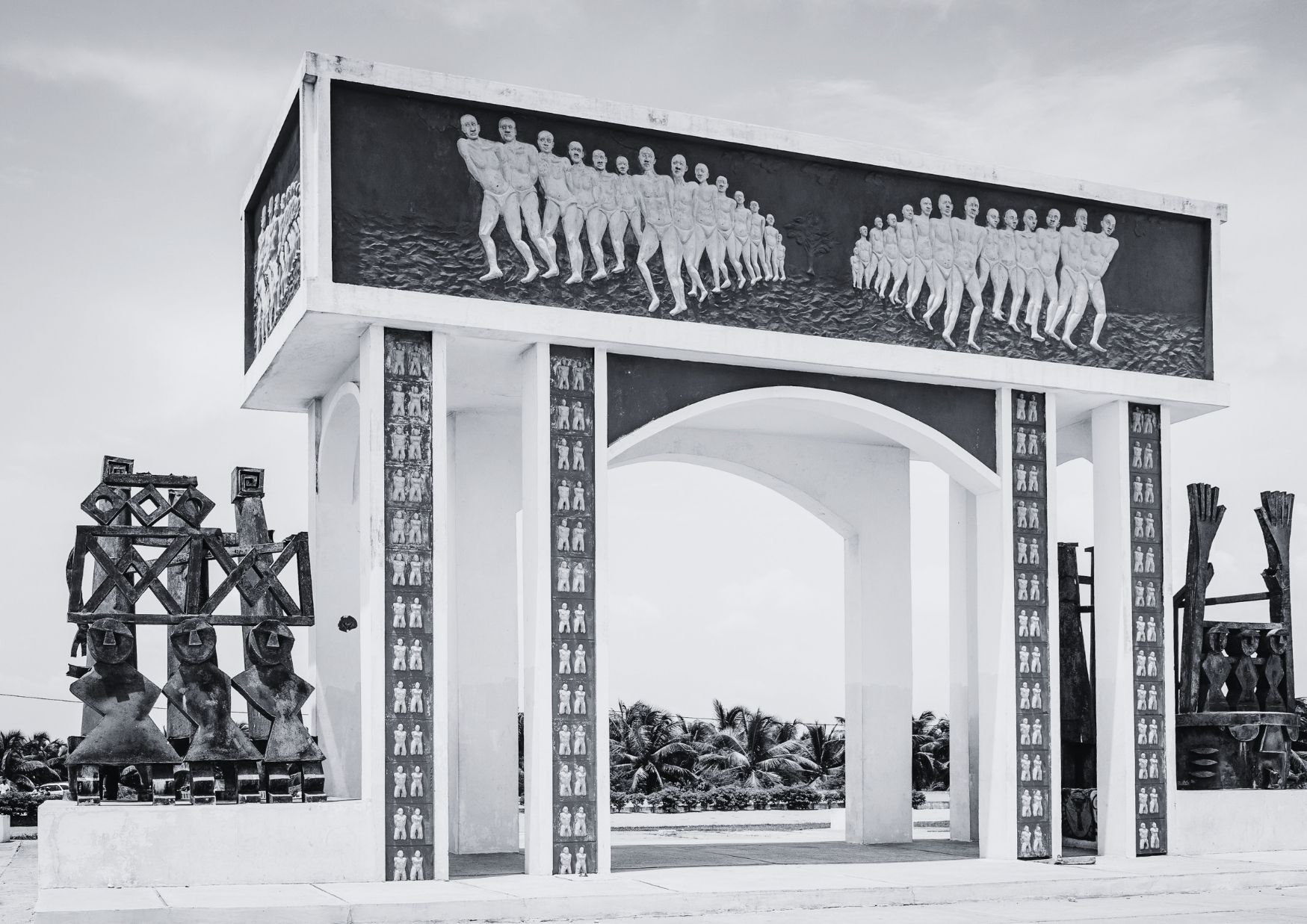
The Gate of No Return in Ouidah, Benin, commemorating the millions of enslaved Africans
The museum has long been imagined as a place of preservation, education, and in recent times healing. Yet I wonder whether healing has become one of the most convenient metaphors through which museums avoid the harder work of confronting history. I have been contemplating on this question a lot lately, which is, if the museum heals too quickly, what kinds of wounds does it leave untouched?
I recently participated in a webinar put together by the Europeana Network Association Communicators Community titled Decolonising Museum Practices: Collections, Interpretation and the Invisible. During the discussion, the host, HERITΛGE’s Maria Kagkelidou asked how museums might present painful narratives while remaining sensitive to audiences. My response was that it appears we have become too eager to sanitise the past to tidy history into something consumable and morally resolved. I further suggested that we sometimes need to sit with discomfort, relaying my intervention with Donna Haraway’s (2016) invitation to stay with the trouble(1). My answer gestured towards the fact that difficult histories should not always be resolved but should sometimes remain difficult because the past itself has not been resolved.
Difficult histories should not always be resolved but should sometimes remain difficult because the past itself has not been resolved.
My co-panellist, Peter Jegede, offered a different perspective. He argued that there are ways to address difficult histories without reopening old wounds. He noted that the museum ought to be a place of healing. It was a compelling position, and the conversation ended there.
Days later, while scrolling through social media, I came across a short video featuring the Vietnamese-American poet Ocean Vuong. He was reflecting on the distinction between writing violence and writing trauma. Although the clip was brief, Vuong suggested that trauma can sometimes become an easier narrative because it names the aftermath without requiring us to remain with the structures that produced it. He spoke further and made an illustration through the image of excavation. He noted that anytime you dig, you find some bones, and the question is who was it, how did that happened and what happens now. This metaphor brought me back to the earlier conversation about museums being a place of healing.
I very much like Vough’s metaphor and want to stretch it to the webinar conversation. I want to suggest that the museum should be less concerned with covering wounds than with excavating them. The museum should rid itself from what seems to be the endless performance of guilt and spectacle. Within the workings of the museum, there should be an understanding or a recognition, that every collection is already an excavation. This is to say, that display case or ethnographic label sits upon histories of movement, extraction, violence, and asymmetry of power. The museum therefore is full of bones, literally and metaphorically. The various human remains, sacred objects, looted artworks, displaced archives, interrupted cosmologies, stolen futures are embedded within in the museum’s make-up. To curate is therefore to decide which histories become visible or disappear into storage.
To curate is therefore to decide which histories become visible or disappear into storage.
Scholars such as Ariella Aïsha Azoulay (2019) have argued that the modern museum is inseparable from imperial world-making(2). For her, museums do more than just simply collect the world. Museums actively participate in producing a world in which colonial conquest appear natural, ownership is regarded as legal, and dispossession is seen as heritage. In Potential History, Azoulay challenges us to refuse the museum’s claim that colonial violence belongs safely to the past. The objects behind glass remain evidence of relationships that have never been repaired and their presence continually implicates the present.
This critique is hardly new, scholars like Tony Bennett (1995) have demonstrated how museums emerged as technologies for producing disciplined citizens(3). Annie Coombes (1994) has also showed how imperial museums helped normalised colonial authority by transforming conquest into culture(4). Similarly, James Clifford (1997) has reminded us that museums are “contact zones” where unequal encounters continue to open up(5).
Also, Løgstrup’s (2021) proposition of the museum as a conflict zone challenges the desire to move too quickly toward healing(6). If conflict is inherited within the museum itself, then difficult histories cannot simply be treated as wounds that need closure. Instead, museums must create conditions where these tensions can remain visible and productive.
More recently, Dan Hicks (2020) has argued that ethnographic collections are the material residue of colonial violence(7). This is to say, to display them without confronting the violence that enabled their acquisition is itself a political act. So, if these scholars are correct, then the question is no longer whether museums should heal rather the question becomes, heal whom?
We cannot speak of healing without asking whose pain is recognised and whose is ignored. If we do so, we risk reproducing the very inequalities museums now seek to overcome.
Healing in any stage or state is never politically innocent. We cannot speak of healing without asking whose pain is recognised and whose is ignored. If we do so, we risk reproducing the very inequalities museums now seek to overcome. For instance, for descendants of colonial powers, healing may mean reconciliation with an uncomfortable national past. For communities whose ancestors were dispossessed, healing may require acknowledgement, restitution, repatriation, or even the refusal of museum ownership altogether. I must emphasise that what feels like closure for one community may feel like erasure for another.
This is why I remain uneasy whenever museums speak too confidently about healing. Healing often assumes that the wound has been properly diagnosed but what if the wound has barely been named? Perhaps what museums need is not therapeutic certainty but something that may look like ethical uncertainty.
This is where Haraway’s notion of staying with the trouble becomes productive. Staying with trouble does not mean celebrating conflict or refusing repair. It means resisting the temptation of premature resolution and sometimes allowing exhibitions to remain unresolved enough that visitors leave carrying questions rather than comforting answers.
The museum, then, becomes less a sanctuary than an ongoing excavation. Ocean Vuong’s metaphor of digging which I mentioned earlier captures this beautifully. Digging inevitably exposes bones and once they are out, we face an ethical decision. We can quickly rebury them and preserve institutional comfort or we can place them behind glass as objects of detached curiosity. In a more difficult sense, we can ask challenging questions like who lived, who died, who profited, who remembers, who forgot and what responsibilities emerge now that we know. Alternatively we could also ask what should we do with the information like Seth Avusuglo once told me that one of the Black Atlantic Residents asked after watching Johan Grimonprez’s Soundtrack to a Coup d’Etat (8).
These questions extend beyond human remains and apply equally to looted bronzes, sacred masks, colonial photographs, linguistic archives, botanical collections, and scientific specimens. Every object carries multiple lives, and every exhibition chooses which life to narrate. Perhaps the most important question is whose sensibilities museums are so anxious to protect and not offend. When institutions speak of avoiding offence, they rarely ask whose comfort has historically structured the museum in the first place. Sanitisation thus become a politics of selective forgetting.
Museums should certainly aspire toward healing but that healing should not arrive through simplification or carefully managed discomfort. They should instead cultivate what could be called reparative discomfort or to put it differently a willingness to remain with histories that continue to demand accountability and imagination. Perhaps this is how healing begins; by refusing to pretend it has already healed.
* Kwame Boafo is a scholar and artist from Accra, Ghana, exploring how ritual, religion, embodied knowledge and African cultural expression intersect.
** The views and opinions expressed in Opinion Pieces featured on the HERITΛGE website, including this article, are those of the author(s) and do not necessarily reflect the official position of the Heritage Management Organization (HERITΛGE), its partners, or affiliated institutions.
Footnotes:
- Haraway, D. J. (2016). Staying with the Trouble: Making Kin in the Chthulucene. Duke University Press.
- Azoulay, A. A. (2019). Potential History: Unlearning Imperialism. Verso.
- Bennett, T. (2009). The Birth of the Museum: History, Theory, Politics (Reprinted). Routledge.
- Coombes, A. E. (with Internet Archive). (1994). Reinventing Africa: Museums, Material Culture, and Popular Imagination in Late Victorian and Edwardian England. New Haven ; London : Yale University Press. http://archive.org/details/reinventingafric0000coom
- Clifford, J. (1997). Routes: Travel and Translation in the Late Twentieth Century. Harvard Univ. Press.
- Clifford, J. (1997). Routes: Travel and Translation in the Late Twentieth Century. Harvard Univ. Press.
- Hicks, D. (2020). The Brutish Museums: the Benin Bronzes, Colonial Violence and Cultural Restitution. Pluto Press.
- Seth Avusuglo is the manager of the Library Of Africa and The African Diaspora (LOATAD), a decolonial library and cultural space in Accra, Ghana. As part of LOATAD’s programming, he curates films for the Black Atlantic Residents. Following a screening of Johan Grimonprez’s Soundtrack to a Coup d’Etat, one resident posed a question: “What should I do with this information?” The question captures the tension between encountering difficult historical knowledge and determining how such knowledge might be transformed into action or responsibility.