
Tag Archives: preseravation
Australian heritage: A letter from Bologna
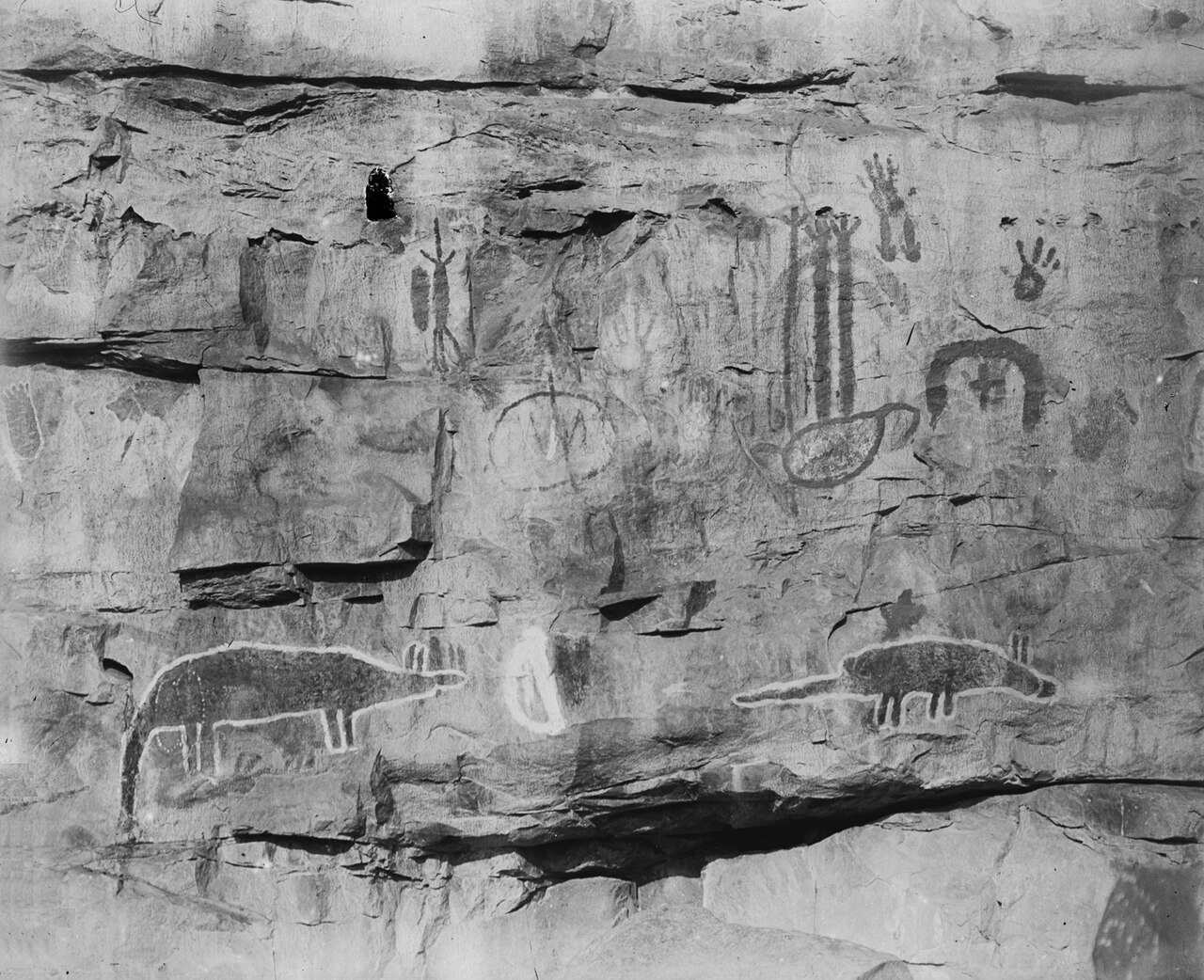
Aboriginal painting on rock surfaces. Photo: Herbert Basedow, Public domain. Source: National Museum of Australia via Wikimedia Commons
By Olivia Panetta*
In May 2020, Rio Tinto legally destroyed two rock shelters at Juukan Gorge in the Pilbara region. The shelters preserved evidence of approximately 46,000 years of occupation and held profound cultural significance for the Puutu Kunti Kurrama and Pinikura peoples. Australian legislation made this destruction entirely legal. It occurred specifically under ministerial consent granted through Western Australia’s Aboriginal Heritage Act 1972. That is perhaps the most disturbing part: a place of extraordinary cultural importance and memory could be recognised and recorded and still the law enabled a mining company more authority over the site than it gave the people to whom the place belonged. A parliamentary inquiry followed, recommending a national framework built on free, prior and informed consent. More than six years later, such reform has not yet been enacted.
From Bologna, where my love for history and aspirations as an archaeologist led me to a Master’s in cultural heritage, I find myself thinking of Juukan Gorge. Three years on, I have realised that being on the other side of the world has brought me closer to my Australian roots. When we think of Australia, we usually picture beautiful beaches, red desert landscapes, and modern city skylines. One of the most common things I have grown up hearing, and what I believe many people associate with Australia, is that it’s a ‘young country’, still finding its feet when compared with the thousands of years of civilisation that you’re exposed to daily when walking a single street in Italy.
Italy protects its material past with a kind of reverence that I rarely encountered growing up in Australia. The porticoes of Bologna, approximately 62 kilometres of them, with some dating to the 1100s, are protected in the face of modern planning. A statute written in 1288 helped establish this continuity, and the urban fabric of the Centro Storico is maintained today. In Rome, the single Metro Line C has taken more than twenty years because of funding, engineering, and bureaucracy, but also because Italian law requires anything that signals archaeological importance, which was the reality of the construction process, to be investigated before construction can continue. Two new ‘archaeostations’ opened in December 2025, displaying the archaeological structures and artefacts uncovered during construction so those on their daily commute can walk past, like an open museum. The Italian heritage system, of course, is far from flawless, but here the archaeological past repeatedly interrupts modern urban life, emerging beneath roads and railway stations, restricting what can be built and what’s remaining almost impossible to overlook. There is pride in preserving and displaying it.
Of course, the material visibility of Australia’s past is very different. Australia’s settler-built environment is comparatively young, while its much deeper Aboriginal and Torres Strait Islander history is embedded primarily in Country, in cultural landscapes, waterways, rock art, engineered environments and continuing knowledge. Indigenous culture is highly visible when reproduced through tourism, national imagery or commercial design, yet the Country from which it emerges has not always received the same public recognition or legal protection.
This contrast between the two countries and the way they treat heritage is glaring. Reflecting from my small apartment in Bologna’s Centro Storico, I found myself confronting something uncomfortable: Archaeological evidence places people on the Australian continent at least 65,000 years ago, while Aboriginal and Torres Strait Islander cultures remain living and continuous. So, the perception of Australia as a ‘young country’ comes directly from considering its colonial past, yet why does this description remain so familiar?
For a sector like ours, the glaring difference between Italy’s near-religious preservation efforts and Australia’s gap between recommendation and reform as evidenced in the aftermath of the Juukan Gorge loss, mean there is a staggering amount of practical work still ahead for Australia. Legal protection has to mean decision-making authority, not just consultation. Western Australia briefly strengthened its cultural heritage laws, only to repeal them weeks later and return to the amended 1972 Act.
But, there are still some reasons for hope. Last July, UNESCO inscribed the Murujuga Cultural Landscape on the World Heritage List after decades of a campaign led by its Traditional Custodians. The land and seascape contain an estimated one to two million petroglyphs and record approximately 50,000 years of Ngarda-Ngarli custodianship, creativity and adaptation.
At the same time, archaeologists are identifying entirely new rock art styles in the Kimberley, with divers finding tools preserved on the seabed off the Pilbara coast and cultural evidence underwater. This work demonstrates that the sector is capable of extraordinary work that is both interdisciplinary and community-led heritage, even within systems where meaningful protection has often required a prolonged struggle.
I don’t presume to speak for the Traditional Owners, whose authority over their heritage must remain central. But, from an ocean away and while studying heritage abroad, I can question the assumptions I brought with me and to write honestly about my own country’s oldest and most vulnerable heritage, contemplating what protecting it might actually look like. Australia’s heritage stretches far beyond the story suggested by the phrase “young country”. Protecting it requires us to recognise that depth—and to ensure that the people who have cared for Country across generations have meaningful authority over what happens to it now.
*Olivia Panetta is an Australian archeologist completing her Masters at the University of Bologna.