
Tag Archives: resilient heritage
HERITΛGE to Deliver the First Seasonal School of the Resilient Cultural Heritage Partnership
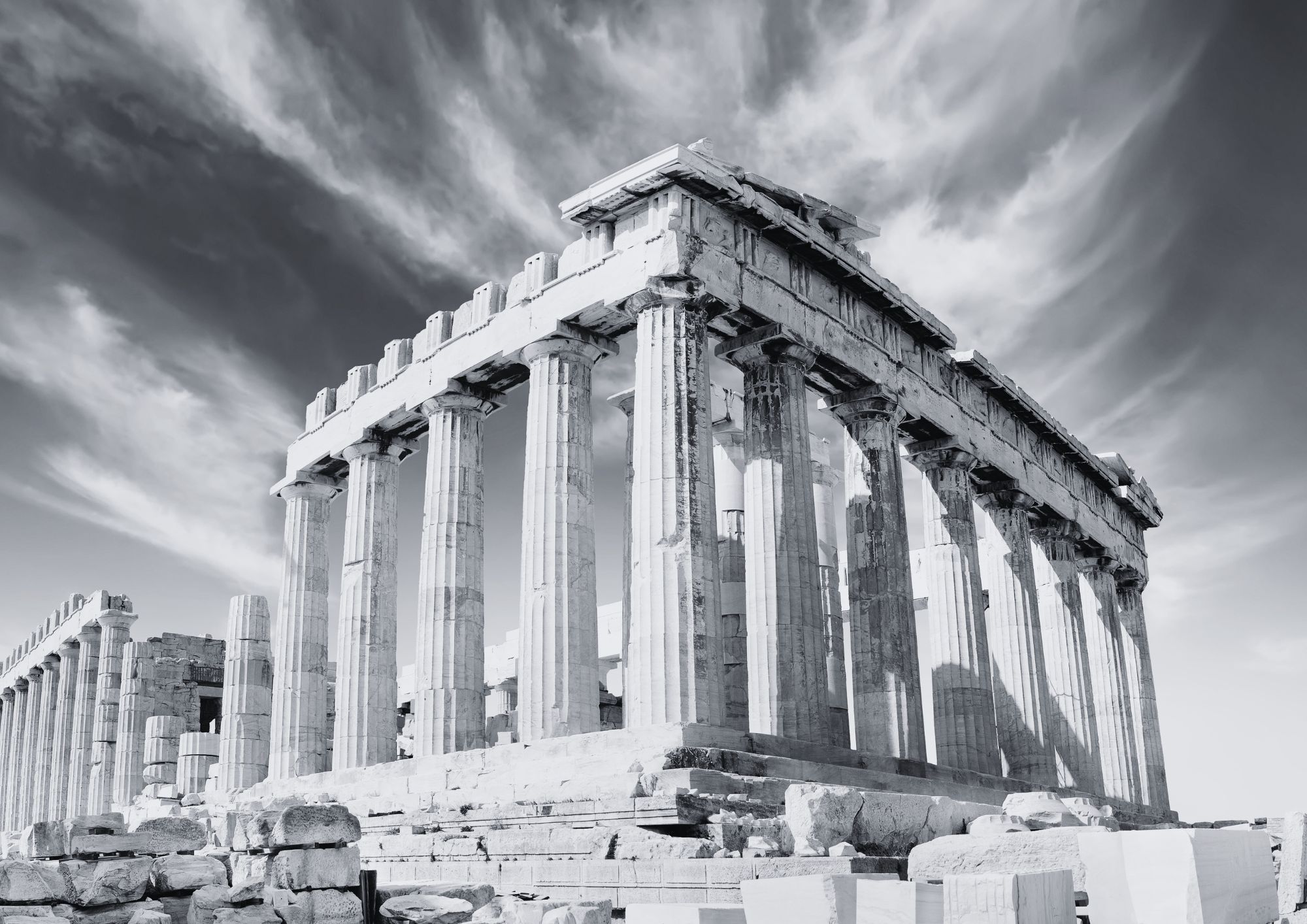
The Heritage Management Organization (HERITΛGE) is proud to announce that it will deliver the first capacity building activity of the European Partnership for Resilient Cultural Heritage (RCH)—a major new Horizon Europe-funded initiative bringing together 90 organisations from 30 countries to strengthen the resilience of cultural heritage in the face of climate change and explore heritage’s contribution to climate change adaptation.
As one of the Partnership’s flagship capacity-building initiatives, RCH will organise a series of seven international Seasonal Schools, each exploring a different dimension of climate resilience and equipping heritage professionals with the knowledge, skills and networks needed to respond to one of the defining challenges of our time.
HERITΛGE has been entrusted with delivering the inaugural programme, Heritage Adaptation to Climate Change, which will take place 5–15 October 2026 in Athens and online. The Seasonal School marks the beginning of an ambitious global training programme that combines scientific knowledge with practical, project-based learning to help heritage professionals develop effective adaptation strategies for the places, collections and communities they serve.
“Delivering the first RCH Seasonal School is both an honour and a responsibility, and we look forward to welcoming participants from across the globe to begin this exciting journey together,” Dr Evangelos Kyriakidis
The ten-day programme will bring together internationally recognised experts in heritage management, climate science and conservation. Rather than focusing solely on theory, participants will work throughout the School on a real project from their own professional practice, receiving personalised mentoring and expert guidance while developing practical adaptation strategies that can be implemented in their own organisations.
“For almost two decades, HERITΛGE has worked with heritage professionals around the world to build practical skills and lasting international networks. Delivering the first RCH Seasonal School is both an honour and a responsibility, and we look forward to welcoming participants from across Europe and beyond to begin this exciting journey together, said HERITΛGE Director, Dr. Evangelos Kyriakidis
More than a training course, the inaugural Climate School offers participants the opportunity to become part of the growing RCH community—an international network of researchers, practitioners, policymakers and cultural institutions committed to advancing resilient cultural heritage through collaboration, innovation and knowledge exchange.
Participation in the Seasonal School is free of charge.
In-person participation is limited to seconded experts but applications are now open for online participants. Find out more and apply here before September 15th.
We look forward to welcoming the first cohort of participants and launching this exciting new initiative together.
What Future for Sacred Places in the Age of Climate and Virtuality?
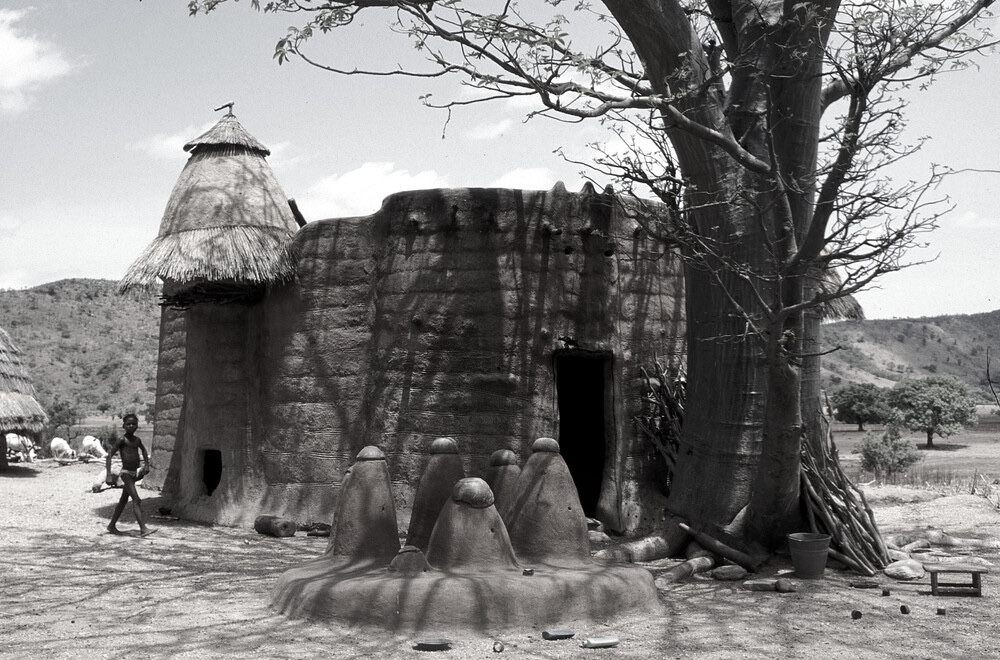
Copyright: CRA-terre Source: UNESCO
By Ibrahim Tchan,
Climate change does not only erode landscapes or materials. It threatens gestures, rituals, stories—what binds people to their territories, to their ancestors, to their sense of belonging. In the face of this, should we simply document, archive, observe the loss? Or should we begin to invent new forms of presence, capable of extending the breath of heritage where the ground becomes unstable, practices disperse, and memory fades?
This is exactly the path we are currently walking with the Takienta, the ritual dwelling of the Batammariba people, in the Koutammakou region (Benin/Togo).
We are actively engaging in a multi-layered process using virtual reality, 3D modeling, photogrammetry, telepresence, augmented reality, and now drone-assisted AI for inventory and sacred landscape mapping.
But our aim is not to freeze this living architecture in pixels. It is to make it accessible in new ways, to enable active transmission, especially where collapsing soils, displacement, or disrupted rhythms make ritual continuity difficult.
We are working to ensure that initiation rituals like the Dikuntri (for girls) and the Difuani (for boys) can still be felt, understood, and experienced—even remotely, even tomorrow—in a world where physical presence may no longer be possible, but where spiritual connection can be reimagined. This is no longer just about preserving form, but about ensuring that communities—especially younger generations—can continue to “inhabit” their heritage, making it a living resource in an uncertain world.
This approach raises critical questions:
➡ How can digital tools become instruments of cultural adaptation, not substitution?
➡ What ethical, inclusive, and grounded models can guide us in this transition?
➡ Which stories, practices, and examples should we be sharing—urgently?
We offer this not as a finished solution, but as an open invitation to explore, test, and co-create. To engage in cross-disciplinary collaboration, to rethink how we care for what matters most. Because heritage does not preserve itself. It must be carried, transformed, retold—together. And if the tools of tomorrow can help honor the memory of our origins, then it is up to us to use them with care, clarity… and commitment.
*Ibrahim Tchan is a Heritage and Climate Change Specialist Researcher/Project Manager working in Benin