
From Screen to Site: Preparing Heritage Professionals for the Digital Future
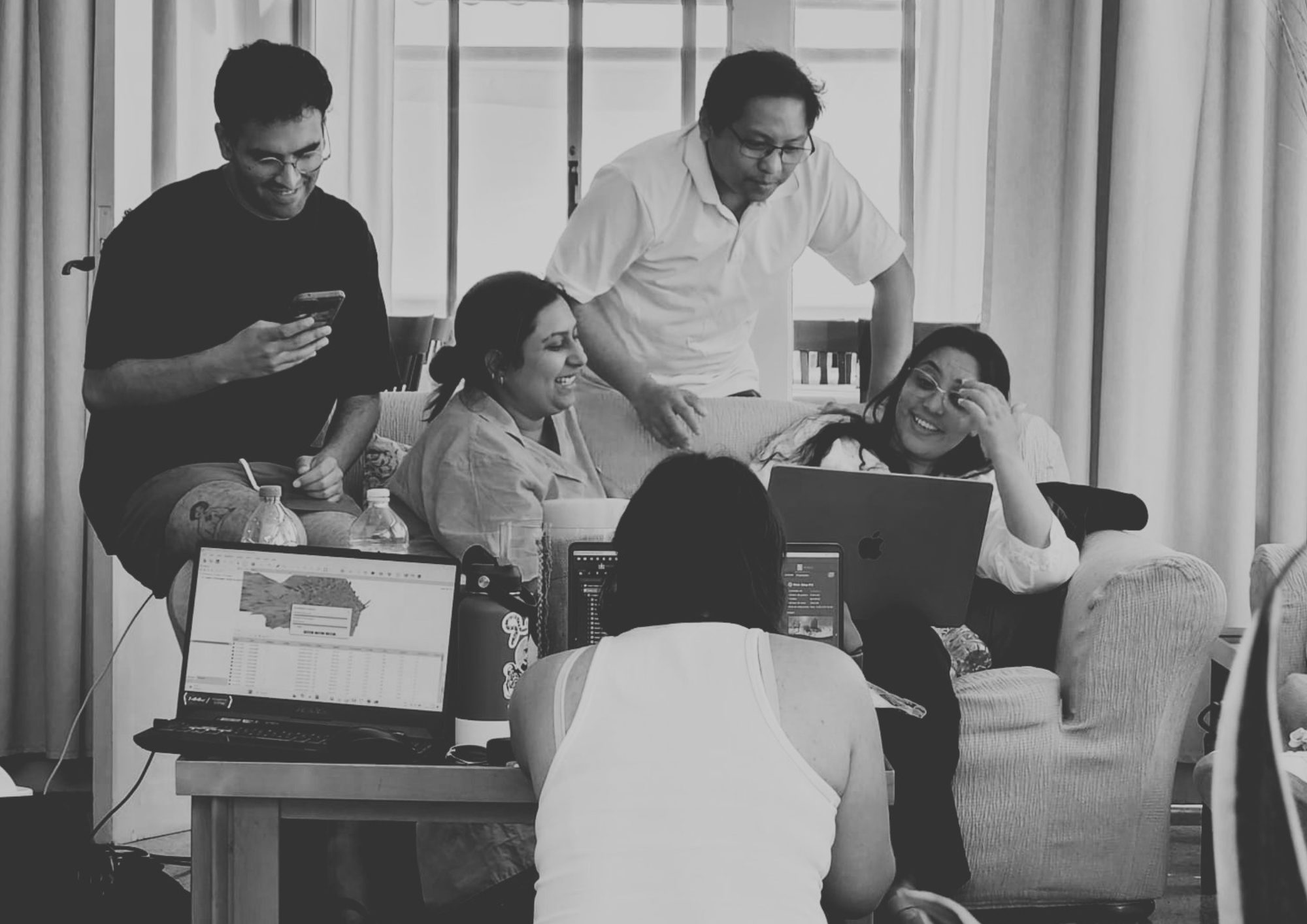
Our trainees at work.
This year, HERITΛGE’s Digital Tools Summer School – delivered in cooperation with HOGENT- brought together 27 heritage professionals from 23 countries across five continents, online and then in person in Greece. By combining flexible online education with intensive, hands-on fieldwork in Greece, the program successfully bridged theory and practice, equipping participants with the critical skills needed to document and manage cultural heritage in the modern era.
Building on over 10 years of experience, this year’s programme extended the online component, giving participants more time to develop their understanding of complex concepts before meeting in person. As a result, an evolved learning model has been developed with asynchronous preparation, targeted live sessions and real-world application giving trainees including students, researchers and heritage professionals more flexibility and opportunities to delve into the material at their own pace.
Participants studied at their own pace using asynchronous learning materials prepared by Dr Cornelis Stal, while submitting questions and reflections through a dedicated digital platform. These informed a series of live online sessions tailored to participants’ needs, prioritizing discussion, clarification and practical problem-solving.
The strong online preparation ensured that participants arrived in Greece with a strong theoretical foundation, allowing the field school to focus on applying knowledge rather than introducing concepts for the first time.
Learning the digital tools shaping heritage practice
During the online phase, participants developed practical competencies in two areas that are becoming increasingly important across the heritage sector: Geographic Information Systems (GIS) and image-based 3D documentation.
Working through practical exercises and using their own projects as case studies, participants learned, among others, how to:
- create and manage spatial datasets using GIS;
- apply data styling and labelling;
- digitise heritage information from field measurements and existing sources;
- perform attribute and spatial analyses;
- produce maps for documentation and decision-making;
- construct orthophotos, point clouds and three-dimensional models through photogrammetry;
- integrate image-based 3D models into GIS environments.
These technologies are transforming the way cultural heritage is documented, analysed and managed, enabling professionals to make more informed decisions while creating richer digital records for research, conservation and public engagement.
From online learning to real-world application
The program’s dual structure offers unique flexibility. While the online component serves as a valuable, standalone autonomous training program in mapping, GIS, and photogrammetry for those unable to travel, it also acts as the vital foundation for the field school. Rather than a separate course, the field school is the direct continuation of the online curriculum.
“The field component also demonstrated an important lesson: digital documentation is not simply about mastering software. It requires understanding heritage places, adapting to field conditions, solving practical challenges and making informed decisions throughout the recording process. ” Dr Cornelis Stal
In the second phase, 14 participants travelled to Tolo and Nafplio for an intensive ten-day practical training programme focused on laser scanning and drone photogrammetry. Working at heritage sites in Nafplio, Drepano, Asini, Romvi and Kastraki, participants planned documentation campaigns, collected field data, operated advanced recording equipment and processed the information into accurate digital outputs. The training took place with the support of Agisoft Metashap that offered free access to its photogrammetry software to participants for the duration of the summer school.
By applying the concepts explored online in authentic heritage settings, participants experienced the complete digital documentation workflow—from data acquisition and processing to analysis and interpretation.
“The field component also demonstrated an important lesson: digital documentation is not simply about mastering software. It requires understanding heritage places, adapting to field conditions, solving practical challenges and making informed decisions throughout the recording process,” said HERIΤΛGE and HOGENT’s Dr Cornelis Stal.
Technology becomes valuable only when it is applied thoughtfully in real heritage contexts.
A global learning community
This year’s Summer School brought together participants from Bangladesh, Bosnia and Herzegovina, Botswana, Brazil, Chile, Ethiopia, Ghana, Greece, India, Iraq, Lesotho, Libya, Moldova, New Zealand, Nigeria, Pakistan, Paraguay, the Philippines, Rwanda, Tunisia, Uganda, the United Kingdom and the United States.
Representing five continents and a wide range of professional backgrounds, participants shared experiences from archaeological sites, museums, historic cities, cultural landscapes and community heritage initiatives.
The diversity of perspectives enriched discussions throughout the programme, creating opportunities to exchange approaches, compare challenges and establish professional connections that will continue well beyond the Summer School itself.