
Tag Archives: horizon europe
Join Us for the Launch of a New Partnership for Resilient Cultural Heritage
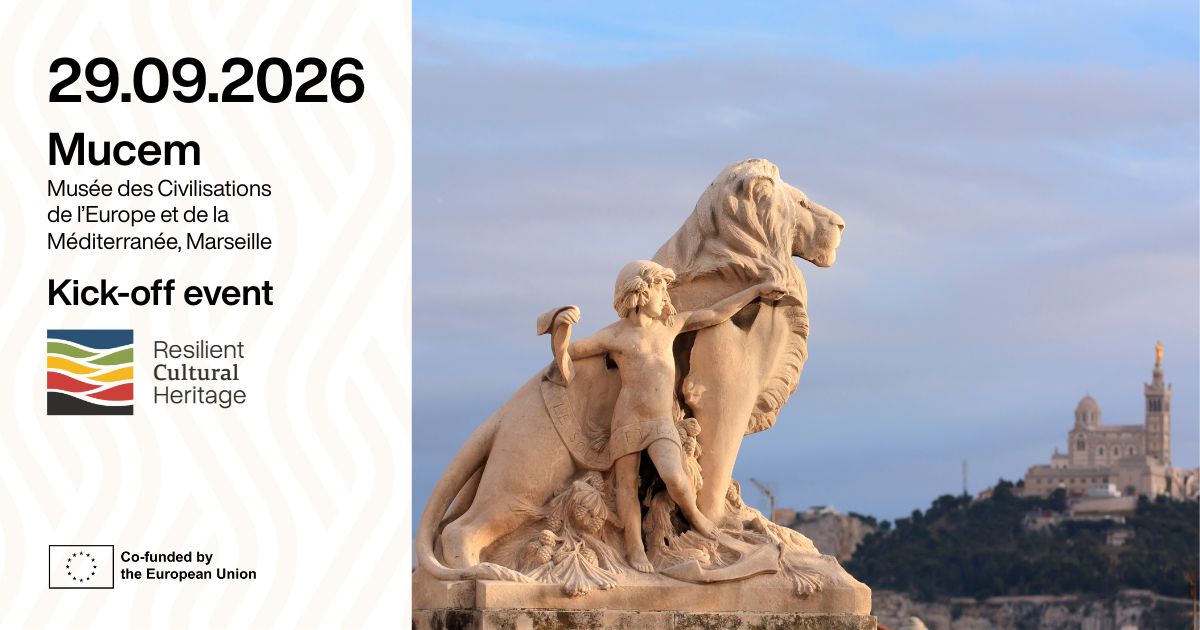
We are delighted to invite our global HERITΛGE community to join us for the official Kick-off Event of the European Partnership for Resilient Cultural Heritage (RCH), taking place on 29 September 2026 at Mucem – Musée des civilisations de l’Europe et de la Méditerranée in Marseille, France, and online.
For us at HERITΛGE, this is far more than the launch of another European project. It marks the beginning of an ambitious, decade-long collaboration that has the potential to transform how Europe—and its international partners—understand, protect and adapt cultural heritage in the face of climate change and how heritage can itself contribute to climate change adaptation.
We are incredibly proud that HERITΛGE is one of the 90 partner organisations from 30 countries shaping this landmark initiative, one of the largest investments ever made in research and innovation connecting cultural heritage and climate action.
Over the next ten years, the Partnership will coordinate transnational research and innovation funding, while building an entire ecosystem of activities to strengthen the heritage sector. These include capacity-building programmes, networking opportunities, impact monitoring, Living Labs, knowledge exchange, and collaborative initiatives that will help translate research into practical action and public policy.
As we contribute to the Partnership’s capacity-building activities, HERITΛGE is especially excited to be working to develop opportunities that will equip professionals, researchers, institutions and communities with the knowledge and skills needed to respond to one of the defining challenges of our time.
Why attend?
Whether you work in cultural heritage, climate science, museums, conservation, archaeology, architecture, policy, education, local government or the creative industries, this event offers an exciting opportunity to become part of the RCH community from the very beginning.
By joining us, you will be able to:
- Learn about the Partnership’s vision, priorities and roadmap for the next decade.
- Discover upcoming transnational funding opportunities for collaborative research and innovation.
- Explore how RCH’s Mapping, Living Labs, Capacity Building and other initiatives can support your work.
- Meet researchers, practitioners, policymakers and organisations working across heritage and climate resilience.
- Join discussions exploring how research can better inform policy, practice and sustainable development.
The programme will feature distinguished speakers from the European Commission, French national and regional institutions, and leading experts from the fields of cultural heritage and climate science. Through keynote lectures, panel discussions and interdisciplinary conversations, participants will explore new ways of working across disciplines, sectors and countries to strengthen the resilience of cultural heritage.
Event Details
Date: 29 September 2026
Venue: Mucem, Marseille, France
Participation: In person or online
️ Cost: Participation is completely free, but registration is required.
We would love to welcome members of the extended HERITΛGE network—from former participants, alumni and trainers to partners, colleagues and friends from around the world. Whether you join us in Marseille or online, your participation will help launch a community that will shape the future of resilient cultural heritage for years to come.
EXCALIBUR visits the Tombs of the Kings
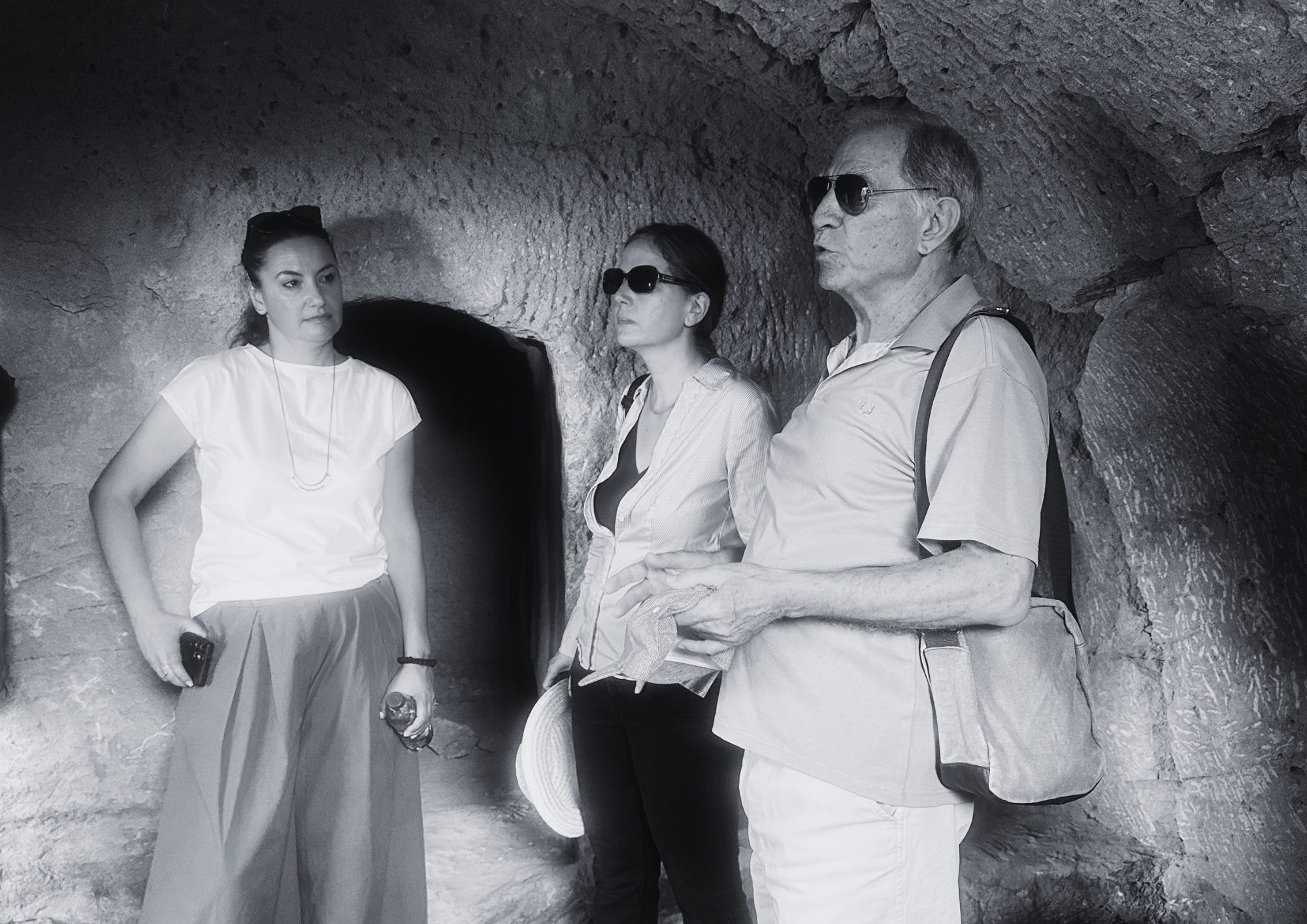 As part of the EXCALIBUR project, which is funded by the EU’s Horizon Europe initiative, HERITΛGE’s Dr. Eleni Stefanou and Maria Kagkelidou joined EXCALIBUR project partners in Paphos, Cyprus, for the first Use Case visit centred on one of the Mediterranean’s most remarkable archaeological landscapes: the UNESCO World Heritage Site of the Tombs of the Kings.
EXCALIBUR is one of the flagship projects contributing to the European Collaborative Cloud for Cultural Heritage (ECHOES) initiative, which is developing the European Heritage Cloud—a shared digital ecosystem designed to enable heritage professionals, researchers and institutions across Europe to collaborate, share knowledge and harness advanced digital technologies for the preservation, study and interpretation of cultural heritage. Within this framework, EXCALIBUR is developing innovative AI-powered and extended reality (XR) tools that will help document, analyse and safeguard heritage sites for future generations.
The team visited the sites and was privileged to have a special guide: the tour was led by Dr Sophocles Hadjisavvas, Honorary Director of the Department of Antiquities of Cyprus and the archaeologist who directed excavations at the site between 1977 and 1990. Walking through the monumental necropolis alongside the person who helped reveal many ofl its secrets transformed what could have been a technical site visit into an unforgettable lesson in archaeology, history and interpretation.
Dr Hadjisavvas guided participants through the remarkable architectural diversity of the cemetery, explaining how the site reflects the social hierarchy of Hellenistic Cyprus. Some tombs are relatively modest underground chambers, while others are monumental peristyle complexes inspired by domestic architecture, complete with colonnaded courtyards carved directly into the rock.
“Walking through the Tombs of the Kings with the archaeologist who excavated them reminded us that every digital model begins with human knowledge. The future of heritage lies not in replacing expertise with technology, but in bringing them together.”
Dr Eleni Stefanou, HERITΛGE
Throughout the morning, he shared stories from the excavations that only someone who had spent years uncovering the site could tell.
Among the most fascinating insights was the evidence suggesting that Tomb 8 may be the burial place of Ptolemy of Cyprus, the island’s last king before Cyprus became a Roman province—a reminder that archaeology is not simply about objects and monuments, but about reconstructing lives, identities and historical turning points. The tour was complemented by a visit to the Paphos Archaeological Museum that houses many of the artefacts found at the Tombs of the Kings.
For the EXCALIBUR consortium, the visit also had a practical purpose.
The Tombs of the Kings constitute Use Case 1 of the project, providing a real-world environment in which partners are defining the requirements for a new generation of digital tools. During the site visit, participants examined the monument’s structures, discussed areas vulnerable to environmental degradation and human impact, and identified priorities for documentation, including 3D scanning, environmental monitoring and the datasets required for future digital preservation. The visit was followed by technical workshops exploring AI, risk mapping, semantic data, XR technologies and collaborative digital environments for cultural heritage.

Preserving Europe’s Musical Heritage Through Technology: the First MusicSphere Use Case Meeting
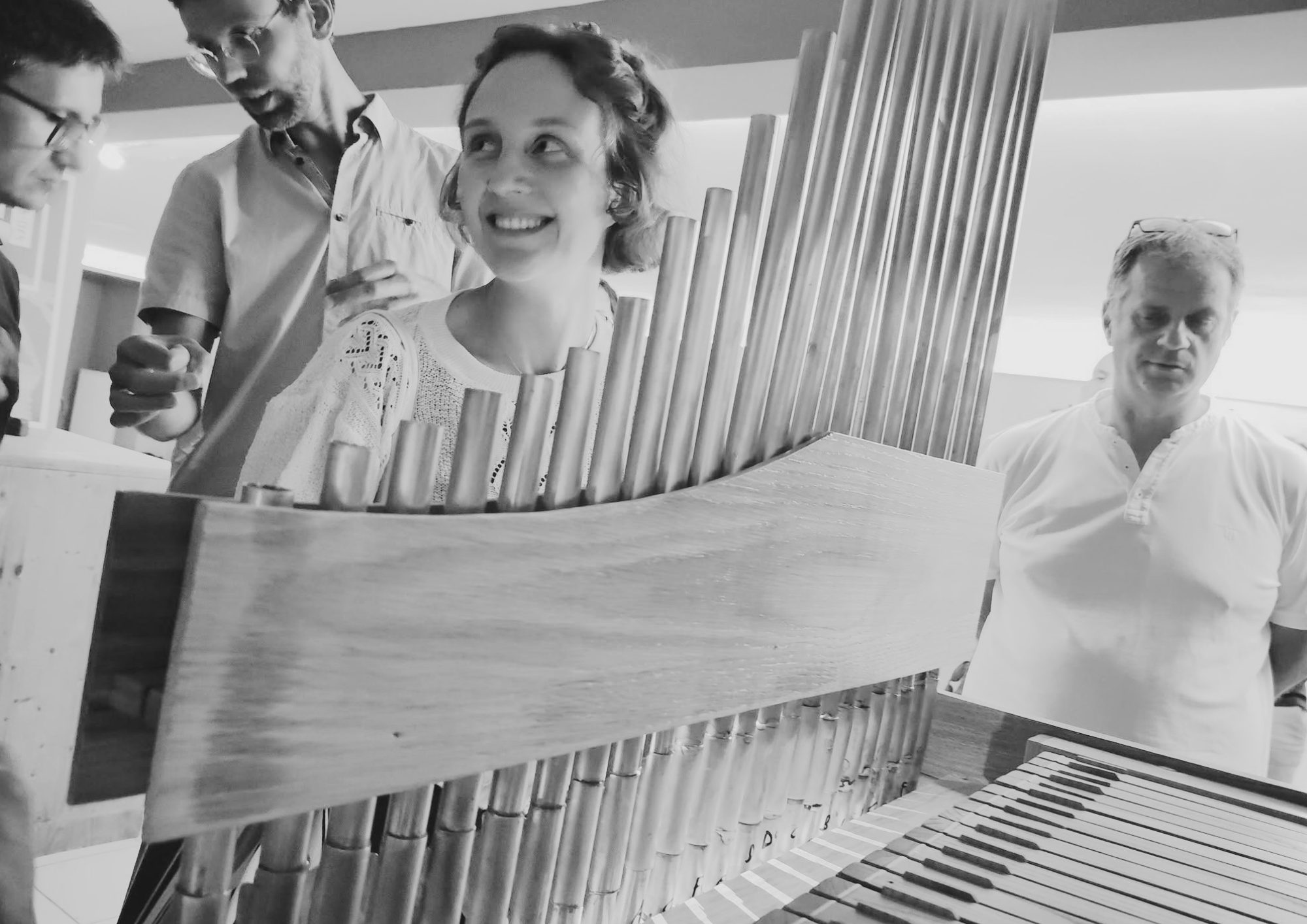 HERITΛGE is proud to be a partner in MusicSphere, a Horizon Europe-funded project and part of the wider European Cultural Heritage Cloud ecosystem being developed through the ECHOES initiative. Bringing together experts in cultural heritage, musicology, conservation, artificial intelligence, digital technologies, and immersive experiences, MusicSphere seeks to transform the way traditional musical instruments are documented, studied, preserved, and experienced.
The project focuses particularly on traditional musical organs and other historically significant instruments, combining advanced 3D technologies, acoustic analysis, artificial intelligence, digital twins, and immersive virtual and augmented reality experiences. By capturing not only the physical form of these instruments, but also their internal structure, mechanical behaviour, sound production, craftsmanship, and interaction with their architectural environment, MusicSphere aims to preserve both the tangible and intangible dimensions of Europe’s rich musical heritage.
On 2–3 June 2026, representatives of the MusicSphere consortium gathered in Thessaloniki, Greece, for the project’s first Use Case Meeting. Hosted by the International Hellenic University (IHU) and LUTHIEROS, the event brought together project partners to review progress, strengthen collaboration, and explore the cultural heritage that lies at the heart of MusicSphere’s research and innovation activities.
HERITΛGE was represented by Dr Aris Anagnostopoulos, who joined fellow consortium members for two days of discussions, cultural visits, and technical exchanges.
Exploring Organ Heritage: From Ancient Innovation to Living Traditions
The first day focused on cultural visits connected to MusicSphere’s first use case, which examines the Hydraulis of Dion within the broader context of Europe’s organ heritage.
Partners travelled to Katerini to visit the Greek Evangelical Church, home to the largest pipe organ installed in a church in Greece. Built by Weigle and installed in 1980, the instrument features 22 registers and a fully mechanical action system. The visit offered valuable insights into the preservation, operation, and cultural significance of pipe organs, which represent one of the project’s primary areas of focus.
The consortium then visited the Archaeological Museum of Dion, where participants explored the remains of the Hydraulis of Dion, the oldest surviving pipe organ ever discovered and the earliest known keyboard instrument in history. Invented in Alexandria during the 3rd century BCE, the Hydraulis is widely regarded as the technological ancestor of the modern pipe organ and an important milestone in the development of musical instruments.
Although only fragments of the original instrument survive, the Hydraulis provides a fascinating opportunity to investigate the origins of organ technology. As part of MusicSphere’s first use case, partners are exploring how advanced digital technologies can help reconstruct and better understand this remarkable instrument.
The day concluded with a visit to the SEIKILO Museum of Ancient Music in Thessaloniki, including a guided tour and live concert. Managed by MusicSphere partner LUTHIEROS, SEIKILO is the world’s first interactive museum dedicated to ancient music. Visitors can hear, touch, and play reconstructed ancient Greek instruments while exploring the sounds and musical traditions of the ancient world.
Developing Digital Twins for Musical Heritage
A central objective of MusicSphere is the creation of advanced digital representations of traditional musical instruments that capture far more than their physical appearance.
Through the integration of 3D scanning, digital reconstruction, acoustic modelling, artificial intelligence, and immersive technologies, the project seeks to recreate not only the instruments themselves but also their soundscapes, performance characteristics, and cultural contexts. These digital twins will help researchers, conservators, musicians, and the wider public explore and experience instruments that may be fragile, inaccessible, or partially lost.
For the Hydraulis of Dion, this approach offers a way to reconstruct missing components and explore how the instrument may originally have functioned and sounded, despite the fragmented nature of the surviving remains.
Reviewing Progress Across the Project
The second day was dedicated to consortium meetings hosted by the International Hellenic University.
Partners reviewed progress across multiple work packages and discussed upcoming milestones, deliverables, and technical developments. Discussions focused on artificial intelligence algorithms, toolkit architecture, digitisation activities, dataset preparation, acoustic analysis methodologies, and the development of the project’s advanced technological infrastructure.
The International Hellenic University also presented the latest 3D reconstruction of the Hydraulis of Dion, demonstrating ongoing work towards its digital restoration and integration into the project’s Digital Twin framework.
Dedicated technical sessions allowed partners to align requirements, exchange expertise, and coordinate future implementation activities.
Cultural Heritage SHIFTing forward

Representatives from HERITΛGE and 12 consortium partners met in Budapest on March 21st-22nd for the General Assembly of the SHIFT project, an innovative effort to make cultural heritage more accessible using technology, funded by the European Union.
SHIFT stands for MetamorphoSis of cultural Heritage Into augmented hypermedia assets For enhanced accessibiliTy and inclusion. The project aims to make cultural heritage more accessible and inclusive through the creation and use of new technology including haptics
During the General Assembly, hosted by the Semmelweis Museum, Library, and Archive of the History of Medicine, the consortium partners reviewed the progress made and mapped out the steps to be taken in the next year to achieve SHIFT’s aims. They also approved SHIFT’s new logo and the creation of the project’s social media channels to introduce stakeholders and the public to the project and allow them to contribute to its development.
“The General Assembly was a great opportunity to take stock of how the project has developed so far and plan our next steps,” says Rob Davies, HERITΛGE head of European Projects.
You can find and follow SHIFT on LinkedIn and Twitter.