Tag Archives: SHIFT
Critical challenges in the way we experience heritage in the realm of museums
By Dr. George Margetis
The SHIFT project, funded by the European Commission’s Horizon Europe Program, comes to revitalize how we experience cultural heritage by matching innovation with tradition and creating multi-sensory heritage encounters that transcend boundaries and welcome everyone.
More specifically, SHIFT aims to unlock the past for everyone and is committed to accessibility and inclusivity, ensuring that cultural heritage becomes accessible to all, and allowing everyone to connect with their heritage regardless of background or ability. Emphasizing also that diversity matters, SHIFT pursues to empower people with disabilities to enrich their perspectives and foster their understanding.
SHIFT is addressing the critical challenges we encounter in the realm of museums. These are:
Challenge 1: diverse heritage, diverse needs.
Our cultural heritage often excludes individuals of diverse backgrounds from fully engaging with it.
Challenge 2: physical barriers transform heritage exploration into a struggle for individuals with mobility challenges.
Limited access narrows their ability to engage with exhibits, diminishing their capacity to immerse themselves in their stories.
Challenge 3: language and cognitive barriers.
The language barrier and cognitive disabilities create a divide leaving visitors disconnected from heritage stories.
Challenge 4: exclusion of sensory diversity.
Many cultural experiences focus on sight and sound, excluding those who experience the world differently.
Challenge 5: theater of inclusivity.
Museums should prioritize inclusivity for all visitors but certain interactive elements and live performances may unintentionally exclude individuals with varying abilities.
The SHIFT project consortium that consists of 13 European partners, is tackling these challenges head-on, reimagining accessibility to cultural heritage through innovative and inclusive approaches.
By addressing these issues we pave the way to a more accessible and enriching cultural experience for all.
Dr. George Margetis, is a postdoctoral researcher with the Human-Computer Interaction Laboratory of The Institute of Computer Science of FORTH. The HCI lab is leading SHIFT’s Work Package 3 implementation, catering to the accessibility of cultural heritage assets and improving the user experience of people with visual impairments. This opinion piece was originally part of a presentation for the webinar held to celebrate European Heritage Days 2023. You can watch the entire webinar that was hosted by HERITΛGE here.
SHIFT Project Webinar: accessible & inclusive cultural heritage content
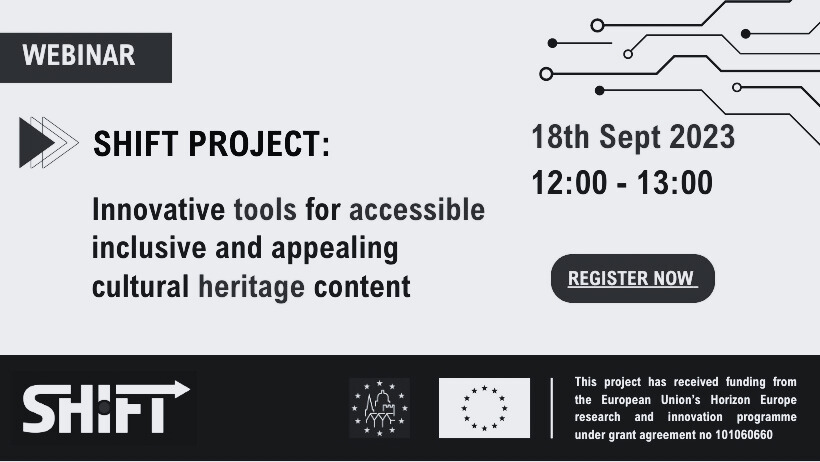
Join us for a webinar to celebrate this year’s European Heritage Days organized by SHIFT, an international project funded by the European Commission’s Horizon Europe Program to make cultural heritage more inclusive and accessible through technology.
SHIFT’s (MetamorphoSis of cultural Heritage Into augmented hypermedia assets For enhanced accessibiliTy and inclusion)online event will explore the innovative tools being developed by the SHIFT Consortium to improve the accessibility, inclusivity, and appeal of cultural heritage content. It will be held on September 18th, 11 AM CET.
SHIFT is one of a cluster of six projects funded by the European Commission’s Horizon Europe Program under Cluster 2 Culture, Creativity, and Inclusive Society: Preserving and enhancing cultural heritage with advanced digital technologies. SHIFT supports the adoption of digital transformation strategies and the uptake of tools within the creative and cultural industries (CCI).
The webinar is addressed to cultural heritage professionals, researchers, and the public. To attend, participants can register by filling out this form.
SHIFT PROJECT: The SHIFT Consortium’s 13 partners are leveraging advances in Artificial Intelligence (AI) and Machine Learning (ML) to improve cultural heritage access for European citizens experiencing sensory impairment. They aim to enrich the experience of interacting with cultural assets through visual, auditory, and sensory modalities, e.g., using haptics. SHIFT is also developing tools and methodologies to enable contemporary description of cultural assets through language evolution models. HERITΛGE is proud to be a part of the SHIFT Consortium. To find out more about SHIFT, please watch this introductory video.
European Cultural Heritage Days: Every September, the signatory States to the European Cultural Convention take part in the European Heritage Days – a joint action of the Council of Europe and the European Commission. The action’s aims are, among others, to raise the awareness of European citizens to the richness and cultural diversity of Europe and invite responses to the social, political and economic challenges it faces.
More about SHIFT: https://shift-europe.eu/
SHIFT Project forges ahead to make heritage accessible through technology
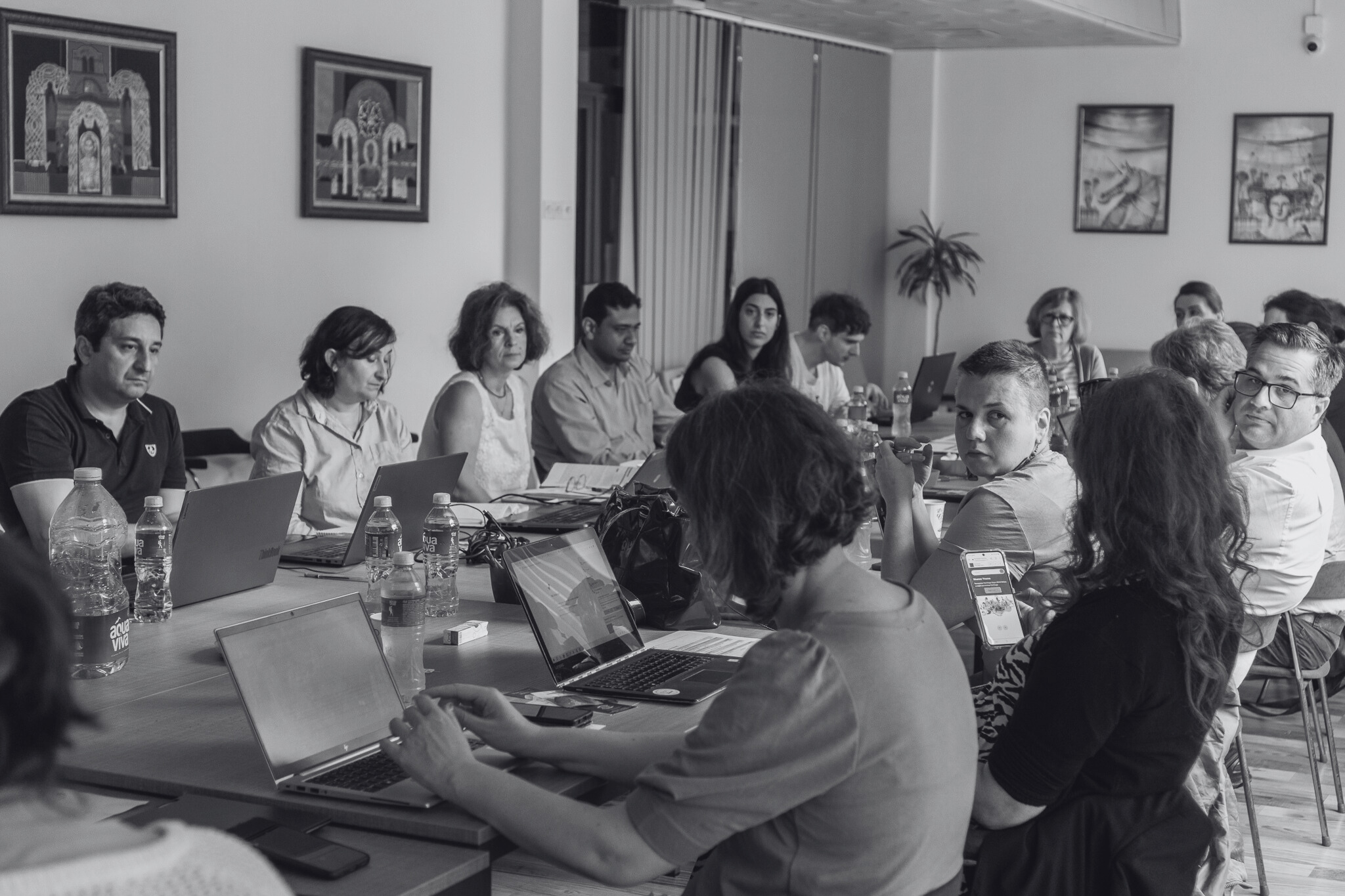
SHIFT Consortium partners meeting in Serbia
HERTΛGE attends SHIFT Consortium meeting: consulting stakeholders and reviewing use cases to make cultural heritage more accessible and inclusive through technology.
The SHIFT Consortium held its second in-person meeting earlier this month in Knjaževac, Serbia. HERITΛGE and twelve consortium partners were hosted on 15th – 16th June by the Homeland Museum of Knjaževac, part of the Balkan Museum Network.
¨We had a great opportunity to take stock of all the progress that has already been made for the creation of tools that will help make cultural heritage more accessible and inclusive,” said Razvan Purcarea, from project coordinating partner SIMAVI.
SHIFT is funded by the European Commission’s Horizon Europe program. It brings together 13 leading research and industrial organisations and SMEs with a common vision: to strengthen the impact of cultural heritage assets. SHIFT will produce an array of tools taking advantage of the latest developments in fields such as Artificial Intelligence (AI), Machine Learning (ML), Haptics, and Auditory Synthesizers to increase the appeal of historical artefacts, improving their accessibility and usability for everyone through better content representation, enriched user experiences, inclusive design, training, and more engaging business models.
During the Knjaževac consortium meeting, partners had the opportunity to review use-case scenarios and functional requirements, engage with external stakeholders, and attend the opening of the Homeland Museum’s latest exhibition.
- 1
- 2