
HERITΛGE delivers Seasonal School on heritage adaptation to climate change
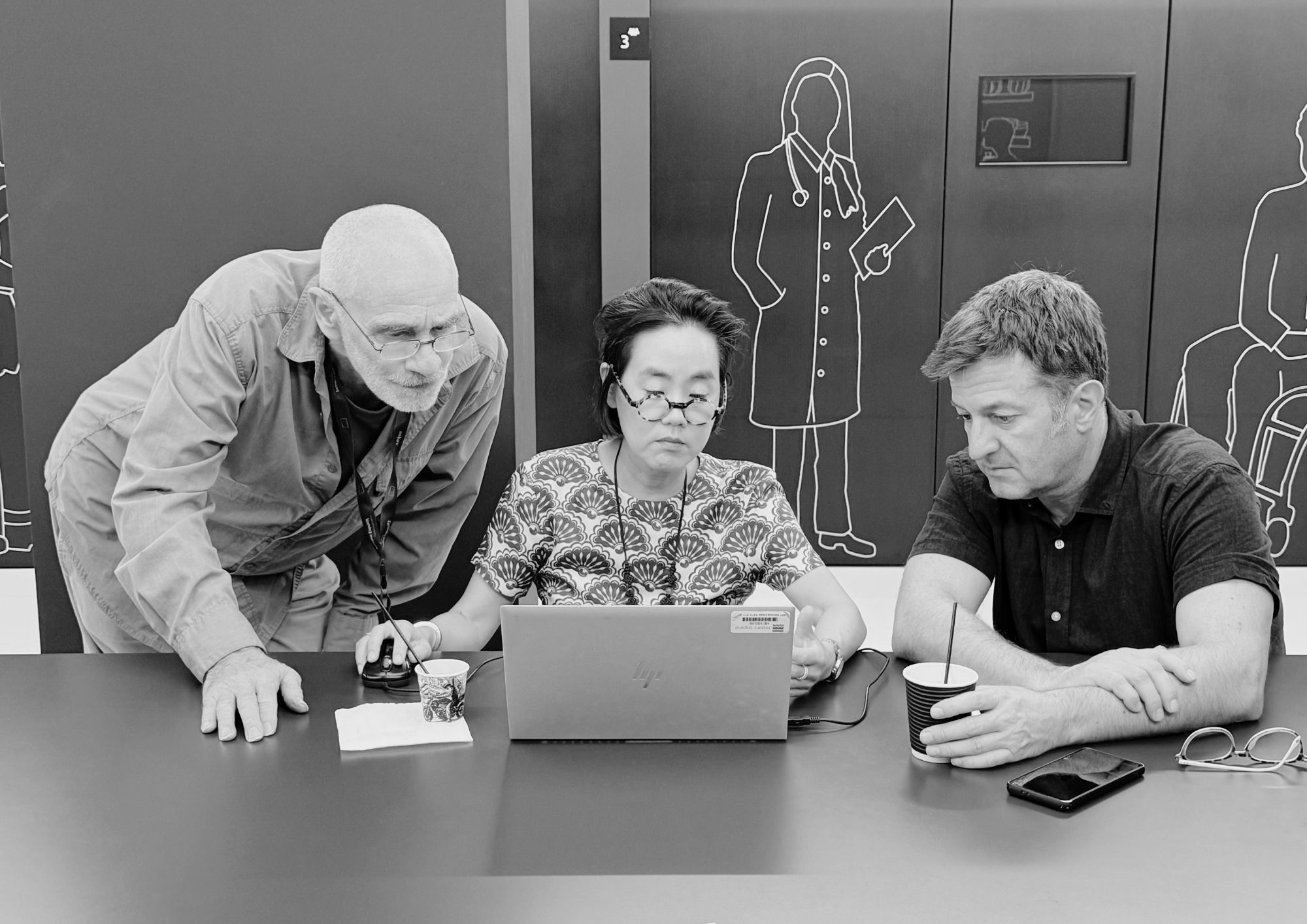
Working with Prof. Brimblecombe
How can climate projections help heritage professionals decide which monument needs attention first? And what does adaptation mean for a mountain community whose landscape and traditions are threatened by recurring wildfires? These were among the questions that heritage professionals and researchers brought to Athens for the first Seasonal School of the European Partnership for Resilient Cultural Heritage (RCH).
The Heritage Management Organization (HERITΛGE) delivered the school, Heritage Adaptation to Climate Change, from 5 to 15 October 2026. More than 400 applications were filed from around the world. Fourteen participants attended in person at the European Parliament’s Europa Experience in Athens, and more than 100 took part online. The in-person participants were selected from candidates nominated by states participating in RCH. They represented 13 countries, with two participants from Spain and one each from Belgium, Croatia, Egypt, Finland, Greece, Italy, Lithuania, Malta, the Netherlands, Portugal, Romania and the United Kingdom.
Professor Peter Brimblecombe, Dr Jenny Richards and HERITΛGE Director Dr Evangelos Kyriakidis led the training. Participants brought projects from their own work and used them to explore how to find and interpret climate data, assess risks to particular sites and prioritise conservation measures. The group included conservators, architects, ethnographers, materials scientists and meteorologists, some working on their doctoral research and others drawing on years of professional practice.
Reflecting on the value of bringing these colleagues together, Dr Kyriakidis said, “It was a great opportunity not only to learn from excellent instructors such as Peter Brimblecombe and Jenny Richards, but also to learn from one another and see the different challenges and the different solutions that are being given in different countries and in different types of heritage, different aspects of heritage.”
From national strategy to the stone of the Acropolis
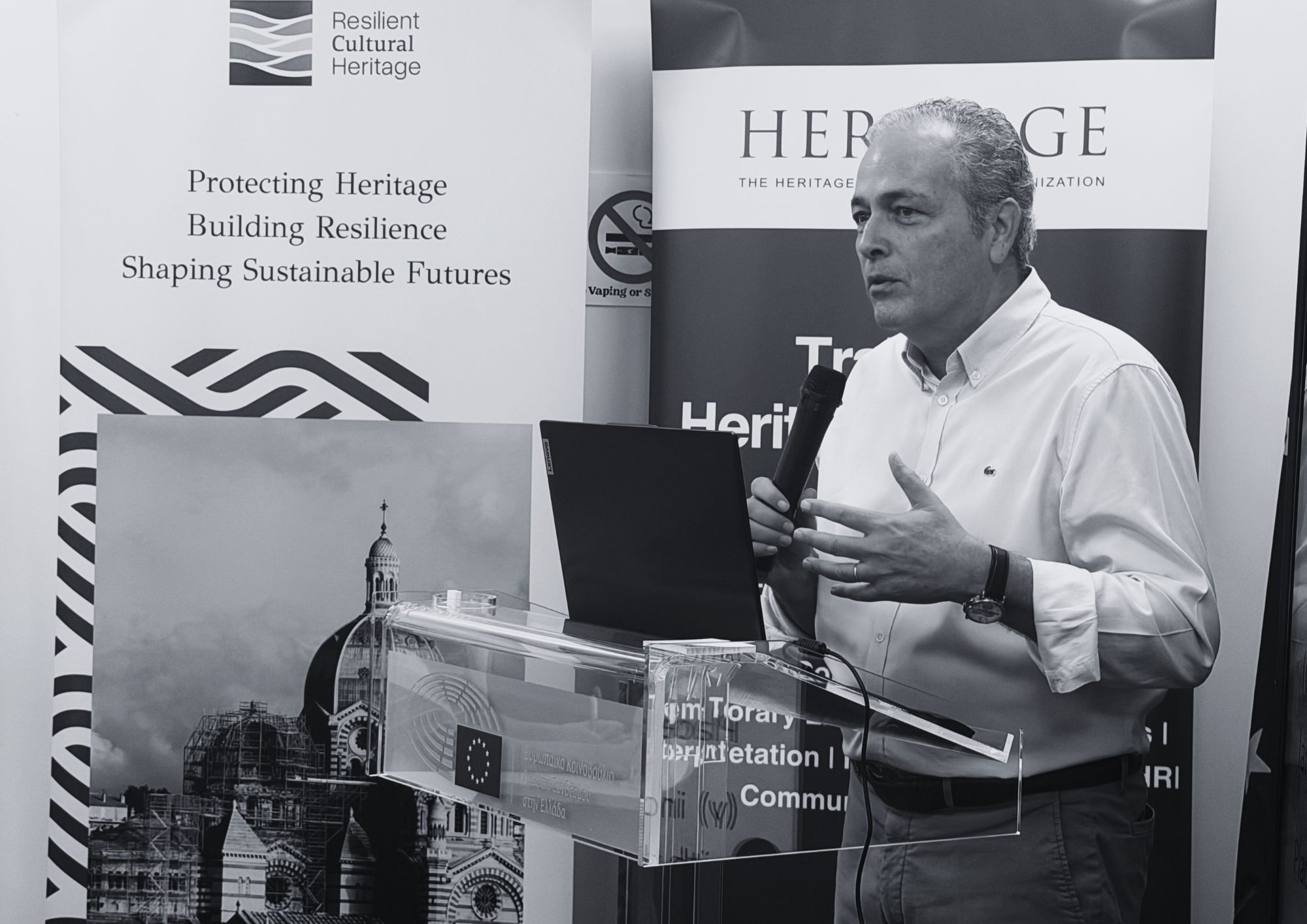
Professor Constantinos Cartalis’ Keynote
In his keynote, Professor Constantinos Cartalis of the National and Kapodistrian University of Athens presented Greece’s national strategy for protecting cultural heritage from the impacts of climate change, focusing on monuments and archaeological sites. Field visits to the Acropolis and the archaeological site of Elefsina, organised by the University of West Attica’s Department of Conservation of Antiquities and Works of Art, gave participants the opportunity to consider those challenges on site. While in Athens, the Seasonal School participants also attended a special EMPATHS Multiplier Event on how heritage professionals and local communities can work together to interpret cultural heritage and respond to climate change.
For Dr Alexis Stefanis, an associate professor in the department who also leads HERITΛGE’s conservation workshops, understanding the risks to an archaeological site means looking closely at the materials themselves. Floods and wildfires are visible threats. Changes in the way moisture moves or salts crystallise within porous stone can be harder to see, yet they matter to the conservators responsible for its care. “What’s happening inside the pores of the material? How does salt crystallisation happen?” he asked.
Back in the classroom, participants explored how to use evidence of such risks to make the case for intervention. As Professor Brimblecombe put it, “quantification is really important in convincing policy makers and people who can fund restoration and fund preservation of sites.”
What participants took home
For Ana Margarida Cruz da Silva, a researcher at the Centre for Intercultural Studies at the Polytechnic University of Porto, the starting point was Serra da Estrela. Her doctoral research explores identity and memory in this mountainous region of Portugal, where communities have faced wildfires for decades. She came to the school with an interest in how people protect both the places and the traditions affected by those fires. Asked what she would take back to her work, she said:
“I think that one of the main insights is that a lot of people are dealing with the same things we are dealing with. But the other part is also that we can see so many different things happening in the world that sometimes we are not aware of… it was an amazing opportunity also to take back to the community things that are happening across the world.”
Other participants approached the relationship between heritage and climate through very different projects. Aurora Cairoli, a conservation and heritage scientist from Italy, studies contemporary outdoor murals. Their exposure to the elements is one part of her research. Another is what happens to their significance when environmental change affects the communities for whom the paintings are part of a shared identity.
Ionica Pîrvu, who works in the Project Management Unit of Romania’s Ministry of Culture, used the school to develop an idea for monitoring the country’s built heritage. He told HERITΛGE that upon his return, he will propose a network of sensors that could track humidity, vibration and small cracks in historic buildings. Read alongside satellite imagery, those measurements could help conservators spot gradual deterioration and decide where an early repair could prevent more extensive damage.
HERITΛGE thanks the European Parliament Office in Athens for welcoming the Seasonal School to Europa Experience, Professor Constantinos Cartalis for his time and insights, the University of West Attica for organising the field visits, and the Ephorate of Antiquities of the City of Athens and the Ephorate of Antiquities of West Attica for their support and kind offer to guide the Seasonal School around both these important sites and share insights into their work.