
Heritage Interpretation Workshop
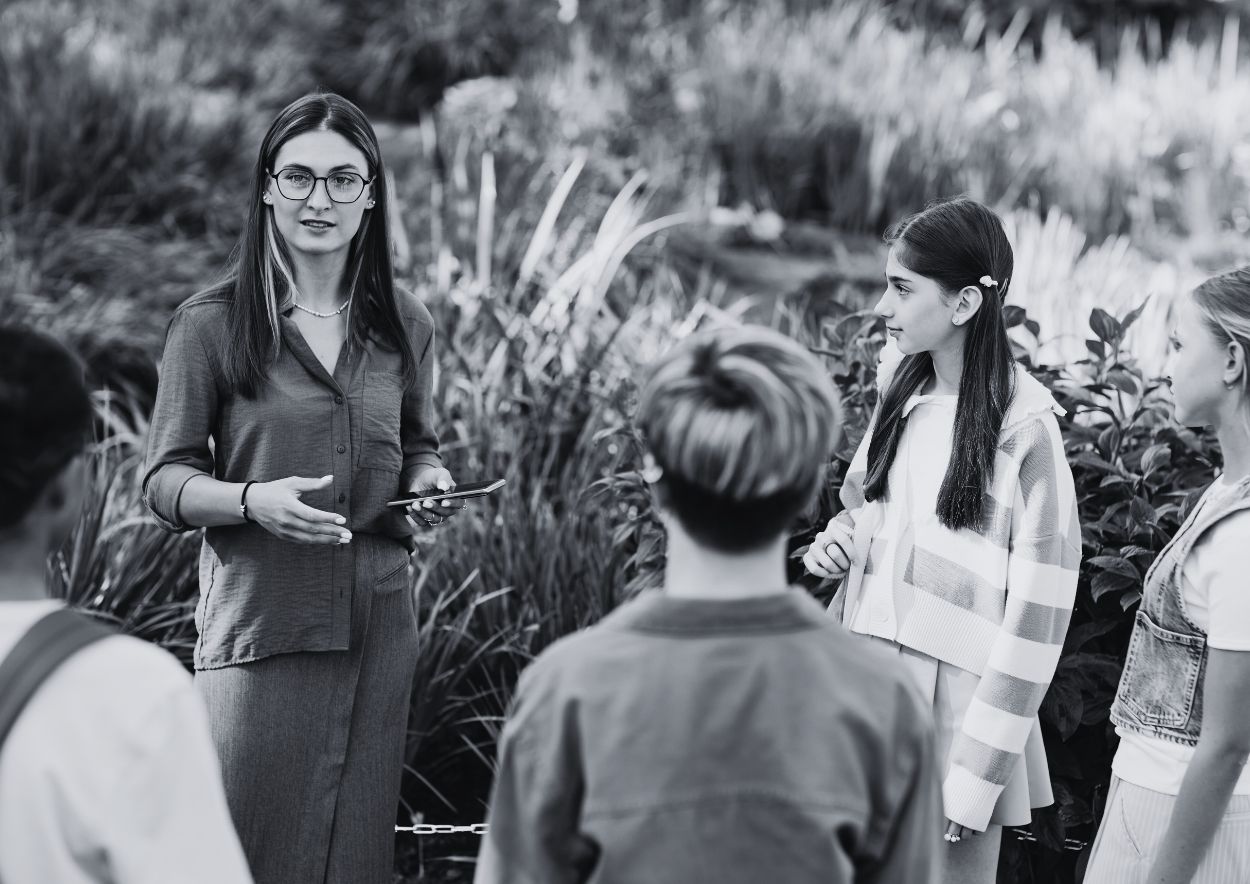 From 13th to 16th October, HERITΛGE delivered an online workshop on Heritage Interpretation, bringing together 22 heritage managers from 17 countries across Africa, Asia, Europe and South America. Through 22 capacity building cases and 22 case studies, participants explored how interpretation can generate meaningful connections between visitors and heritage.
“This is the first time I have taken a course in heritage interpretation. All topics were relevant and sparked my interest.”
Dounama Biri
The workshop was led by interpretation specialist Valya Stergioti who introduced participants to the core principles of heritage interpretation. Sessions highlighted how interpretation moves beyond facts to reveal meanings, provoke reflection and foster stewardship.
Day 1 focused on the foundations of interpretation. Participants shared stories of memorable guides and discussed the qualities that define good interpretation, from sensory engagement to contextual storytelling. They examined Freeman Tilden’s definition of interpretation and reflected on how interpretation as an educational experience should encourage exploration rather than the delivery of isolated facts. The day concluded with an introduction to the interpretive triangle and a practical group activity on applying the four aces to selected heritage phenomena.
Day 2 explored meanings, values and universal concepts. Through an illustrative exercise on the idea of “home”, participants discussed how words carry different meanings across cultures and contexts. The session introduced the theory of frames and highlighted the importance of language in shaping interpretive outcomes. Participants worked in groups to link phenomena with universal concepts and later developed their own sets of open ended questions. These questions were framed around four types: focus, transfer, process and evaluation, each designed to encourage dialogue, reflection and participation.
Days 3 and 4 centred on interpretive themes, interpretive services and the development of participants’ own projects. Participants created themes for personal heritage objects, aligned them with sustainability goals and collaborated in groups to design exhibition concepts such as A Day in the Life of a Fisherman Across the Globe and Legacy of Ancestors. They also examined the strengths of personal and non personal interpretation through a structured debate and discussed the essential role of local communities.
“I became more confident about the educational methods and universal concepts which will help me to interpret my site.”
Habab Idriss Ahmed
The workshop concluded with presentations of individual projects, ranging from Lamu Old Town in Kenya to the Royal Palaces of Abomey in Benin, the Paper Trail of Hand Produced Paper in Assam and the Armero Town Ruins in Colombia. Each participant presented a phenomenon, a theme and the interpretive services they would employ.
By the end of the training, participants had strengthened their skills in crafting themes, engaging audiences and building meaningful interpretive experiences.
Find more information about HERITΛGE’s workshops here or follow us on Facebook, Twitter / X, LinkedIn or Instagram.