Tag Archives: cultural heritage

Could the recognition of Somaliland have any impact on the management of its heritage?

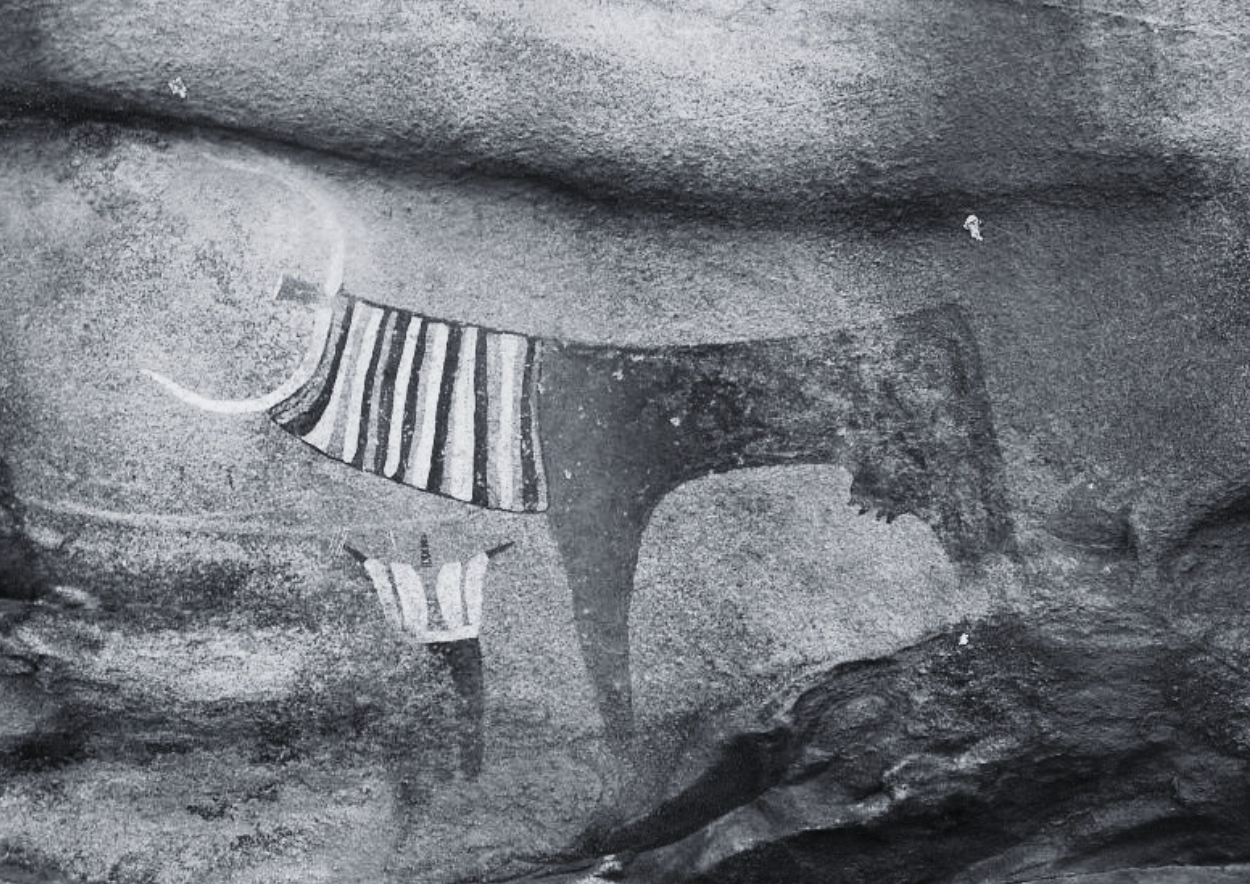
Detail of the Laas Geel cave paintings near Hargeysa, showing a cow accompanied by a human being. This image is the most unusual one in the collection, the cow appears to be draped in ceremonial robes.

Laas Geel Somaliland. Credit: Najeeb

By Pavlina Bafas

For more than three decades, Somaliland has functioned as a de facto state, maintaining relative peace, democratic governance, and its own institutions, despite lacking international recognition. Recent developments -most notably Israel’s recognition of Somaliland(1), have reignited discussions surrounding the right to self-determination and intensified regional and international responses. In reaction, a joint statement issued by more than twenty predominantly Middle Eastern and African states, together with the Organization of Islamic Cooperation, rejected Israel’s recognition, citing its potential repercussions for peace and security in the Horn of Africa, the Red Sea region, and the broader international order(2). While debates around recognition mainly focus on security, politics and economics, one area that receives far less attention is cultural heritage. Given the pronounced geopolitical implications of Somaliland’s secessionist tensions, why in this article do we examine it through the lens of its heritage?  

It is notable that much of the recent literature on the Somali political crisis relies on reductive assumptions that portray Somali society as culturally homogenous and uniquely driven by clan-based conflict. Such analyses overlook the historical and social complexities of Somali political reality. As some researchers argue(3), the notion of a “mono-culture” Somali identity is a myth constructed by outsiders, obscuring long-standing divisions—particularly between northern nomadic pastoralists and southern agro-pastoralists with distinct cultural, social, and linguistic structures.  In particular, Somaliland is home to a great range of cultural heritage assets, from prehistoric rock art sites to Islamic architecture, historic port towns like Berbera, and vibrant intangible heritage including poetry, music, and oral traditions(4). Besides cultural heritage, Somaliland counts numerous natural heritage sites and a rich wildlife like the famous Somali cheetahs(5).

Despite this wealth of heritage, Somaliland’s lack of international recognition has historically made formal global protection (such as UNESCO World Heritage listing) difficult, meaning national and local mechanisms have had to take the lead. Looking at an up-to-date picture of how heritage management works in Somaliland, we could recognize that the Somaliland governing authority has strengthened its cultural policies and institutional frameworks, even though many responsibilities are shared with local communities, NGOs, museums, and external partners(6).

Initially, Somaliland’s heritage management is not highly centralized in the classic western sense (with one dominant national body only), but there are formal government structures responsible for it such as the Department of Archaeology Protection and Indigenous Arts Promotion (under the Ministry of Trade and Tourism) that now leads much of the heritage policy, planning, conservation, and promotion work, including research and site protection initiatives. Working alongside this Department, the Horn Heritage Foundation, an NGO, assisted the Somaliland government in drafting new heritage legislation. More specifically, this Act incorporates key principles from major international agreements, particularly the 1954 Hague Convention for the Protection of Cultural Property in the Event of Armed Conflict and its Second Protocol, as well as the 1970 Convention aimed at preventing the illicit import, export, and transfer of ownership of cultural property(7).

Moreover, a separate Department of Culture supports broader cultural activities like music, theatre, and arts and is therefore responsible for most intangible heritage. Government policies include procedures to safeguard heritage during development projects. A major example is the $2 million heritage conservation and development project funded by the French Development Agency (AFD). This initiative focuses on protecting key archaeological sites like Laas Geel  — the most famous rock art complex, while building local capacity for heritage management, and integrating sustainable tourism as an economic driver(8). It is worth noticing that “no Agence Française de Développement (AFD, French Development Agency) activities are envisaged in Somalia in the short term, and no Treasury implements are now available to the country.  In the humanitarian field, France provided aid of €4.8 million in 2017, while Somaliland is the primary destination of our bilateral assistance to Somalia.”  (9) Another great project was the inauguration of the Somaliland National Museum in Hargeisa in July 2024, providing a central space for preservation, research, and public education(10, 11). This autonomous public service is evidence that the central Somali government is not involved in Somaliland’s heritage management. 

Regardless of the notable progress, particularly community empowerment and tourism development, obstacles still exist and are mostly related to institutional strength and international recognition. Guenther Wirth, president of Heritage Somaliland and working on Somaliland for almost three decades, provided us an overview of protected areas in Somaliland, a topic, as he states, remains difficult to define within the country’s current context. At the governmental level, responsibility for such areas is distributed across several institutions (three Ministries). While each of these bodies plays a role in matters related to conservation, protected areas have not emerged as a clear national priority. This situation is further complicated by limited institutional capacity, which constrains effective administration and management. Also, in certain cases, local communities or NGOs have taken an interest in preserving specific sites. Despite these efforts, it is widely believed that only a few of these areas benefit from consistent management, adequate protection, or sustained oversight(12).

Recognition has the potential to transform Somaliland’s heritage management system into one that is both legally empowered and internationally connected, but this transformation would not be automatic. Recognition would allow Somaliland to formally engage with UNESCO, ICOMOS, ICCROM, and other global heritage bodies, enabling access to training, expertise, and international standards. It would also increase opportunities for research collaboration and technical conservation support. However, it’s important how effectively Somaliland strengthens its domestic institutions, allocates resources, and builds professional capacity. Also, it provides the tools and access, but meaningful transformation requires political commitment and long-term planning. Additionally, as Somaliland is placed in a high position, concerning illegal trafficking (i.e. cheetahs), the intervention of international bodies could enhance the combat of this phenomenon. 

The potential benefits are significant. Recognition could unlock international funding, increase visibility for Somaliland’s heritage sites, and support sustainable cultural tourism. It would also give Somaliland greater control over how its history and identity are represented globally. However, recognition also carries risks. Increased tourism and international attention may place pressure on fragile sites, while donor-driven agendas could overshadow local values and priorities. There is also a risk that heritage management could become overly centralized or technocratic, sidelining community-based traditions and intangible heritage. Balancing economic opportunities with cultural integrity would therefore be essential. 

Last but not least, international recognition of Somaliland would also be shaped by significant geopolitical and internal political risks that directly affect cultural heritage management. Regionally, recognition could heighten tensions with Somalia and neighboring states, potentially politicizing heritage sites as symbols of sovereignty rather than shared history. Geopolitical rivalries in the Horn of Africa may influence funding priorities and international engagement, making heritage support uneven or strategically driven. Internally, recognition could shift political power dynamics, leading to competition over control of heritage institutions, resources, and narratives. If not carefully managed, these pressures could undermine inclusive, community-based heritage protection and instead turn cultural heritage into a contested political tool. 

* Pavlina Bafas is an early-career researcher collaborating with the Heritage Management Organization (HERITΛGE). Her academic interests focus on geopolitics, energy, and cultural diplomacy.

** The views and opinions expressed in Opinion Pieces featured on the HERITΛGE website, including this article, are those of the author(s) and do not necessarily reflect the official position of the Heritage Management Organization (HERITΛGE), its partners, or affiliated institutions.

Footnotes

  1. BBC Somali (30 Dec. 2025) Why Israel’s recognition of Somaliland as an independent state is controversial . https://www.bbc.com/news/articles/c14v4kmg275o 
  2. Agrican Security Analysis. (28 Dec. 2025) Implications of Israel’s Recognition of Somaliland’s Independence. https://www.africansecurityanalysis.com/reports/implications-of-israel-s-recognition-of-somaliland-s-independence 
  3. Mukhtar, M. H. (1996). The plight of the Agropastoral society of Somalia. Review of African Political Economy, 23(70), 543–553. https://doi.org/10.1080/ 03056249608704222 
  4. Ahmed, I. I., & Green, R. H. (1999). The Heritage of War and State Collapse in Somalia and Somaliland: Local-Level Effects, External Interventions and Reconstruction. Third World Quarterly, 20(1), 113–127. http://www.jstor.org/stable/3993185 
  5. Guenther Wirth, pers. com., March 2026
  6. Mohamed H. Jama (Former Deputy Area Manager and Head of Project at Welthungerhilfe. Former Consultant for Early Warning Technical Advisor at Nordic International Support foundation Seconded to National Disaster Preparedness and Food Reserve Authority , pers. com., March 2026 
  7. Somaliland’s Heritage Law.   https://www.hornheritage.org/the-somaliland-heritage-law/  
  8. Protection and promotion of Somaliland’s archaeological heritage. (Nov. 2024) https://www.expertisefrance.fr/en/projects/protection-and-promotion-somalilands-archaeological-heritage 
  9. https://www.diplomatie.gouv.fr/en/information-by-country/somalia/france-and-somalia (Accessed 20 Apr. 2026)
  10.  Inauguration of the Somaliland National Museum: Celebrating Cultural Heritage and National Pride (Jun. 2024) https://somalilandnation.com/2024/06/29/inauguration-of-the-somaliland-national-museum-celebrating-cultural-heritage-and-national-pride/ 
  11. https://somalilandcentral.com/museum/
  12.  Guenther Wirth, pers. com., March 2026
Applications Now Open for the 2026 Cultural Heritage Summer Schools

We are delighted to announce that applications are now open for our 2026 Summer Field Schools in Greece. This year’s programmes bring together community focused heritage practice, advanced digital documentation, and hands-on field experience. Both summer schools offer updated structures for 2026, including more flexible online learning, expanded field components, and a strong emphasis on collaboration, critical thinking, and practical application.

Engaging Communities in Cultural Heritage

Dates: 08 to 28 June 2026
Hybrid Programme: Online and Paros, Greece
Application Deadline: 1 March 2026
Deadline for Greek Living Heritage Network applicants: TBC

This programme explores how cultural heritage professionals can work with communities in meaningful, responsible, and sustainable ways. The online opening week introduces key concepts, participatory methods, community empowerment, and ethical engagement. The two-week in-person phase on Paros brings these ideas to life through field visits, workshops, and collaboration with local stakeholders. Participants gain valuable skills in communication, facilitation, co-creation, and community driven heritage interpretation, making this course ideal for practitioners, students, and researchers seeking a grounded approach to engagement.

Programme Structure

8 to 14 June: Online training programme

15 to 28 June: Field School in Paros, Greece

Read more and apply here

Digital Tools for Cultural Heritage Management

Dates: 24 April to 18 June 2026
Hybrid Programme: Online and Nafplio and Tolo, Greece
Application Deadline: 13 April 2026

The 2026 edition introduces a redesigned and extended online training format based on participant feedback and evolving professional needs. The new structure provides more time between online sessions to process material and practise techniques, more time between the online period and the field school to support preparation, no conventional lectures with trainers instead acting as supervisors and consultants, and a more on-demand and flexible learning model rather than a strict schedule.

Programme Structure

24 April to 2 June: Online training programme
24 April to 15 May: Cartography using GIS (Online)
19 to 29 May: Photogrammetry and Image Based 3D Modelling (Online)
7 to 18 June: Field School in Nafplio and Tolo (In person), featuring photogrammetry, image based 3D modelling, and terrestrial laser scanning

This hybrid model allows participants to build skills steadily online before applying them intensively in the field school.

Read more and apply here


AHEAD Final Event in Brussels: Co-creation Tools for Cultural Heritage

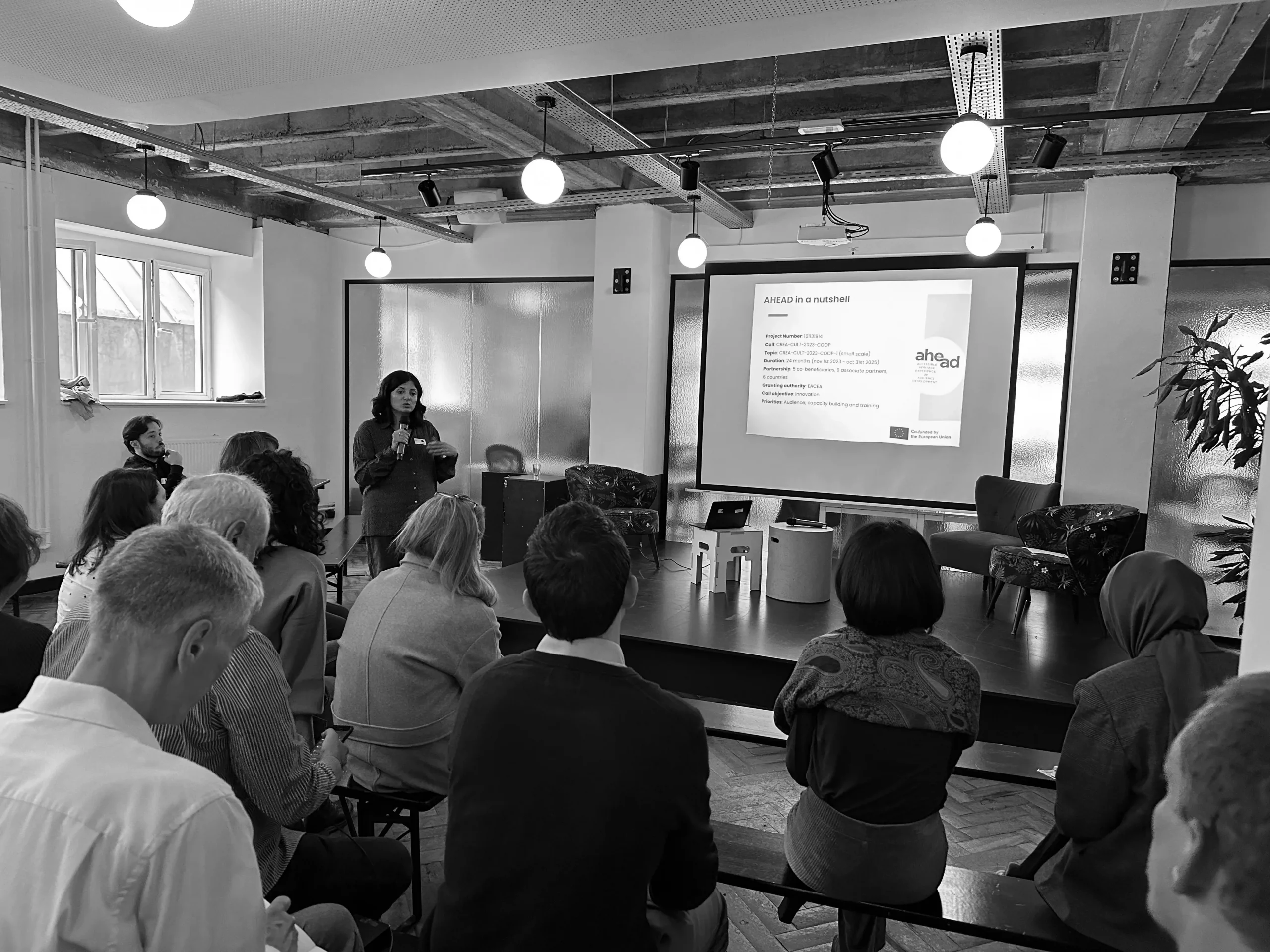
AHEAD presented in BeCentral in Brussels. Woman speaking, audience seated.

The AHEAD project concluded its journey with a dynamic final multiplier event in Brussels on October 13th, 2025, bringing together cultural professionals, researchers, and policymakers to explore how co-creation and audience-centered approaches can shape a more inclusive and innovative future for the cultural heritage sector.

“HERITAGE is proud to be a part of the AHEAD project, working to give Cultural Heritage Professionals the tools and methods to use design thinking to co-create new experiences with their target audiences and develop new audiences for their institutions,” said Roula Gkika, the organization’s AHEAD project manager.

Hosted at BeCentral, the event, titled “AHEAD in Brussels: Co-creation Tools for Cultural Heritage”, offered an engaging afternoon of presentations, discussions, and collaboration. Gilles Pellayo, representing the European Education and Culture Executive Agency (EACEA), addressed participants, highlighting the project’s contribution to EU priorities in culture, participation, and capacity building.

Participants heard from AHEAD partners including the Archaeological Park of Ostia Antica, the National Museum and Research Center of Altamira, and the Archaeological Museum of Messara, alongside artists, researchers, and cultural managers who have co-developed and tested AHEAD’s participatory tools across Europe.

Through a series of interactive sessions, from a “World Café” on capacity building, innovation, and sustainability to collaborative discussions on turning project learnings into practical, long-term tools, attendees exchanged ideas and charted new paths for audience engagement and institutional change.

The event closed with reflections and a networking reception that celebrated the project’s achievements and the strong partnerships forged throughout its implementation.

Funded by the Creative Europe programme of the European Union, AHEAD has aimed to enhance the capacity of cultural heritage institutions through a participatory audience development model. Over the past two years, the project has developed co-creation frameworks and practical toolkits that empower museums and cultural organizations to engage their audiences as active partners in heritage interpretation and innovation.

HERITΛGE run the AHEAD Greek hub in the Archaeological Museum of Messara in Crete and contributed to the project’s capacity building, community engagement and communications work.


Celebrating Cultural Heritage in Lahore

In August 2025, Lahore hosted two events that celebrated Pakistan’s rich heritage and explored innovative approaches to its preservation with the participation of our Preservation of Buddhist Rock Reliefs in the Swat Valley project.

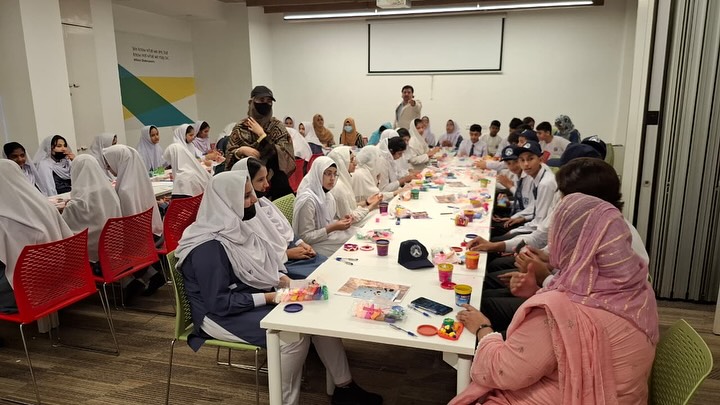
At the British Council Library in Lahore, school students from across the city took part in an interactive session designed to introduce them to the Gandhara civilisation and its artistic legacy. Organised under the project “Preservation of the Buddhist Rock Reliefs in the Swat Valley: Digital Documentation, First-Aid Conservation, and Climate Change Adaptation,” the initiative forms part of the British Council’s Cultural Protection Fund (CPF) and was implemented in collaboration with national and international partners, including the Directorate of Archaeology and Museums, Khyber Pakhtunkhwa, the Italian Archaeological Mission to Pakistan, The Heritage Management Organization, and Essanoor Associates.

During the session, students engaged in creative workshops that encouraged exploration of heritage, history, and environmental awareness. They painted tote bags inspired by Gandharan motifs and crafted clay replicas of artefacts. The programme successfully combined artistic expression with educational enrichment, fostering both appreciation and curiosity for cultural preservation. 

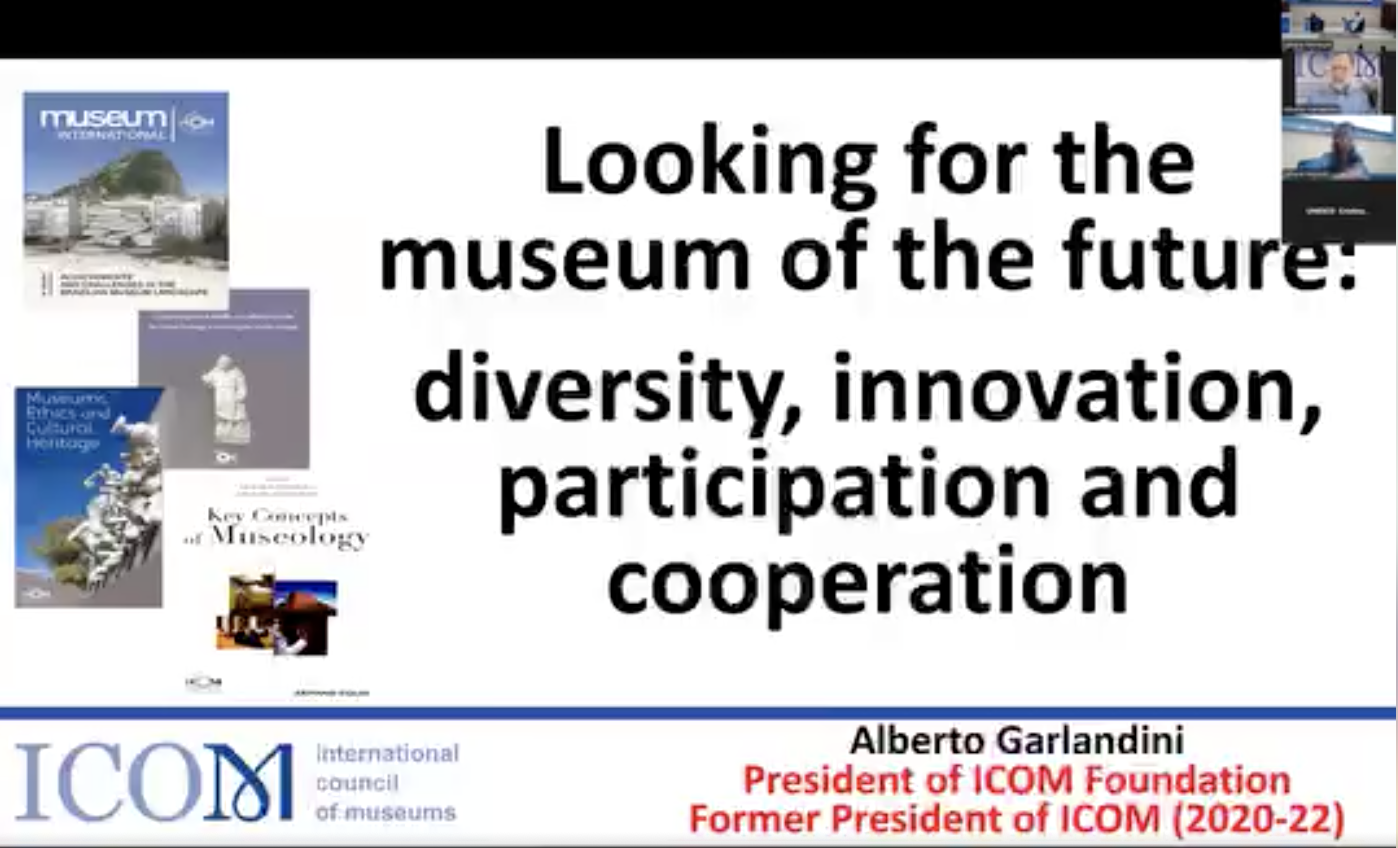
On the same day, the Lahore Museum hosted an International Panel Discussion entitled “The Future Museum: Technology, Heritage Conservation, and Inclusive Innovation.” The event was supported by ICOM, UNESCO, Essanoor Associates, the Heritage Management Organization, and the Tourism, Archaeology and Museum Department, and featured experts including Dr. Cristina Mengazzi (UNESCO), Alberto Garlandini (ICOM Foundation), Ar. Kashif Essa, and Malik Magsood, with moderation by Zainab Sabri, the Museum Education Officer. The panel examined the evolving role of museums, highlighting how technological advancements, innovative curation strategies, and inclusive practices can make cultural institutions more accessible and sustainable. Discussions also addressed local challenges and opportunities, bridging international perspectives with Pakistan’s heritage context. Th recording is available on Lahore Museum’s Facebook page

Both were fantastic initiatives which illustrated Lahore’s multi-faceted approach to cultural engagement, demonstrating how hands-on educational programmes for young learners can complement professional dialogues on innovation and preservation.


Summer Field School in Community Engagement for Cultural Heritage

This summer, HERITΛGE’s 11th Engaging Communities in Cultural Heritage Summer School brought together students, researchers and practitioners from around the world for two weeks of learning, discovery and collaboration. Through a range of activities, participants explored how communities engage with cultural heritage through a mix of academic sessions, practical fieldwork and creative activities.

The first week of the programme involved online teaching where participants were introduced to the ideas of engaging communities. Then, from June 23rd to July 6th, participants travelled to the Island of Paros where they were able to further explore what they had learned. Here is a look back at how it went.

Day 1: Mapping First Impressions
The in-person programme began in Paroikia, the island’s capital. After an introductory session, participants stepped out to create personal maps of the area using their senses as guides. In a group discussion, they shared first impressions and identified key questions to explore in the days ahead.

In the evening, the group travelled to Aliki to join the Klidonas midsummer festival. Music, dancing and lively conversation provided a first opportunity to connect with the local community and one another.

Day 2: Sensing the Island
Participants deepened their exploration by tuning into the sensory dimensions of Paroikia, focusing on its sounds, smells, textures and colours. Later, they collaborated on a collective mental map that reflected both individual and shared perspectives.

The day ended with a welcome dinner by the coast, accompanied by traditional music and conversation.

Day 3: Observation and Oral History Skills
Having become more familiar with the environment, participants focused on specific locations of interest, blending observation with active participation.

A hands on session introduced tools and techniques for conducting oral history interviews, with a focus on audio and video recording.

Day 4: Learning from the Locals
The group met with Spyros Mitrogiannis, a leading figure in local cultural work, who guided a visit to the Institute for Archaeology of Paros and the Cyclades. He shared insights into the cultural, environmental and political landscape of the island.

In the afternoon, participants examined themes such as ancient quarrying, fishing traditions and contemporary religious practices, laying the groundwork for their field research.

Day 5: Stories from Afar and At Home
Two guest speakers enriched the day’s programme. In the morning, Traci Kawai presented the Fisher Child project from Cape Town, a VR and AR exploration of sea, memory and healing.

In the evening, Katerina Konstantinou shared her research on folklore and local material culture, examining how heirlooms and souvenirs shape participatory documentation.

Between sessions, teams continued developing interview guides in preparation for community engagement.

Day 7: Walking the Paths of Heritage
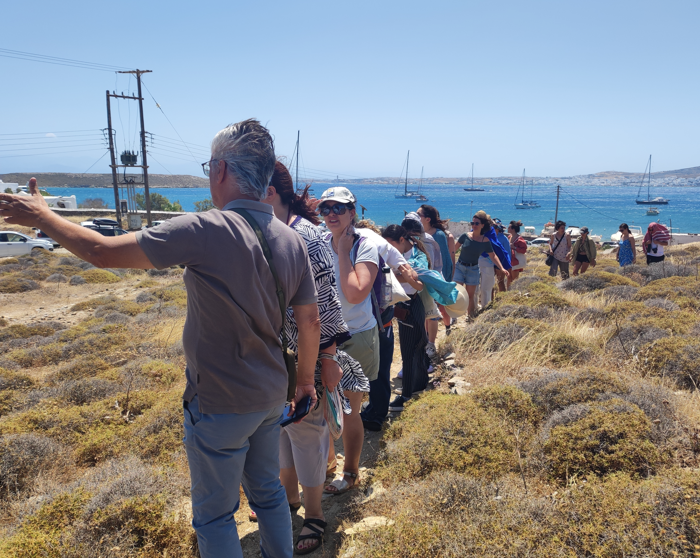
In northern Paros, participants met Malatestas, President of Paros Park, who spoke about the challenges of heritage management and local involvement. A walk through the park’s trails highlighted the close ties between landscape and culture.

The day concluded with a beautiful sunset watched from the beach.

Day 8: Festivals and Tourism
The day focused on festivals as expressions of identity. Vicky Papadimitriou shared her experience with local, regional and national events, while Tim Healing offered case studies on community tourism and sustainability, prompting thoughtful discussion on responsible development.

Participants also used the day to refine their ongoing projects.

Day 9: Stories Set in Stone
The morning opened with discussions about interviews already carried out, ranging from fishing traditions to quarrying and religious offerings.

In the evening, Spyros Mitrogiannis led a visit to the Ancient Marble Quarries at Marathi, offering historical context and highlighting present day challenges around preservation.

Day 10: Visual Identity and Storytelling
Participants continued reviewing interview materials and shaping their group projects. In the afternoon, Irene Biza led a session on design and identity, exploring how visuals influence perceptions of place.

The day concluded with a screening of Yorgos of Kedros, a documentary that sparked reflection on storytelling and self representation.

Days 11 and 12: Final Preparations and Reflections
As the public presentations approached, teams worked to analyse ethnographic data and create podcasts, videos and visual materials.

Participants also attended a lecture by visual artist Natassa Biza, who offered new insights into ancient spolia around Paroikia, challenging conventional perceptions of historical remnants.

The final day was dedicated to collaboration, as teams prepared their presentations to the local communities and reflected on their shared journey.

Online Conference and Presentation 


The field school concluded with the Online Engaging Communities Conference on Sunday, July 6th, where participants shared their insights and creative outputs with an international audience. This event was exclusively available to our trainees and alumni and included presentations and insights from the Summer Field School Alumni who shared their current research projects, sparking an engaging session enriched with thoughtful discussions and commentary.

Following the conclusion of the Conference, the trainees organized a presentation of their work that was open to the public and was widely attended. The presentation took place in the Dimitrokopoulos Building in Paroikia, with the kind support of the Municipality of Paros.  During this second part of the evening, participants had the opportunity to share insights from our two weeks of fieldwork with attendees interested in their work.

“After days filled with collective challenges and individual discoveries, often marked by the initial confusion that is so characteristic of ethnographic research, this final presentation felt like both a validation of our efforts and an affirmation of our growing professional identities,” reflects trainee Claudia Valisano. “Beyond that, the event also had the potential to spark fresh interest among local residents in the island they call home, renewing awareness both for them and for us. Once all speeches were delivered and questions from the audience were addressed, guests were invited to enjoy food and drinks on the building’s beautiful terrace.”

You can find out more about our Summer School programmes and future dates here.


Strategic Planning for Heritage Managers

From 9 to 11 May 2025, HERITΛGE hosted an online workshop on strategic planning for heritage managers, led by Dr Alexandros Papalexandris. The workshop brought together 18 participants from 13 countries across Africa and Europe, aiming to strengthen strategic thinking, build organisational capacity, and support long term planning in the heritage field.

Over three days, participants explored key concepts such as vision and mission setting, stakeholder engagement, SMART objectives, and the role of values in strategy. They learned to use practical tools including SWOT and PESTEL analysis to assess internal and external environments, and examined the differences between planned and emergent strategies.

Working in teams, participants applied these concepts to four real projects: digitising rural culture in South Africa, preserving traditional African sports and games, creating a youth heritage club in Uganda, and documenting a historic monastery collection in Ethiopia. These case studies encouraged collaborative learning and practical application.

The second day featured a guest lecture by Debashish Nayak, a leading architect and heritage expert, who shared insights from over three decades of work on urban conservation in India. His talk highlighted the importance of community involvement and education in heritage preservation, drawing on his experience leading Ahmedabad to become India’s first UNESCO World Heritage City.

The course leader really articulated everything till I really understood and I appreciate his patience through out. [The course will help me to] strategic plan and execute our vision and mission and align them.

~Paidamoyo Mandizvidza, Deputy Director Digital Content and Multimedia Broadcasting at African Traditional Sports and Games Confederation

The final day focused on competitive advantage, strategic implementation, and evaluation. Participants discussed how to align resources with organisational goals and studied cases from institutions such as the British Museum and Cirque du Soleil. They also explored the use of feasibility studies and business plans to support strategic initiatives.

The workshop was a great success, equipping participants with practical tools and strategic insights tailored to the needs of the heritage sector. Feedback was overwhelmingly positive, highlighting the value of real case studies, expert guidance, and peer learning.

For more information about HERITΛGE’s workshops, go to our open courses page, or follow us on Facebook, Twitter / X, LinkedIn or Instagram.


Countries represented: Czech Republic, Ethiopia, Ghana, Kenya, Lesotho, Niger, Nigeria, Rwanda, South Africa, Tanzania, Uganda, Zambia, Zimbabwe.


  • 1
  • 2
Newsletter Sign-up