
From fieldwork to community dialogue: a summer school event
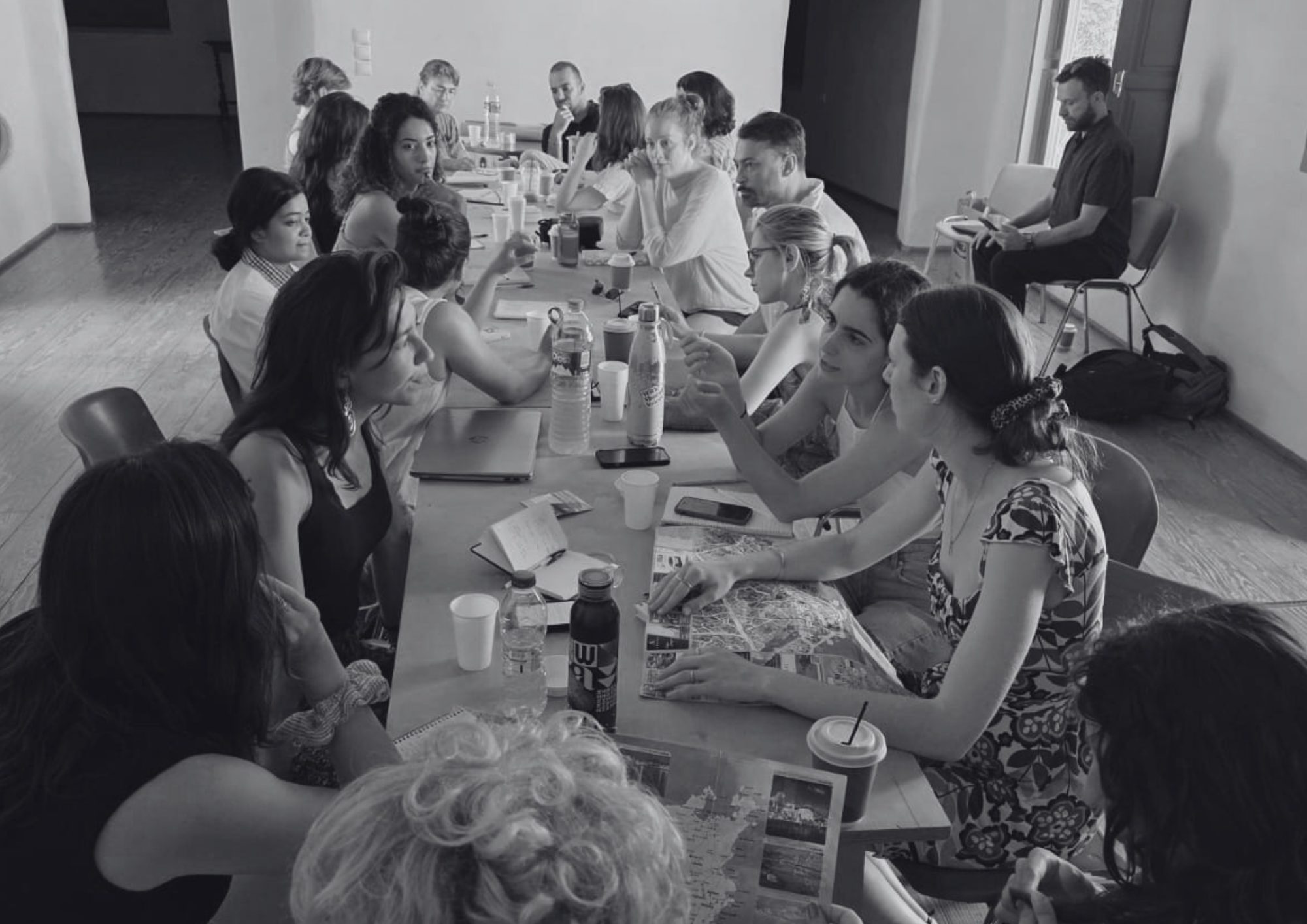
After two weeks of immersive fieldwork across Paros island in Greece, participants in the HERITΛGE Engaging Communities in Cultural Heritage Summer Field School concluded their learning journey by returning their research to the community that helped shape it.
Hosted on June 26th in the Dimitrakopoulos Building in Parikia, the public event brought together local residents, municipal representatives, heritage practitioners and visitors for an evening celebrating collaboration, dialogue and shared discovery. Rather than presenting research solely as an academic exercise, participants shared the stories, experiences and perspectives they had gathered through interviews, observations and conversations with the people of Paros.
Guided by HERITΛGE trainers Dr Aris Anagnostopoulos and Dr Lena Stefanou, the event showcased how community-based heritage research can strengthen connections between people, place and cultural heritage. Participants also had the opportunity to be instructed by Dr Evangelos Kyriakidis, HERITΛGE Director, and Valya Stergioti, heritage interpretation consultant and trainer.
One research group explored the vibrant artistic life of Paros. Through interviews with local artists, makers and craftspeople, the participants documented the diversity of creative practices found across the island, producing a compelling short documentary celebrating the people whose work continues to shape Paros’ cultural identity.
A second group investigated the concept of spolia—the reuse of ancient architectural elements within more recent buildings. Combining historical research, interviews and personal reflections, the team created a poetic video essay inviting audiences to discover traces of the past embedded within the island’s contemporary landscape and to see familiar streets through a different lens.
Another group focused on Paros’ rich food heritage, examining how local products, traditions and everyday practices carry stories of identity, memory and belonging. Through conversations with cheese producers, olive oil makers, bakers and local families, the participants developed an interactive StoryMap and an illustrated zine highlighting food as a living expression of community heritage.
Giving back to the community
The evening was more than a presentation of research findings. It became an opportunity to give something back to the people whose knowledge, generosity and lived experiences made the projects possible. Discussions continued long after the presentations had ended, as participants and members of the local community gathered on the rooftop of the Dimitrakopoulos Building to enjoy local cheese, wine and conversation under the Parian summer sky.
The event reflected the philosophy at the heart of the Engaging Communities in Cultural Heritage Summer Field School: that heritage is created through dialogue, participation and collaboration. By placing local communities at the centre of the learning experience, participants not only developed new research skills but also discovered the importance of listening, co-creating knowledge and sharing it with those to whom it belongs.
The Summer Field School concluded the following morning with an online presentation by Alexander (Sandy) Colvine, Project Manager of the EMPATHS project, who introduced participants to innovative approaches to participatory heritage interpretation. The session offered an opportunity to reflect on the fortnight’s field experience within a broader European context, highlighting how community participation is reshaping the ways heritage is interpreted, experienced and shared.
HERITΛGE extends its sincere thanks to everyone in Paros who welcomed participants into their homes, workshops, businesses and communities, generously sharing their stories, experiences and perspectives. Their openness and hospitality made this year’s Summer Field School a truly collaborative and memorable experience.
We also warmly thank Paros’ Deputy Mayor for Culture, Ms Anna Kagkani, and the President of the Paros Tourism Committee, Ms Katerina Barbarigou, for joining the Summer Field School, sharing their insights with participants and supporting this year’s public programme. Their engagement provided invaluable insights into the challenges faced by local decision-makers and business communities.
Throughout the two-week programme, participants also had the opportunity to engage with leading international practitioners and researchers. Guest speakers included Ghanaian scholar artist at The Africa Institute, National Institute of Singapore, Philip Kwame Boafo, Traci Kwaai who shared the inspiring journey of the Fisher Child project – which has received support through a HERITΛGE grant, HERITΛGE’s Tim Healing, Assistant Professor of Social Anthropology an Panteion University, Dr Despina Nazou, and local community leader Nikos Malatestas. We are grateful to all of them for sharing their thoughts and contributing to a unique experience for our trainees.