
Tag Archives: Mellon Foundation
7th Network Convening for African heritage grantees
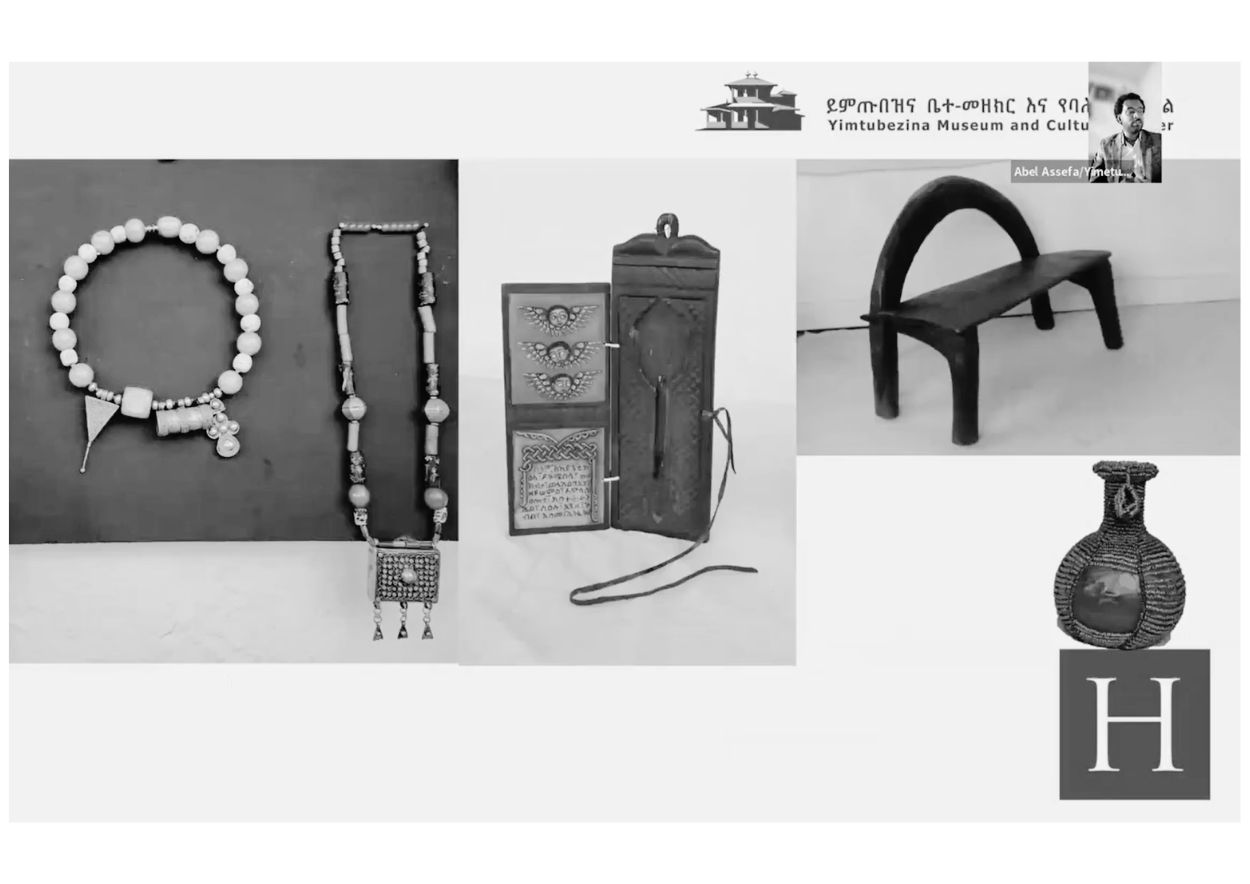
On 25 February 2026, HERITΛGE hosted the seventh online Network Convening for recipients of the Small Grants for African Heritage Projects, bringing together grantees, heritage professionals, members of the re-granting committee, and other partners supporting heritage initiatives across the continent.
The grants initiative is part of HerMaP Africa, HERITΛGE’s programme to strengthen heritage management capacity across the continent, funded by the Mellon Foundation. Through a series of small grants, the programme supports locally led heritage initiatives and fosters a growing network of heritage practitioners across Africa.
HERITΛGE has organised a series of grantee convenings, part of an ongoing effort to connect, support, and strengthen the network of African heritage practitioners funded through the grants programme. The seventh convening brought together participants from 30 funded and fiscally sponsored projects across Africa for two hours of presentations and discussion.
A Guest Address from the National Civil Rights Museum
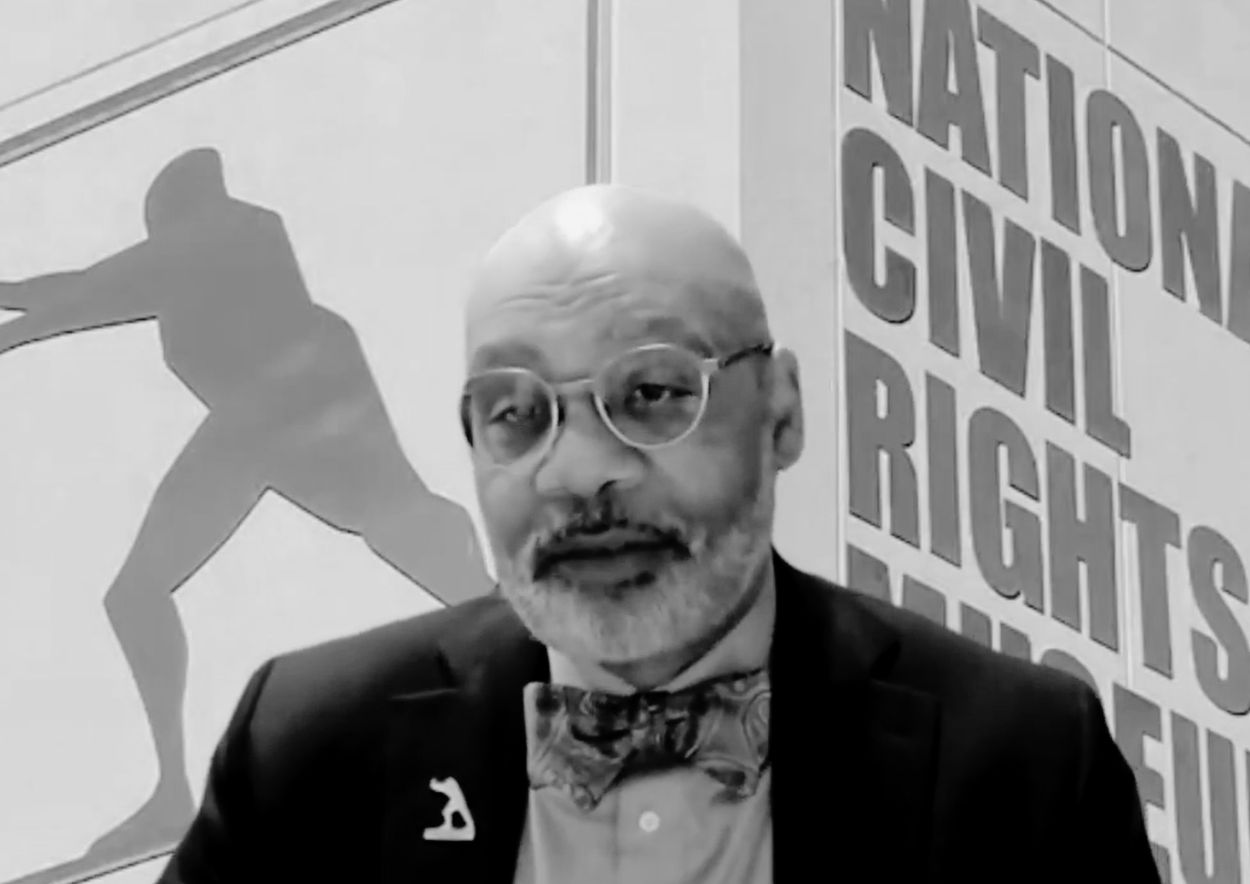
Dr. Russell Wigginton of the National Civil Rights Museum
The session opened with welcoming remarks from Richard A. Brown, Head of Grants and Partnerships at HERITΛGE, who also introduced the guest of honour, Dr. Russell Wigginton, President of the National Civil Rights Museum.
Dr. Wigginton presented the history and mission of the museum, a complex of historic buildings and exhibitions in Memphis that traces the story of the civil rights movement in the United States from the 17th century to the present day. His presentation highlighted the museum’s role not only as a site of remembrance but also as a space for education, dialogue, and social engagement.
The presentation offered valuable perspectives for the participating African heritage professionals, many of whom are working on projects that similarly connect heritage preservation, community memory, and social history.
Grantees Present Heritage Projects from Across Africa
Following the keynote presentation, grantees presented their projects in a series of short presentations designed to showcase the diversity of initiatives supported through the programme.
Five projects were presented during the session:
- Phelile Chima (Zambia) — The Preservation and Promotion of Traditional Zambian Barkcloth
- Agness Onna Gidna (Tanzania) — Empowering Community Conservation for Sustainable Development at Engaruka Heritage Site
- Ahlam Ahmed Mohamed Othman (Egypt) — Preserving Bedouin Oral Literature
- Abel Assefa Girmay (Ethiopia) — Standardization, Documentation and Digitalization of Museum Collections for Effective Heritage Management
- Wacelia Marcelino Zacarias Zualo (Mozambique) — Weaving Resilience: Preserving Carpet Weaving and Cultural Knowledge in Palma, Cabo Delgado
As in previous convenings, presenters were given five minutes each to introduce their work, using a timer to ensure all speakers stayed within the allotted time. Following the presentations, participants engaged in an open question-and-answer discussion.
Several projects generated particular interest among the audience. Participants asked numerous questions about the traditional uses and cultural significance of Zambian barkcloth, while Ahlam Ahmed Mohamed Othman shared a video documenting Bedouin oral literature, providing a vivid glimpse into the storytelling traditions her project is working to preserve.
Strengthening a Network of Heritage Practitioners
As the session drew to a close, the team encouraged grantees to remain connected and continue sharing updates, experiences, and lessons learned.
Over the past two years, the convenings have become an important platform for mutual learning, peer support, and collaboration among heritage professionals working in diverse cultural contexts across Africa.
Even as the grant cycle concludes, HERITΛGE hopes that the relationships built through these sessions will continue to grow, ensuring that the community of African heritage practitioners supported through the programme remains active, collaborative, and engaged.
Coming up next: A Convening of our Fiscally Sponsored project grantees.
Celebrating Progress: The Kayonza Cultural Heritage Center Nears Completion
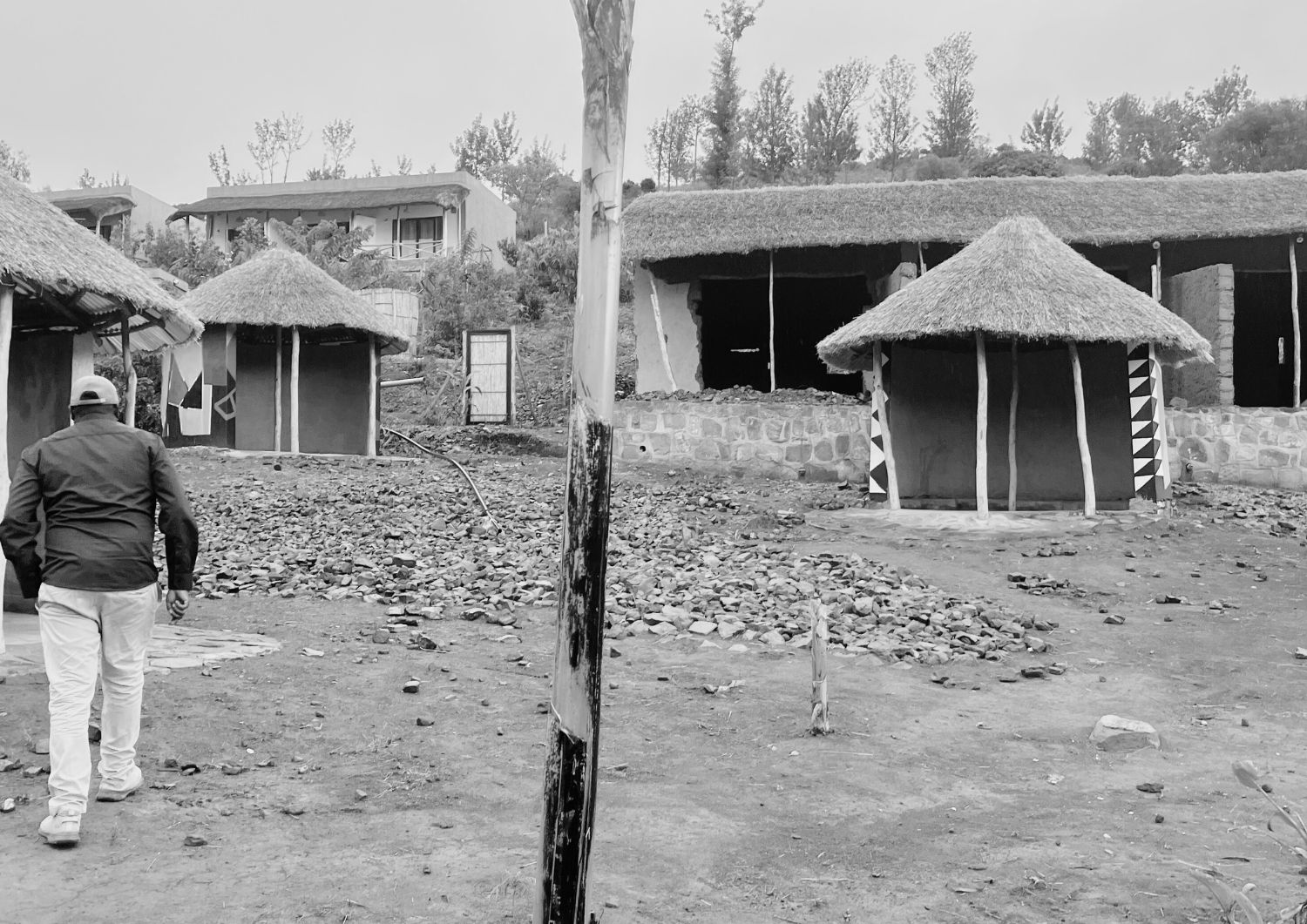
By Greg Bakunzi | Co-Founder, Red Rocks Rwanda
We’re thrilled to share exciting updates from the heart of Kayonza, where our vision for a vibrant Cultural Heritage Center is now becoming a reality. What began as a dream to blend culture, conservation, and community has now taken solid form, with construction already 70% complete.
Since its founding, Red Rocks Rwanda (RRR) has stood for one big idea: that cultural tourism can be a force for community development. From our home in Musanze to the open plains of the Eastern Province, our work continues to prove that when people take pride in their heritage, they also protect the land that sustains them.
Building with Heart and Heritage
The new Kayonza Center beautifully combines modern design with traditional inspiration. Think of hybrid thatch and metal roofs echoing ancestral homes, handwoven sisal wall art, and furnishings crafted from reclaimed local wood. Each detail tells a story. Even as builders complete the last phases of interior work, artisans are already using finished spaces for craft workshops and storytelling sessions.
Overcoming Challenges with Innovation
No journey is without obstacles. Along the way, we’ve had to navigate strict zoning and environmental regulations, especially in flood-prone areas. But rather than slow us down, these challenges inspired innovation. Working closely with REMA (Rwanda Environment Management Authority), we designed elevated foundations and permeable pavements that protect both our buildings and the environment.
These collaborative solutions turned challenges into opportunities, and something wonderful happened. Community participation grew stronger than ever. Local leaders, once cautious, are now some of our most enthusiastic advocates.
Expanding Our Reach
What started as one cultural center is now inspiring a network of seven connected sites around Kayonza. Each will focus on preserving pastoral traditions and fostering eco-tourism experiences like guided Inyambo cattle sessions, heritage walks, and community storytelling circles.
The Kayonza site is now the anchor for seven interconnected cultural locations, each celebrating Rwanda’s rich pastoral traditions. Visitors will soon enjoy experiences like:
-
Inyambo cattle demonstrations with traditional herders
-
Interactive craft workshops led by local cooperatives
-
Cultural storytelling evenings around communal fires
-
Agro-tourism and heritage trails connecting culture with conservation
Looking Ahead
The Kayonza Cultural Heritage Center isn’t just a construction project; it’s a growing movement for cultural preservation and sustainable livelihoods. Here’s what’s next:
-
Creating 200 new jobs for youth and women by 2026
-
Launching vocational training in crafts, hospitality, and eco-agriculture
-
Developing digital archives to safeguard Rwanda’s herding and farming heritage
-
Linking Kayonza cultural tours with Akagera safaris, opening new tourism opportunities
A Call to Our Supporters
At 80% completion, we’re closer than ever to our goal, but there’s still more work ahead. We extend heartfelt gratitude to our partners, especially the Mellon Foundation and The Heritage Management Organization, whose belief in our mission keeps us moving forward.
We invite you, friends, donors, and cultural enthusiasts, to be part of this next chapter. Your continued support helps us preserve Rwanda’s living heritage while creating lasting opportunities for the communities that call it home.
Sixth Online Networking Convening of Africa Grantees
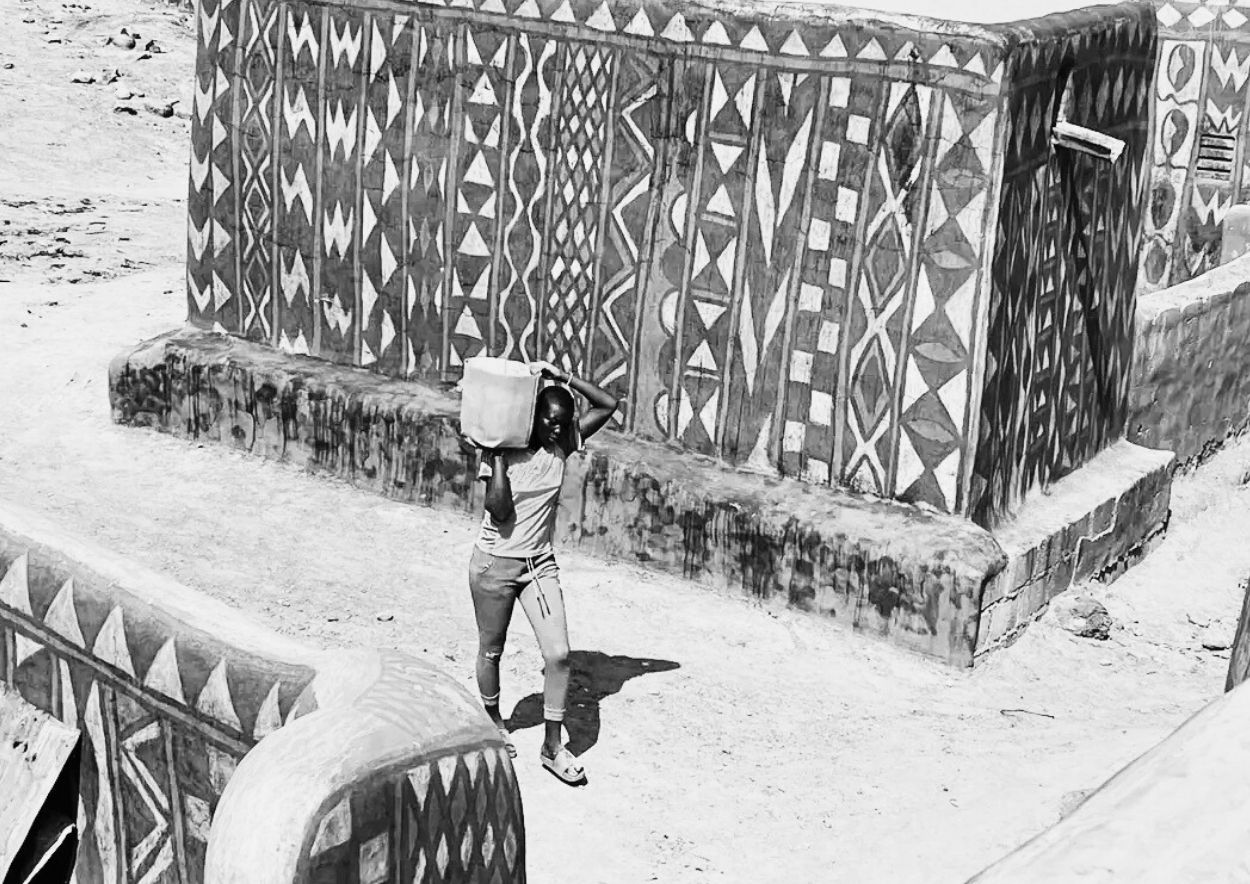
On 10 December 2025, the HERITΛGE Africa Grants Team held the sixth online networking convening for grantees awarded in 2024. The meeting brought together grantees, HERITΛGE staff, members of the Re-granting Committee, representatives of the Mellon Foundation, and other African donors, with 45 attendees. After welcoming remarks by Richard A. Brown, seven grantees shared their projects. These ranged from documenting traditional boat-making in Mauritius and supporting cultural teaching in Senegal to safeguarding heritage industries in Sudan and revitalising museums in Chad and Ghana.
“Hearing the diverse experiences of colleagues across Africa reminded me that we are part of a wider heritage community, facing similar challenges, but also drawing inspiration and new ideas from one another.”
After the presentations, grantees’ refelcted on presenting their work and learning from one another. Participants discussed how the experience of sharing their projects encouraged them to reconsider elements of documentation, community engagement, and youth involvement in heritage work. Several grantees noted that hearing from others sparked new thinking about how to approach their own initiatives and opened possibilities for collaboration across contexts.
The sixth convening highlighted the strength of these gatherings in creating a space for peer learning, shared reflection, and mutual support, reinforcing HERITΛGE’s commitment to fostering heritage initiatives across Africa.
The participants and projects featured were:
-
Dr. Jayshree Mungur-Medhi, Mauritius: ‘Living the Heritage in Vieux Grand Port – Documentation and Transmission of Traditional Boat Making’
-
Abdoulaye Diao Noumounthi, Senegal: ‘ElleSolaire Cultural Academy’
-
Dr. Gafar Ali Fadol Ibrahim, Sudan: ‘Safeguarding Living Cultural Heritage in the Sudan at the Time of Conflict: Documentation of Cultural Industries (Pottery and Basketry) of Sinkat Locality in the Red Sea State’
-
Yaw Mankatah Asare, Ghana: ‘Abibikwantuo (AK) Indigenous Sustainability Hub’
-
Ngague Gaga Taguimbi, Chad (presenting on behalf of Ganda Bini Djabou): ‘Restoration and revitalization of the Sarh Museum’
-
Prof. Pastory Magayane Bushozi, Tanzania: ‘Conservation and Promotion of Cultural Sites in the Eyasi Basin, Tanzania’
-
Isaak Aduko, Ghana: ‘Protection, preservation and promotion of Fort Fredericksburg’
This was the sixth out of six planned events aimed at showcasing projects funded through our Small Grants for African Heritage Projects initiative, made possible through generous funding by the Mellon Foundation. 75 projects have received around $1 million in funding. You can read more about the specific projects on our Africa Grants page.
Gambia President visits Jufureh museum supported by HERITΛGE
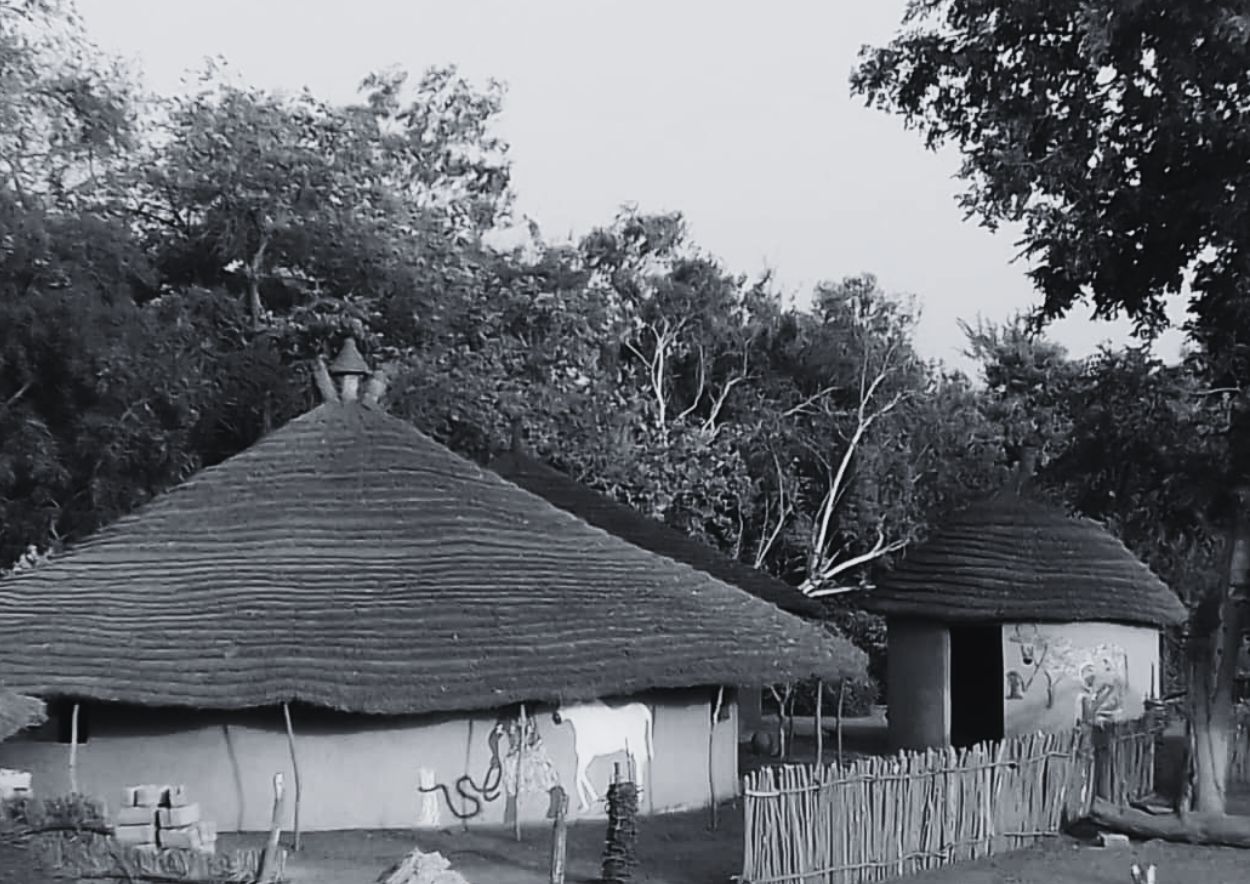 In a strong show of support for the preservation of The Gambia’s cultural heritage, His Excellency President Adama Barrow visited the Jufureh Heritage Village Museum in the North Bank Region. The visit marks a proud moment for HERITΛGE, as the new museum has been made possible with funding from our Small Grants for African Heritage funded by the Mellon Foundation—and our HerMaP Gambia initiative, funded by the European Union.
The Jufureh Heritage Village Museum, developed by the Alamanding Foundation, is a community-driven initiative dedicated to safeguarding traditional knowledge, skills, and stories for future generations. More than a space for preserving artefacts, it serves as a living museum—a place where culture thrives through civic education, environmental awareness, artisan workshops, and storytelling gatherings at Banta Baa, a communal hub for cultural exchange.
At the heart of the project is the construction of a traditional Mandinka homestead, built using local materials and techniques that reflect the authenticity of rural Gambian life. The homestead complements an already completed Fulani compound, together forming a vibrant cultural complex that celebrates the shared heritage of the Mandinka and Fula communities of the Niumi District.
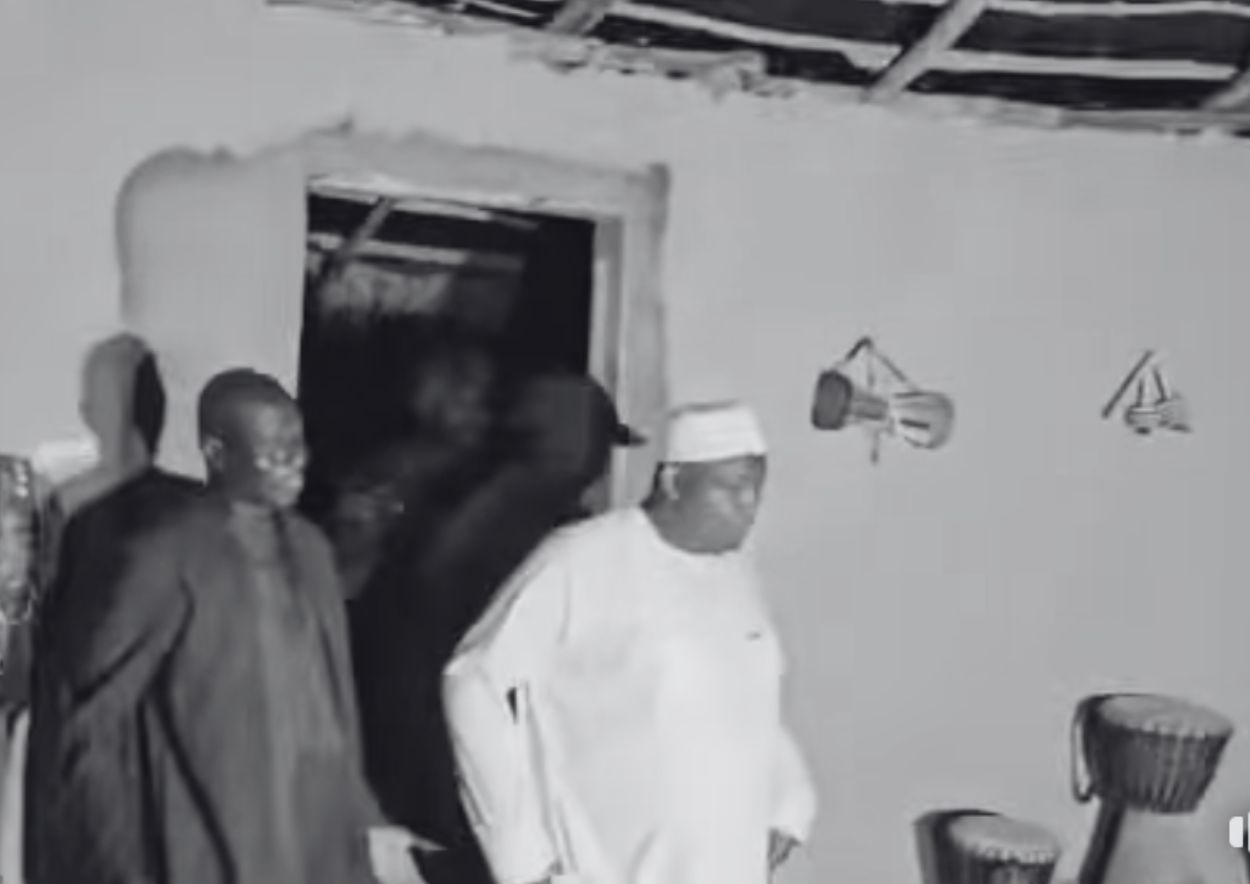
The initiative also supports sustainability and community empowerment. A solar-powered borehole has been installed to provide clean water and electricity to the site, ensuring that the museum operates in an environmentally responsible way. Meanwhile, 12 local stakeholders—including tour guides, museum staff, and tourism officials—have been trained by HERITΛGE in oral history collection, heritage interpretation, and cultural tourism marketing.
These activities are already generating impact. The museum has become a focal point for visitors seeking deeper engagement with Gambian heritage and for locals who see their traditions valued and sustained.
HERITΛGE is proud to have contributed to a project that not only preserves heritage but also creates opportunities, strengthens local identity, and demonstrates the power of community-led action. President Barrow’s visit is a testament to the national importance of such efforts and to the shared vision of building a more inclusive and sustainable future for heritage in The Gambia.
You can now visit the museum and find out more about Jufureh’s heritage. Find out more here.
*HERITΛGE’s Small Grants for Africa Initiative is supported by the Mellon Foundation’s Humanities in Place program. This project has also received funding from EU-funded HerMaP Gambia.
How HERITΛGE is using Generative AI to improve cultural heritage funding

AI-generated image sourced from Canva
Generative Artificial Intelligence (GenAI) has taken the world by storm — transforming the way we write, design, and make decisions. But at HERITΛGE, we’re exploring how it can achieve something even more meaningful: help us understand, evaluate, and support community-led cultural heritage projects.
In 2023 HERITΛGE launched a call inviting and receiving hundreds of proposals from organizations, communities, and individuals in Africa to apply for small grants for Africa heritage projects — from traditional crafts and oral histories to sustainable tourism and cultural education. This was part of our HerMaP Africa initiative, supported by the Mellon Foundation.
The response was phenomenal. We received an unprecedented number of proposals from around the continent, over 1,700. A committee of experts was set up to examine them and decide which projects would be funded – no easy task!
To ensure that our funding decisions were fair, transparent, and data-driven, following the completion of the committee’s work, we joined forces with researchers from the Technical University of Munich (TUM) and Institute of Computer Science, Foundation for Research and Technology – Hellas (FORTH) – also our partners in the EU-funded SHIFT project, and the Group on Language, Audio, and Music (GLAM), at Imperial College London. Together, we set out to answer a simple but powerful question:
Can open, ethical AI help us make smarter and more equitable funding decisions?
The researchers, including HERITΛGE director, Dr. Evangelos Kyriakidis,introduced a framework that developed a new framework to analyze large collections of project proposals in the cultural heritage field — using a mix of established methods and the latest artificial intelligence (AI).
Our goal was to understand what themes and priorities appeared most often in proposals, and what factors might influenced their success.
To do this, we combined traditional topic modeling tools (which find recurring themes in texts) with large language models (LLMs) — the same kind of advanced AI behind tools like ChatGPT.
First, the traditional models identified broad topics across more than 1,700 project proposals focused on protecting and promoting heritage in Africa. Then, newer AI models refined these themes, helping us define them more precisely and in ways that make sense for the heritage field.
We also looked at how language was used in the proposals — for example, how complex the writing was, what tone it used (positive or negative), and whether certain patterns in language might influence how proposals are received.
This approach helped uncover hidden insights about how funding is distributed and what kinds of projects tend to succeed. Ultimately, the aim is to support more transparent and equitable funding decisions and to help cultural heritage organizations better tailor their proposals for impact.
Putting Ethics and Privacy First
While many people are familiar with AI tools like ChatGPT, these are proprietary systems that store data on external servers. When dealing with sensitive information such as grant proposals, that’s a serious concern.
Instead of sending data to the cloud, we used an open-source AI model (LLaMA3) and ran it entirely on our own secure systems. This ensured that all proposal data remained private and compliant with our ethical standards.
Finding Meaning in 1,700 Proposals
Our analysis identified 25 meaningful categories reflecting heritage priorities and emerging trends in real work on the ground in Africa— from agricultural heritage to sustainable crafts and inclusive education.
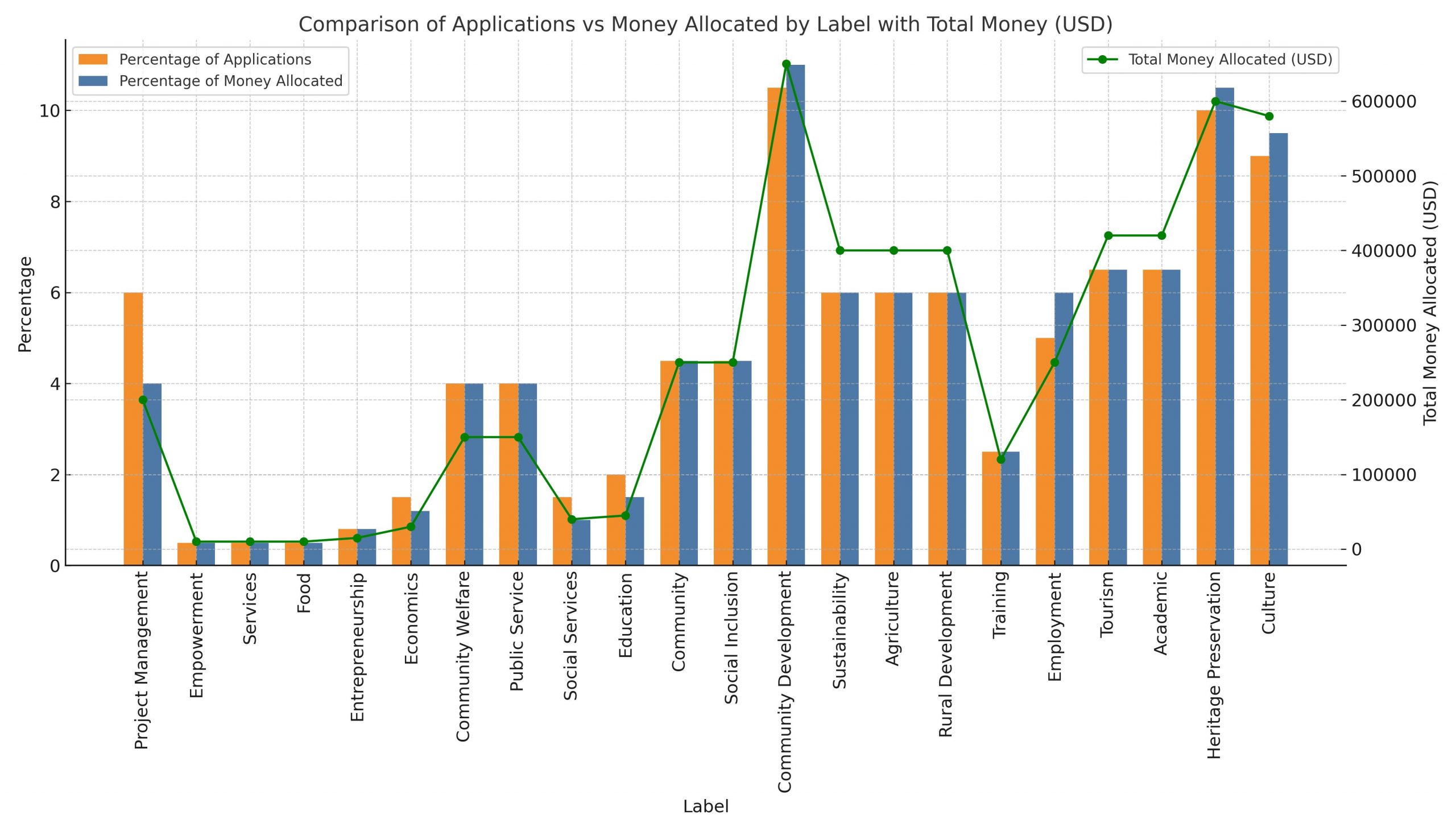 What we learnt was that Community Development, Heritage Preservation, and Culture emerged as the most common and well-funded themes. The figure below depicts how over $1 million of total allocations was apportioned among the 25 refined topics. Three leading categories—Community Development, Heritage Preservation, and Culture—each received close to $600,000. Meanwhile, areas like Social Services and Education fell below $50,000, indicating potential gaps in support.
Interestingly, Tourism and Academic work secured comparatively large allocations despite a smaller share of total applications, highlighting a more targeted focus in these areas. Keep in mind here that applicants had to demonstrate that their project has a lasting impact, develops capacity, builds networks, strengthens local skills, and has a strong, measurable impact for the protection of heritage and the benefit of local people.
Some topics tended to appear together. Our analysis showed that strong overlaps emerged among Community Development, Culture, and Heritage Preservation, implying that community-driven initiatives often intersect with preserving local culture. Similarly, Sustainability, Conservation, and Agriculture frequently clustered, reflecting an expanding emphasis on environmentally responsible heritage initiatives. By contrast, topics like Training, Business, and Economics tended to appear in isolation—suggesting room for more integrated, cross-cutting proposals (e.g. heritage based social enterprises).
We also used sentiment analysis, readability measures, and inclusivity keywords to study the “linguistic fingerprint” of each proposal: we found that sentiment, readabilitty and inclusivity all mattered. Accepted proposals scored higher in positivity, suggesting that evaluators respond well to an upbeat, confident tone. Both successful and unsuccessful proposals were typically quite technical, indicating that complexity alone isn’t a deal-breaker. However, a moderate level of clarity—i.e., avoiding overly dense jargon—tended to correlate with better outcomes. Terms like “diversity” and “accessibility,” as well as a moderate usage of gendered pronouns, appeared more frequently in awarded projects. This underscores the value placed on inclusivity and social impact within cultural heritage funding.
In plain terms, AI confirmed that trojects using positive and inclusive language tended to perform better with evaluators, showing that tone and clarity influence evaluation outcomes. These insights can guide future applicants toward stronger, more effective proposals.
Why It Matters
By uncovering patterns in both what applicants propose and how they articulate their projects, we can provide clearer guidance for future calls and better ensure that funding reaches impactful cultural heritage initiatives.
This study shows that AI, when used ethically, can help cultural heritage professionals make funding processes more transparent, efficient, and fair. It’s not about replacing human judgment but enhancing it with better data and insights — ensuring that resources reach the initiatives with the greatest impact.
HERITΛGE and its partners will continue refining this approach as a new call for proposals for heritage projects in Mexico will soon be published, under our recently launched HerMaP Mexico initiative.
You can find the study and more information on the TUM website.
HERITΛGE launches HerMaP Mexico
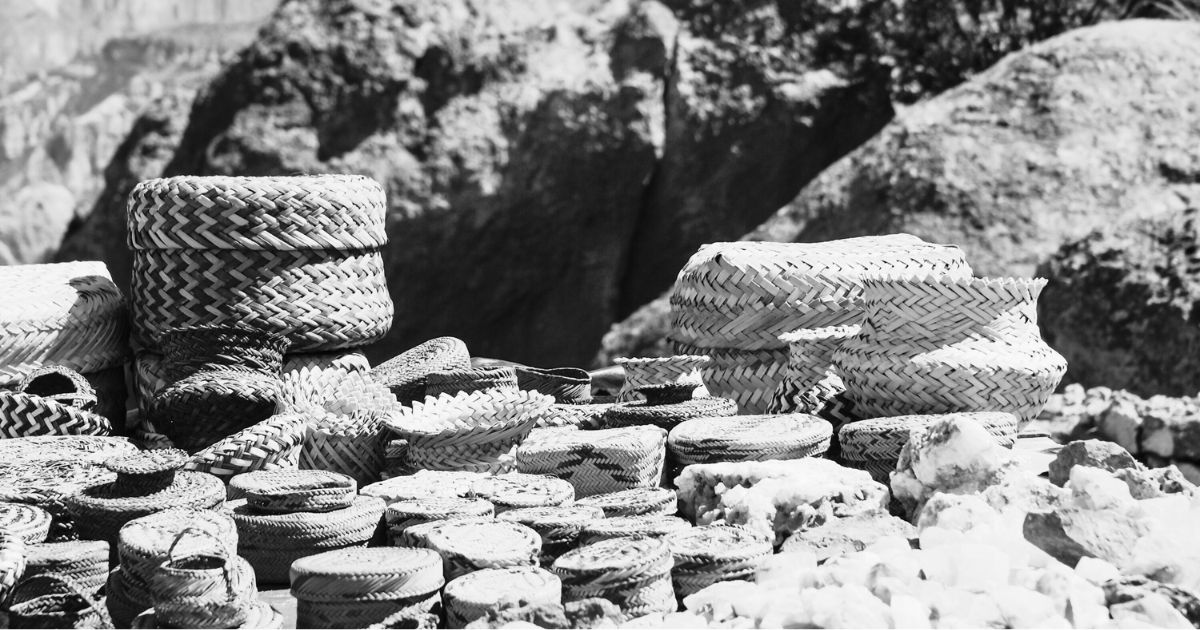
The Heritage Management Organization (HERITΛGE) is proud to announce the launch of HerMaP Mexico, a two-year intervention that will support heritage management initiatives across six Mexican states that share a border with the United States — Baja California, Sonora, Chihuahua, Coahuila, Nuevo León, and Tamaulipas — and empower local communities to harness their cultural heritage as a source of identity, learning, and sustainable development.
Building on the success of HERITΛGE’s international programs, this new project represents a major milestone in the organization’s growing engagement in North America. It will bring together heritage professionals, community organizations, and cultural leaders from across the region to map heritage ecosystems, build capacity, and support community-led projects.
“We see HerMaP Mexico as a transformative initiative — both for the organization and for heritage professionals across Mexico’s border states,” said HERITΛGE’s Denise Navarro Becerra, HerMaP Mexico Project Manager. “With the Mellon Foundation’s generous support, we aim to connect and empower those heritage managers and stewards in one of the world’s most dynamic cultural regions.”
A Four-Pillar Approach to Strengthening Heritage
HerMaP Mexico’s activities are structured around four key pillars:
- Mapping: Identifying actors, capacities, infrastructure, and gaps in heritage management across the six states.
- Capacity Building: Delivering targeted heritage management training programs adapted to and inspired by the local contexts through in-person and online sessions.
- Networking: Organizing regional networking events to connect local, national, and international actors in heritage management.
- Re-granting: Distributing small grants to community-focused heritage projects.
These activities will engage a wide range of stakeholders and topics in cultural heritage management, highlighting the richness and diversity of the border region’s cultural heritage. The program will run until September 2027, combining in-person activities with digital learning resources available through HERITΛGE’s Training Platform.