
Tag Archives: online training
Heritage Professionals Explore Strategic Planning
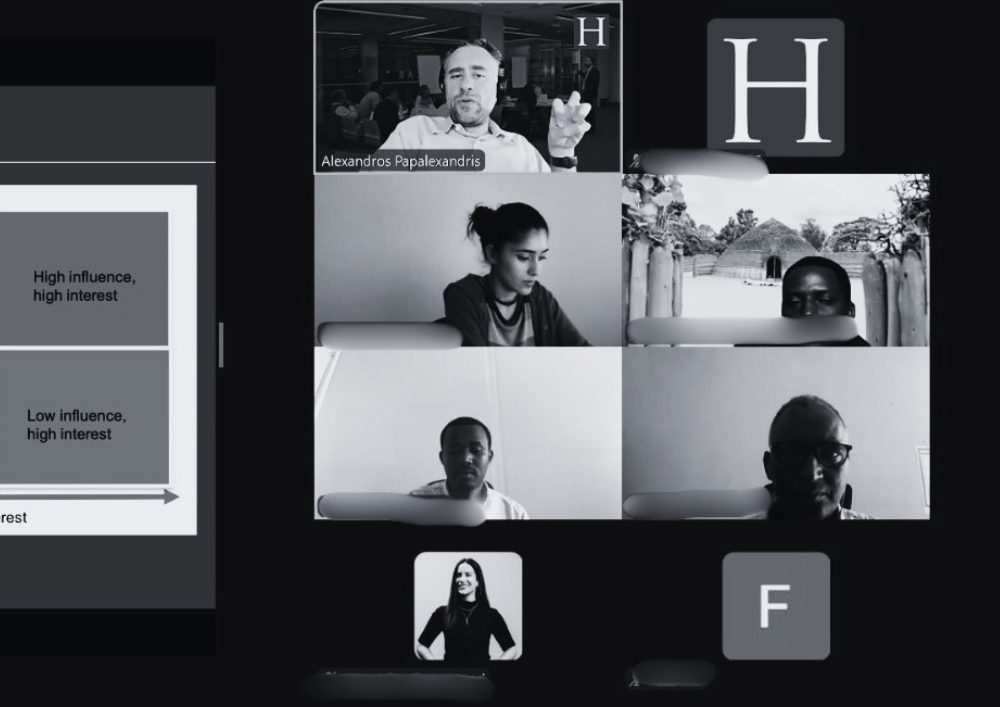 Professionals from across the global heritage and cultural sectors came together this May for HERITΛGE’s Strategic Planning Workshop, an intensive training programme designed to strengthen strategic thinking, organisational resilience, and long-term sustainability within the heritage field.
The workshop took place over two sessions, on 14–15 May and 21–22 May 2026, bringing together 18 participants from Greece, Rwanda, Malawi, Puerto Rico, the Democratic Republic of the Congo, Kenya, Ethiopia, Jordan, Turkey, Zimbabwe, and Botswana.
Led by Dr. Alexandros Papalexandris, the HERITΛGE strategy workshop offers a dynamic introduction to the core principles of strategic management and its critical role in shaping successful individuals and organizations. Participants explore how strategy is formed and applied, gaining insight into organizational vision, mission, and values, as well as how to translate them into clear, actionable strategic goals while effectively navigating change. A strong emphasis is placed on understanding stakeholders and aligning strategies with their expectations.
The program also develops participants’ ability to scan the external environment and industry landscape, using key analytical tools to identify opportunities and market segments. In addition, it highlights the foundations of competitive advantage, essential organizational resources and capabilities, and the key success factors behind effective strategy execution, including the basics of feasibility studies and business planning.
“The Strategic Planning Workshop aims to provide heritage professionals with practical tools and critical perspectives to help them navigate increasingly complex and uncertain environments,” said Foteini Giannoulidi, Educational Programs Manager at HERITΛGE. “What made this workshop particularly valuable was the diversity of experiences and perspectives brought by participants from different regions of the world. The discussions demonstrated how strategic thinking, collaboration, and adaptability are becoming essential skills for safeguarding and sustainably managing heritage today. It was also a great honour to welcome Ivan Verbytskyi, Deputy Minister of Culture and Strategic Communications of Ukraine, whose insights into managing culture and heritage during times of crisis offered participants an inspiring and deeply important perspective on resilience, leadership, and adaptability.”
The workshop was further enriched by a series of inspiring guest lectures and discussions on cultural resilience and leadership in times of uncertainty.
Among the guest speakers was Ivan Verbytskyi, Deputy Minister of Culture and Strategic Communications of Ukraine, who shared powerful insights into the unprecedented challenges faced by Ukraine’s cultural and heritage sector during the ongoing war. His lecture highlighted how heritage managers and cultural institutions can respond effectively during periods of crisis and instability.
One of the key takeaways from his presentation was the importance of flexibility and adaptability in strategic management. In rapidly evolving and unpredictable situations, the ability of managers to adjust quickly and make informed decisions under pressure becomes critical for sustaining institutions and protecting cultural heritage.
Participants also heard from Rafika Mokhtari, architect, co-founder of Izourane Algeria and HERITΛGE fellow. Rafika presented the heritage initiative in Algeria and shared practical lessons from its implementation, including the operational and strategic challenges encountered during the project’s development.
Her presentation offered participants valuable insight into real-world project execution, risk management, collaboration, and the importance of strategic planning in overcoming obstacles within the heritage sector.
HERITΛGE Launches Online Winter School

The Heritage Management Organization (HERITΛGE) is proud to announce the launch of its Winter School, an intensive online program dedicated to Engaging Communities in Cultural Heritage. Running from 26 January to 8 February 2026, this new training initiative builds on the success of HERITΛGE’s established training formats—its introductory 3-day workshop and its immersive summer field school.
As Foteini Giannoulidi, head of HERITΛGE’s Educational Department, explains, “our proudly launched Winter School serves as an intermediate training program between our workshops and our intensive Summer Field School. It is designed for heritage managers who seek a profound approach to community engagement in a remote format, offering the opportunity to complete an extensive, in-depth training program.”
Community engagement has become one of the most important and dynamic areas in heritage management. Around the world, museums, archives, cultural institutions, and local organizations increasingly recognize that meaningful engagement cannot rely on generic “toolkits.” Sustainable and ethical collaboration requires sensitivity to local contexts, awareness of community values, and approaches grounded in shared authority and co-creation.
The Winter School embraces this perspective. It offers a research-led, community-centred framework shaped by HERITΛGE’s extensive practical experience in Europe, Africa, and beyond. Participants will explore the principles and ethics of community engagement while developing practical skills such as applied ethnography, long-distance interviewing, digital documentation of personal and material heritage, collaborative storytelling, and interpretive planning. The program also examines how festivals, artistic practices, and community-driven initiatives can act as powerful platforms for participation and representation.
The course will be taught by Dr Aris Anagnostopoulos and Dr Lena Stefanou, with guest contributions from HERITΛGE Director Dr Evangelos Kyriakidis—a team bringing decades of experience in participatory research, community partnerships, heritage interpretation, and cultural practice.
This Winter School is designed for museum and heritage professionals, cultural managers, researchers, community organizers, and practitioners working in related fields such as archaeology, public history, archives, and tourism. Participants from all regions are welcome, and a strong command of English is required.
Applicants are invited to submit an online application. Those shortlisted will be contacted for a brief interview. Because places are limited, early application is strongly recommended.
Project Management Workshop: 20 participants from 18 countries

In December 2024, 20 participants from 18 countries joined HERITΛGE for the Project Management for Heritage Managers workshop. This 3-day online course aims to equip attendees with essential project management skills, guiding them through the entire project lifecycle.
The course instructor, Tim Healing, started day one with a discussion on the concept of a project, how it differs from everyday tasks and the key qualities of an effective manager. He then outlined the project manager’s responsibilities and essential skills before going over common pitfalls to avoid, equipping participants to recognise and address these issues early. These skills were then put into practice with a group analysis of a case study. The teams used this example to employ the project cycle framework and identify and resolve challenges, before drafting their own proposals.
The projects will be well planned, organized and with clear budgets to attract donor funding. The projects will also be evaluated and risks clearly assessed to have greater impact to the intended beneficiaries.
Walugembe Muzaphalu, Executive Director at Kanungu Empowerment and Support Organization
On the second day, training focused on the need for a structured agenda, with task outlines and risk identification the priority. Tim also introduced the Work Breakdown Structure (WBS), Critical Path Diagram and the SPECTRES risk assessment tool. Participants then worked on the Niger Restoration Project case study, ranking risks, proposing solutions, and identifying which risks should be mitigated before starting the project, applying the risk management techniques and SPECTRES framework already outlined.
I have found good insights in how to manage my project already in progress and it benefits to improve the rest of my project activities.
Rediat Messele, Lecturer in Archaeology and Heritage Management at Aksum University
The final day began with a session on developing project budgets, explaining direct and indirect costs through a publication case study. Participants worked in groups on the Sudan Museum Project case study, identifying monitoring concerns and strategies to stay on track, followed by group presentations and feedback.
The discussions remained lively to the end, and it was clear that participants had gained skills which they felt confident in applying in their own careers.
Participants were from Albania, Botswana, Czech Republic, Ethiopia, France, Germany, Greece, India, Lesotho, Mexico, Netherlands, Nigeria, Pakistan, Palestine, Portugal, Puerto Rico, Uganda, and the United States.
Read more about our upcoming workshops here.
Introducing the principles of quality heritage interpretation for site managers
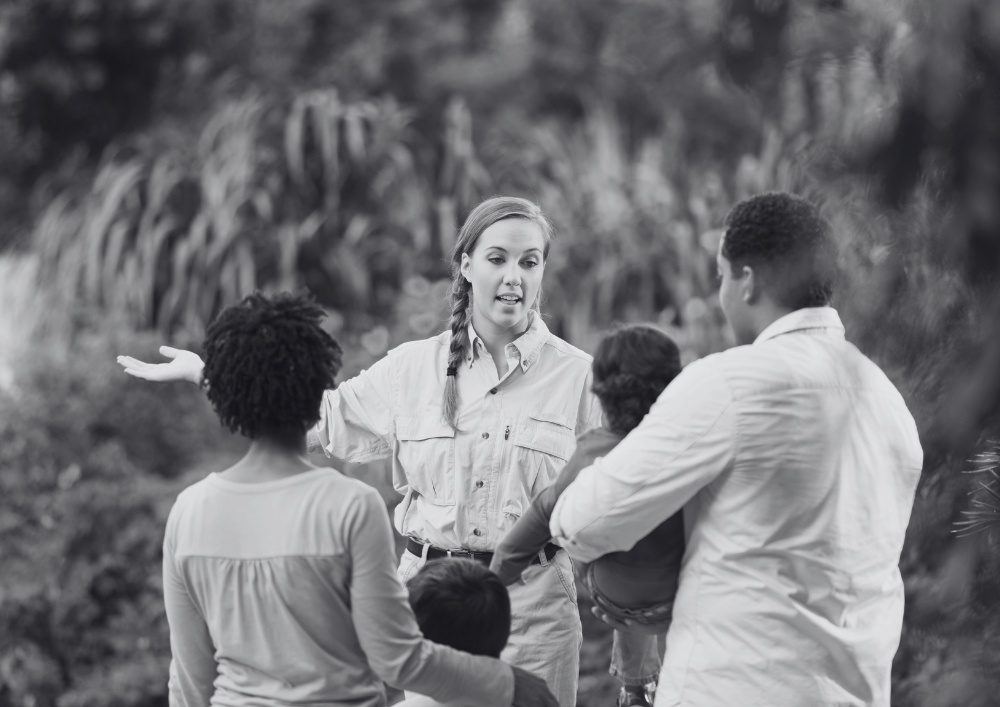
HERITΛGE kicked off its 2024-2025 Online Workshop program with the Introduction to Heritage Interpretation for Site Managers workshop in early October. 19 participants from 15 different countries (Afghanistan, Botswana, Egypt, Ethiopia, Iran, Lesotho, Malawi, Namibia, Nigeria, Romania, South Africa, Sudan, Tanzania, Turkey, Uganda) attended the online course which aimed to introduce the principles of quality heritage interpretation and how these can be applied to a range of sites.
The course was led by Valya Stergioti, an interpretive trainer, planner and consultant who has run a multitude of heritage training interpretation workshops all over Europe. Penelope Gkini* delivered the keynote speech where she shared insights on Heritage Interpretation from her project in Armenoi village, Northwest Crete.
Heritage Interpretation provides a well-structured framework for non-formal learning, aimed at creating meaningful and unforgettable experiences for visitors. Over the course of three days, participants were introduced to the concept of heritage interpretation and through a combination of interactive exercises, group work, presentations and discussions, participants learned how to turn phenomena into experiences.
The 3-day intensive workshop was well received and participants were able to develop knowledge of how to provoke resonance in visitors of heritage sites and foster a greater respect for all heritage across a range of sites in different countries.
“I’ve loved everything of this course. Particularly that we were able to take part in all discussions. As a person who wanted to know more about Heritage I was pleasantly surprised on what it entails,” said Miriam Uithaler, from the Jounou Arts and Culture Foundation
“What I liked the most about the course is the opportunity it gave me to learn from other heritage site managers, to see the work that they are doing in their respective countries” said Pontso Masithela, from Sereti sa Makhoarane Heritage and Tourism Network. “It really inspired me and increased my love and appreciation for heritage management. My project is going to benefit greatly because now I have acquired new skills and knowledge on ways to effectively interpret heritage sites or objects. And I am going to share it with my colleagues.”
Introducing our Conservation II: First Aid for Finds Workshop
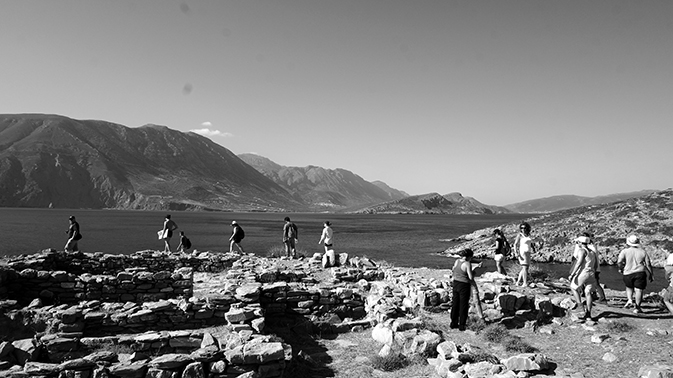
The importance of conservation for heritage preservation and management cannot be overstated. Conservation of cultural heritage is not merely about preserving physical objects; it is about safeguarding the messages and values embedded within them.
To delve deeper into this vital field, we are thrilled to announce our new workshop, Conservation II: First Aid for Finds.
This workshop, scheduled for 12-14 April 2024, is an online training program that allows participants from around the globe to engage in an immersive learning experience.
Conservation aims to maintain both the physical and cultural characteristics of an object, ensuring that its intrinsic value remains undiminished over time.
Led by Dr. Alexis Stefanis, Assistant Professor at the Department of Conservation of Antiquities and Works of Art at the University of West Attica, it will focus on providing step-by-step instructions on the best practices for caring for freshly excavated archaeological and historic objects. Moreover, it will address the delicate task of preserving objects belonging to collections that have been recently damaged, as well as offering insights into administering first aid measures to architectural heritage.
Throughout the workshop, participants will delve into essential processes, including preparation, application of treatments, and monitoring. Dr. Stefanis, with his wealth of experience in research projects and numerous publications on conservation, restoration, and rehabilitation of architectural heritage, will guide participants through these intricate procedures.
Find out more information and apply here by 31 March 2024.
**This workshop accompanies our Conservation I: Introduction to the General Principles of Cultural Heritage Conservation workshop that will take place in May 2024.
Unlocking the Power of Community Engagement: HERITΛGE Workshops Lead the Way
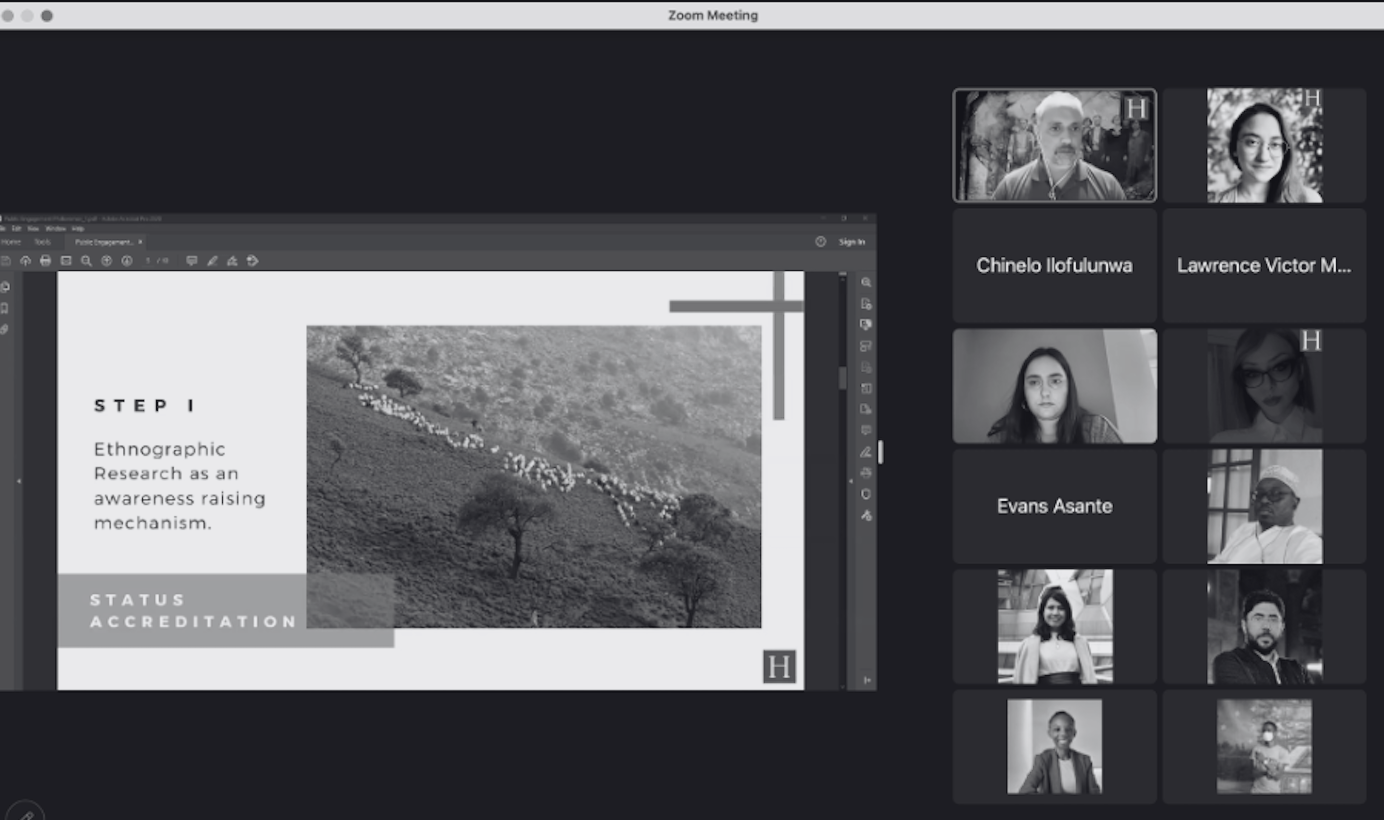
In a rapidly changing world, the role of community engagement has never been more critical for cultural heritage. HERITΛGE’s mission is to empower heritage managers with the skills and knowledge needed to make a difference through community engagement. Our recent three-day workshop equipped 16 heritage professionals from around the world with the tools to engage with their communities, bridge cultural differences, and preserve our shared heritage.
Community engagement is not just a buzzword; it’s the linchpin of heritage preservation. HERITΛGE recognizes that communities are not monolithic entities; they are diverse, dynamic, and rich with unique traditions, perspectives, and values. To truly honor these differences, a cookie-cutter approach won’t suffice. We believe in the power of community-led initiatives and social research to foster engagement that resonates with the specific cultural and social dynamics of each group.
Our recent workshop, held from 27 to 29 October 2023, brought together heritage managers from Africa, North America, Asia, and Europe. These dedicated professionals were not just participants; they were change-makers in the making. Through a combination of lectures, discussions, and hands-on exercises, they delved into the heart of community engagement, exploring methodologies grounded in ethnography and oral history.
Understanding Community Engagement as a Process
One of the key takeaways from the workshop was the profound understanding of community engagement as a dynamic process over time. Participants learned that this approach is not just a strategy but a fundamental aspect of heritage management.
Overcoming Key Challenges
Working with local communities can be challenging, and the workshop equipped our participants with essential knowledge about the primary obstacles they may encounter. With this understanding, they are better prepared to navigate these challenges effectively.
Creating Tailored Engagement Initiatives
The workshop’s focus on understanding the unique traits, requirements, and capacities of different communities was a game-changer. Participants left with the skills to develop engagement initiatives that are specific to each community’s distinct characteristics, needs, and capacities.
Distinguishing Between Communities and Audiences
One of the key lessons learned was the importance of distinguishing between communities and audiences. This insight is invaluable in designing engagement strategies that resonate with each group.
Introduction to Ethnographic Approaches
The workshop introduced participants to ethnographic methodologies, fostering the creation of collaborative research-driven community engagement initiatives. This hands-on experience allowed them to understand the communities they work with on a much deeper level.
Oral History Techniques
Oral history, a powerful tool for eliciting and documenting both tangible and intangible heritage, was another focal point of the workshop. Participants acquired knowledge about the methods and techniques used in oral history, making them proficient in preserving and sharing heritage through storytelling.
A Deeper Appreciation for Heritage
Throughout the workshop, participants gained a profound appreciation for the inherent values associated with heritage. They left with a renewed sense of purpose and a commitment to preserving our cultural and natural treasures.
What’s Next?
The journey doesn’t end with the workshop. A follow-up tutorial session is scheduled for 6 November, offering participants the opportunity to seek guidance, ask questions, and receive expert advice on enhancing their final assignments.
Meet the Instructors
The HERITΛGE workshops were led by a team of expert instructors:
- Dr. Evangelos Kyriakidis, the founding Director of HERITΛGE, brings a wealth of knowledge in Mycenaean administration, Minoan religion, and iconography.
- Dr. Aris Anagnostopoulos, manager of community engagement programs, specializes in the politics and poetics of the material aspects of the past in the present.
- Dr. Eleni Stefanou, manager of programs in Ghana, is an archaeologist and specialist in museum and heritage studies.
At HERITΛGE, as we look to the future, we are excited to see the impact these dedicated professionals will make in their respective regions and the global heritage community.
HERITΛGE also offers an annual summer school in community engagement. Find out more and apply here.
- 1
- 2